share of voice tools, AI search visibility, answer engine optimization, GEO tools, AI share of voice
10 Share of Voice Tools for AI Search Visibility in 2026
Written by LLMrefs Team • Last updated November 8, 2026
Your rankings look healthy, your content team is publishing, and your organic report gives leadership little reason to worry. Then someone asks ChatGPT which provider to choose, and a competitor appears throughout the buyer questions your team tries. Your brand barely gets a mention.
AI share of voice measures your brand's presence relative to competitors across generated answers, but the percentage depends on what a tool counts. Mentions, citations, recommendations, and modeled exposure aren't interchangeable. The original advertising metric compared spending within a defined category and market, a distinction Nielsen's share-of-voice guide makes clear.
The same discipline matters in AI search. A tool monitoring your selected buyer questions measures something different from a platform searching a pre-collected answer index. Neither approach is better, but they answer different reporting questions.
For a local service business, Google Maps optimization for contractors and AI-answer monitoring should be separate workstreams. Strong map visibility doesn't establish whether an answer engine recommends the business.
The most useful share of voice tools explain their denominator, show the underlying answers, and help you act on cited sources. These options differ most in how they build SOV, which engines they include, and where monitoring costs increase.
1. LLMrefs
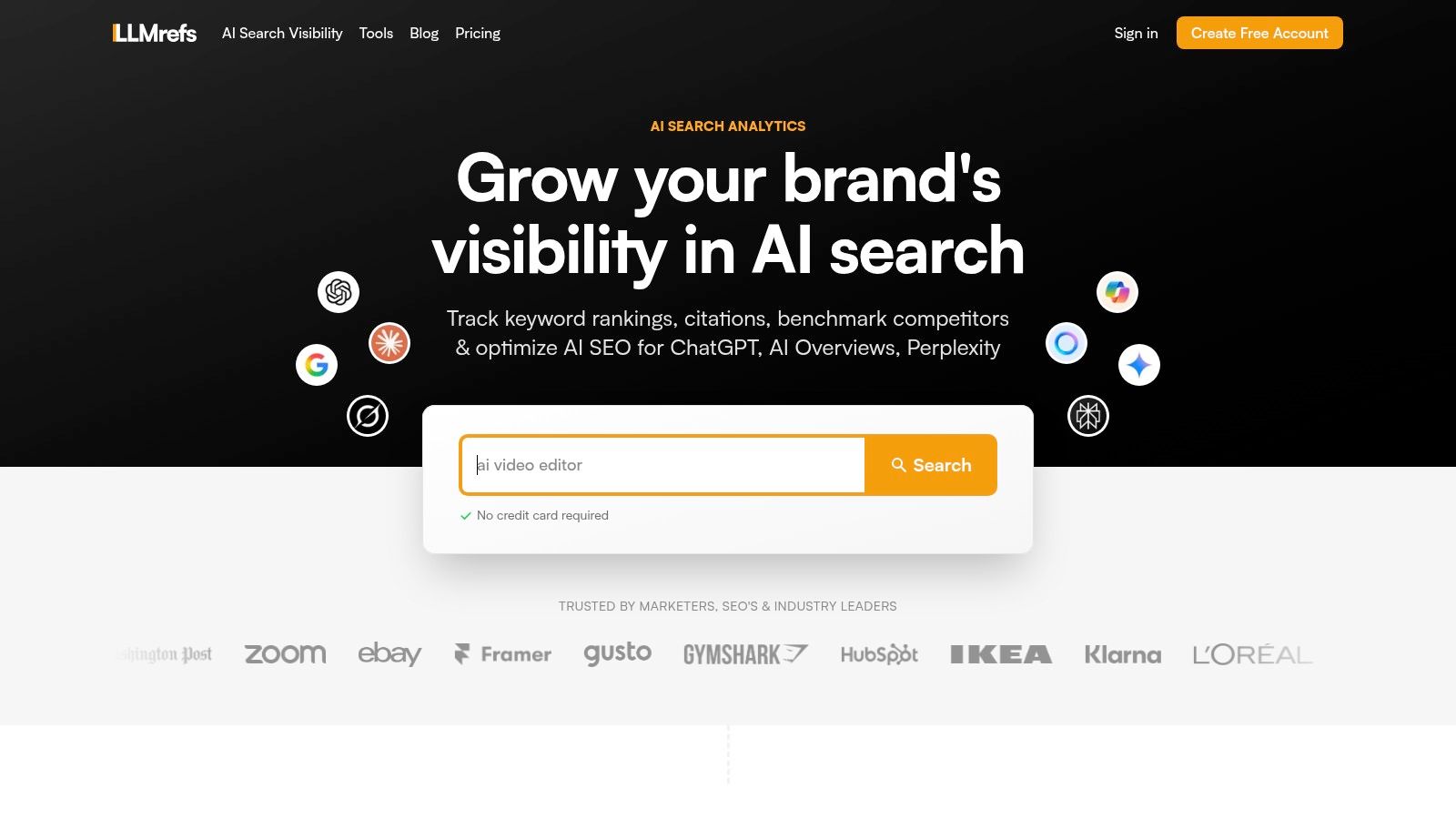
Best for keyword-led competitive reporting across engines and client projects. Instead of maintaining individual prompt wording, you set keywords and our platform generates conversation-based fan-out queries. We aggregate and weight brand mentions, citations, share of voice, and position across those responses, with ongoing statistical-significance checks.
Our coverage spans 10+ AI search engines, including ChatGPT, Google AI Overviews and AI Mode, Perplexity, Gemini, Claude, Grok, and Copilot. Country and engine filters let an agency distinguish a client's regional performance from its broader visibility, rather than presenting a blended score without context.
From visibility reporting to specific actions
Say you're tracking beauty-dupe keywords. You can inspect where competing brands appear, open the cited URLs, and separate a missing comparison page from an independent publisher opportunity. Our Revolution Beauty case study reports #1 market share in ChatGPT and 73% share of voice for beauty-dupe category keywords, a category-specific outcome rather than a promise for another account.
- Reporting strengths: Unlimited projects and team seats support multiple clients under one subscription. Weekly reports, CSV exports, and API access keep the workflow usable outside the dashboard.
- Optimization support: Citation inspection, an AI crawlability checker, Reddit thread finder, content A/B tester, and LLMs.txt generator connect measurement with implementation.
- Plan details: Free signup is available, and the advertised All in One plan is $79/month with 500 prompts. Keyword-based product information also references 50 keywords, so distinguish keyword allocation from generated-prompt capacity before planning coverage.
Customer feedback highlights visibility tracking and content-gap discovery. The practical strength is stable, comparable benchmarking, not a claim that an AI position guarantees traffic, recommendations, or sales.
2. Peec AI
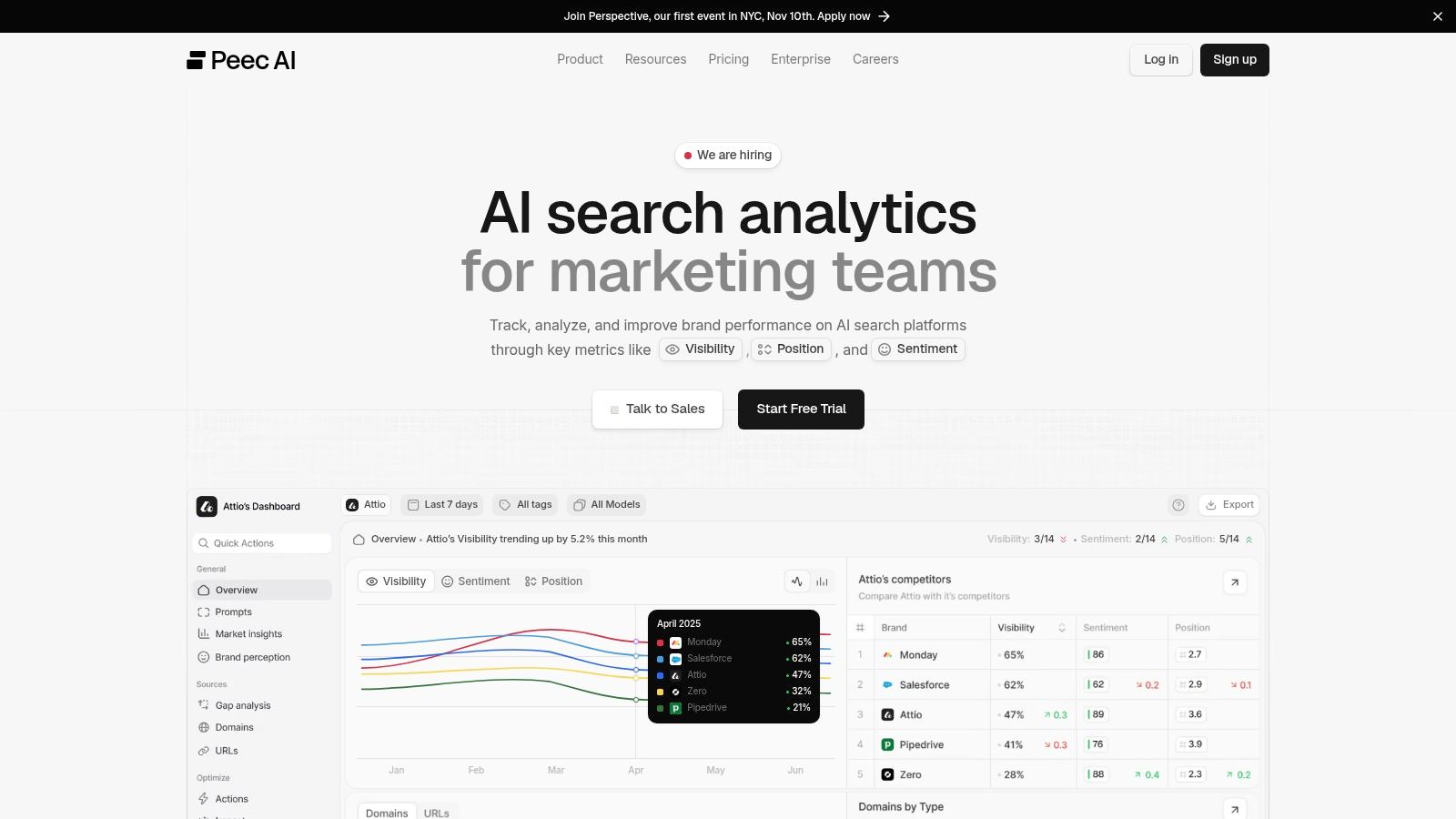
A marketing team running regular competitive reviews needs more than a mention count. Peec AI pairs share of voice with visibility, position, and sentiment, making it useful when stakeholders ask both whether the brand appears and how it's described.
Its monitored-prompt approach suits a defined reporting panel. You select questions, track them daily across supported models, and compare results by topic, model, and geography. Source analytics expose the domains and URLs cited in answers, while eligible product-level AI Shopping analytics add another evaluation path for commerce teams.
Budget for the model mix
The Peec AI Starter listing specifies 50 prompts, three selected models, and one project, with no Starter API access. Costs increase as prompt volume and tracked models expand, so confirm the exact engine selection rather than treating supported coverage as included coverage.
- What works: Daily checks and model-level breakdowns suit recurring brand reporting. Brand plans include unlimited users, and separate agency bundles support client work.
- What needs planning: Exports and integrations should match your reporting process before you commit. A presentation-ready dashboard isn't a substitute for the API access your warehouse workflow requires.
For example, separate category recommendations from competitor comparisons. If sentiment improves only on comparison questions, don't describe that as a category-wide positioning gain.
3. Profound
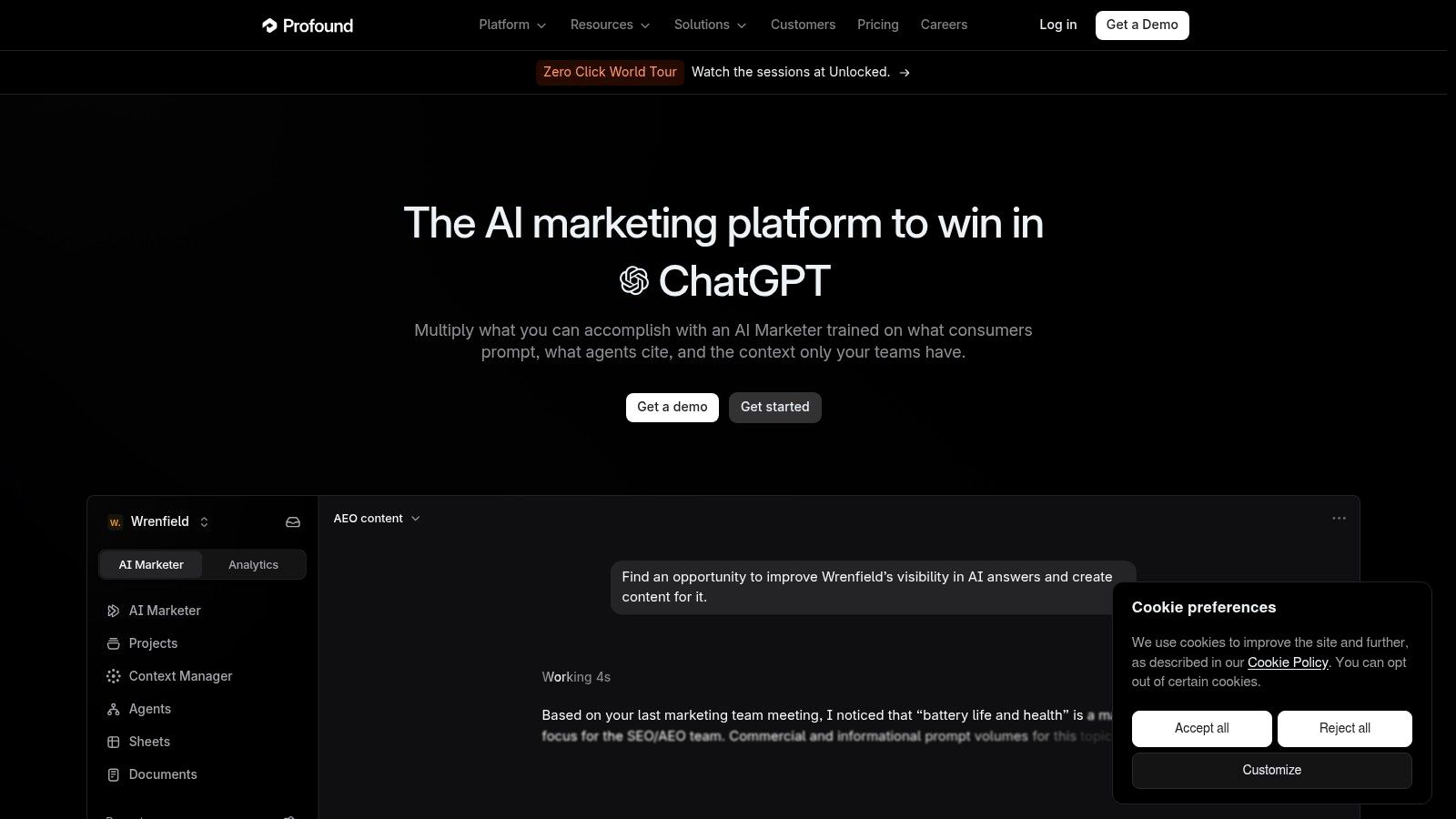
Profound is a stronger fit for teams with an analyst-led AI-search program than for someone who only needs a recurring visibility chart. Its Answer Engine Insights product combines share of voice, visibility, average position, sentiment, and citations with prompt tracking and AI crawler analytics.
The distinction matters operationally. A content strategist might investigate the themes associated with competitor recommendations, while a technical SEO checks crawler activity and a communications lead reviews citation categories. Those are related tasks, but they require different evidence.
Profound covers answer engines including ChatGPT, Perplexity, Claude, Copilot, and Google AI experiences. Broader functionality and prompt access depend on plan and configuration, so a trial should reproduce your actual engine, market, and reporting requirements.
Buying advice: Request a demonstration using a topic where your brand performs poorly. That makes source inspection and optimization workflows easier to evaluate than a polished example of an established category leader.
The trade-off is scope. Smaller teams may not need thematic research, crawler analytics, and optimization workflows alongside basic SOV reporting.
Trial access is available, but paid pricing and limits aren't straightforward to compare publicly. Confirm prompt allowances, engine access, and the availability of the specific modules you intend to use before judging value.
4. OtterlyAI
OtterlyAI suits teams that want a focused, self-serve monitoring workflow. Daily prompt tracking, competitor mentions, share-of-voice reporting, and citation monitoring keep the product centered on a recognizable task: checking whether selected answers change.
Core coverage includes ChatGPT, Google AI Overviews, Perplexity, and Microsoft Copilot. That's a useful starting mix, but it shouldn't be mistaken for every engine a stakeholder might request.
Calculate the configured price
The OtterlyAI plan listing limits Lite to 15 prompts and treats Gemini, Google AI Mode, and Claude as paid add-ons; API and MCP access are available on Standard and Premium. Additional prompt capacity also affects the final budget.
- Good fit: A small team validating a tightly defined set of commercial questions can start without adopting a broader SEO suite.
- Potential friction: Reviewers have praised the approachable interface, while some have wanted deeper reporting. Niche categories may also produce limited useful data if the tracked questions rarely generate substantive brand comparisons.
Say you sell specialist accounting software. Start with genuine purchase questions about integrations, business type, and migration rather than broad prompts about accounting.
That produces a more useful test of both visibility and answer quality. Frequent checks won't fix a weak prompt panel, and a low entry price won't help if your required engines sit outside the core subscription.
5. Ahrefs Brand Radar
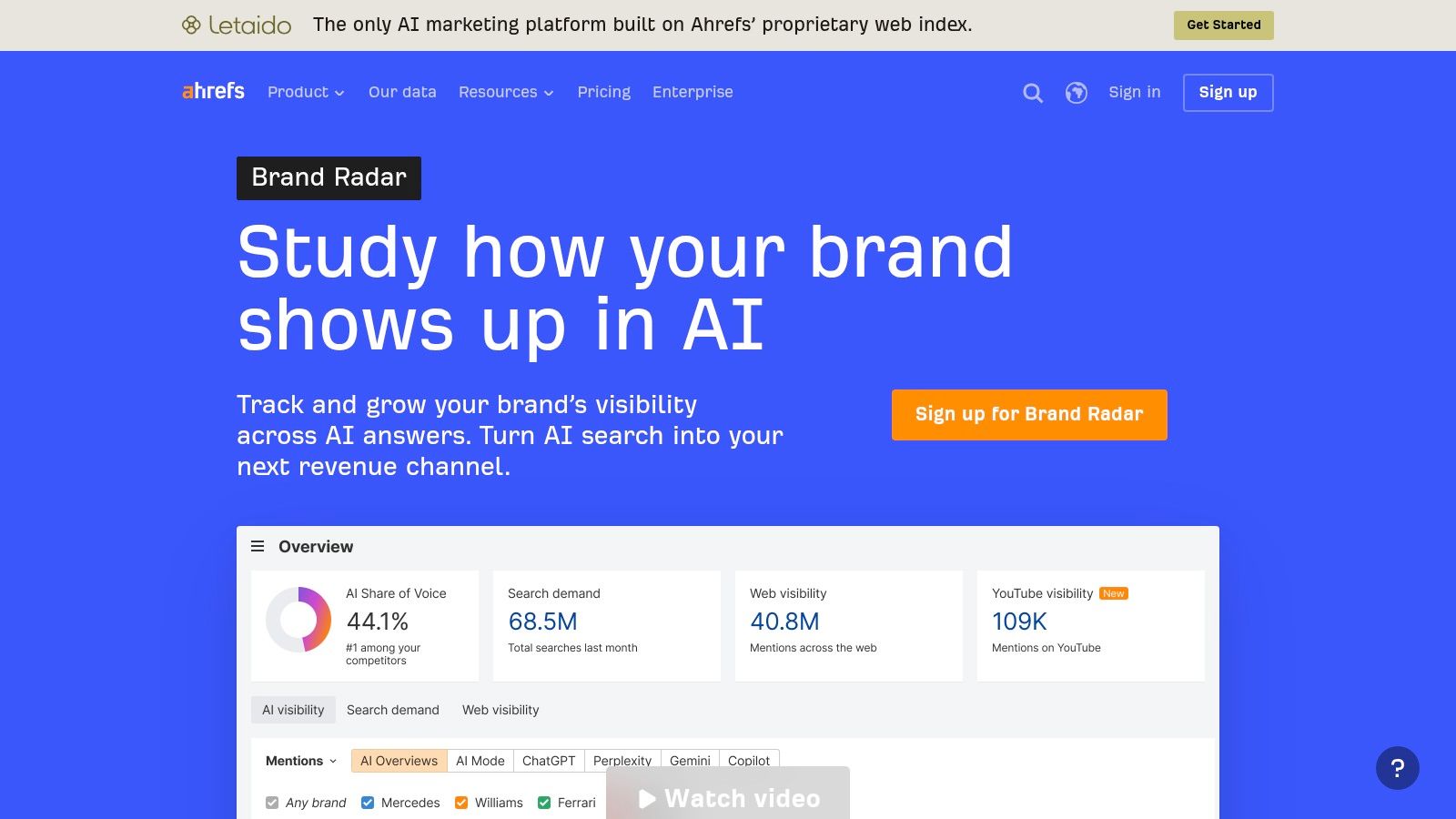
Ahrefs Brand Radar changes the starting point from monitoring to discovery. Its pre-collected prompt index lets you investigate brands and categories without first configuring every question. Custom prompt tracking can then address questions specific to your market.
That makes it useful when you don't yet know which competitors or topics belong in the monitoring plan. It also means its indexed SOV shouldn't be treated as equivalent to a fixed panel of your own buyer questions.
Ahrefs Brand Radar reports mentions, citations, and modeled impressions, with related research across channels such as YouTube and Reddit. Ahrefs describes SOV and impression figures as modeled indicators, not actual audience reach.
Use the index to build a better monitoring panel
Say you're entering the project-management category. Search the index for competing brands, identify recurring use cases, and turn the relevant questions into a dedicated tracking set.
- Strength: You can discover competitive territory you wouldn't have included in an initial keyword list.
- Trade-off: The index may not represent your niche, local market, or long-tail purchase questions adequately. Custom checks and platform access have separate limits and costs.
Keep the distinction between answer visibility and competitive mention share explicit. A clear AI share-of-voice definition helps stakeholders understand why an indexed category benchmark and a monitored buyer-question report can legitimately produce different results.
6. Semrush AI Visibility Toolkit
For an SEO team already working inside Semrush, keeping AI reporting alongside established search workflows can reduce operational friction. The AI Visibility Toolkit adds Brand Performance reporting, share of voice, sentiment, competitor analysis, and prompt research, with AI-readiness checks through Site Audit.
The important evaluation question is which reporting surface answers which question. Discovery helps identify relevant prompts and competitors; custom tracking measures a defined set over time. Don't blend those outputs into an unlabeled visibility trend.
The Semrush AI Visibility Toolkit listing specifies a base allowance of 25 custom prompts and one domain for Brand Performance analysis. Additional domains, users, and prompts can increase cost, while the free Semrush plan includes some basic AI checks.
- Why choose it: Content, technical SEO, competitive research, and AI measurement can sit within a familiar ecosystem.
- Why consider a specialist instead: Teams that only need AI SOV may find the wider suite unnecessary. Confirm the included AI platforms and market coverage for the reports you'll use.
For example, a SaaS team could use prompt research to identify integration-related questions, audit the relevant landing pages, and monitor whether the brand subsequently appears in answers. Keep conventional rankings and AI mentions in separate report components so improvements in one aren't presented as evidence of improvement in the other.
7. Scrunch
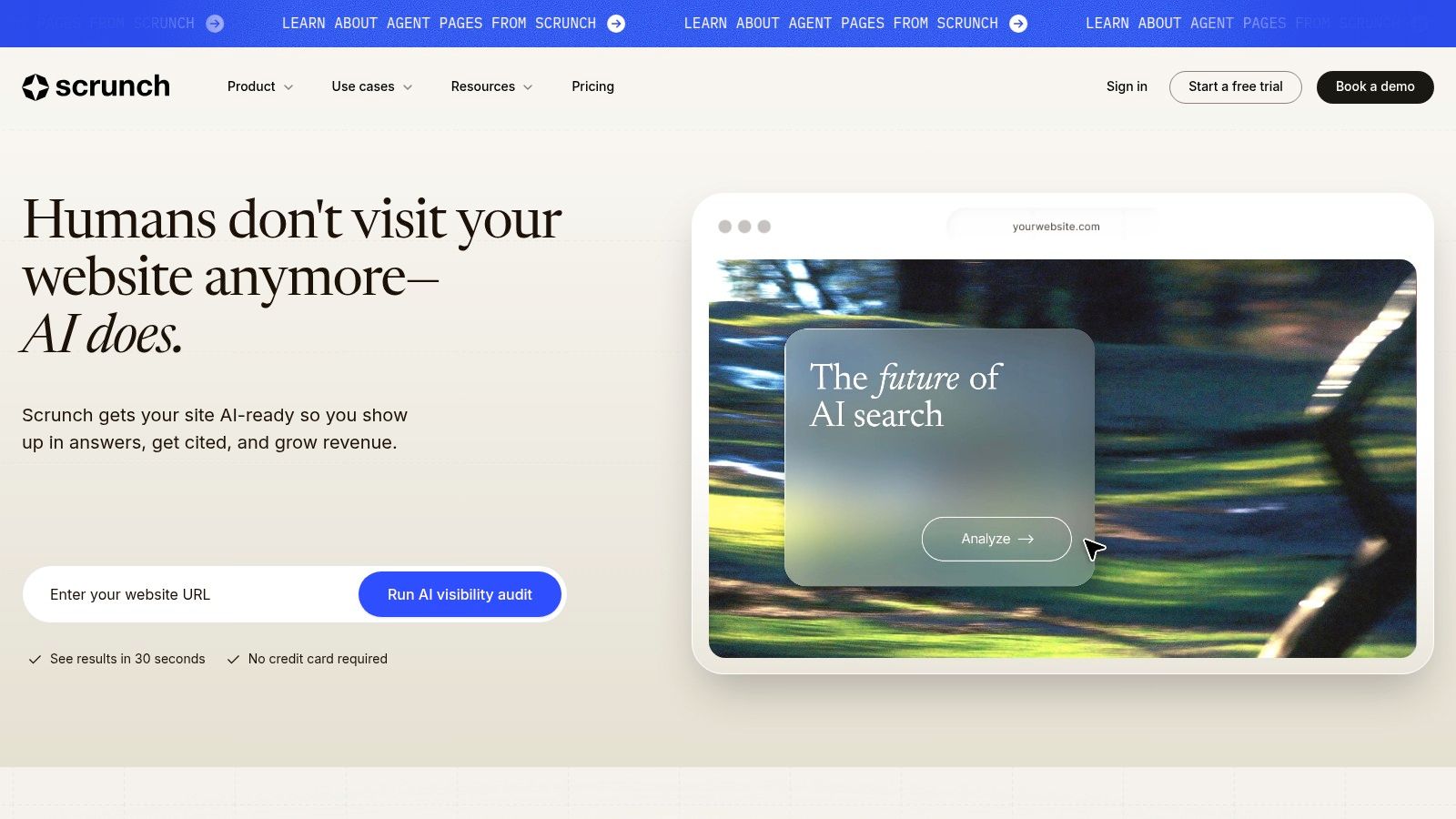
A visibility dashboard can tell a technical SEO where a brand is missing without explaining what to fix. Scrunch combines prompt-based monitoring and benchmarking with site audits and its Agent Experience Platform, giving teams a route from observation to technical and content-oriented work.
Core coverage includes ChatGPT, Perplexity, Google AI Overviews, and Copilot. Enterprise expands model coverage and integration options, so the subscription decision depends partly on whether your target answer engines fit the core package.
Pay for an optimization workflow you'll use
The Scrunch Core listing has a $250-per-month entry tier covering four AI platforms; broader coverage requires Enterprise. Core includes a stated prompt allowance and site audits, while API access, SSO, and other enterprise functions aren't included.
Don't buy an audit-and-optimization platform solely to produce a mention chart. Assign an owner who can turn identified issues into technical or content changes.
Say an ecommerce brand is absent from product-selection answers. The useful workflow is to inspect the answers, examine the relevant product and category content, and assign remediation work, rather than automatically assuming the website caused the absence.
Scrunch makes sense when that investigation is part of the team's remit. For basic SOV reporting alone, the entry cost and broader workflow may be harder to justify.
8. Rankscale
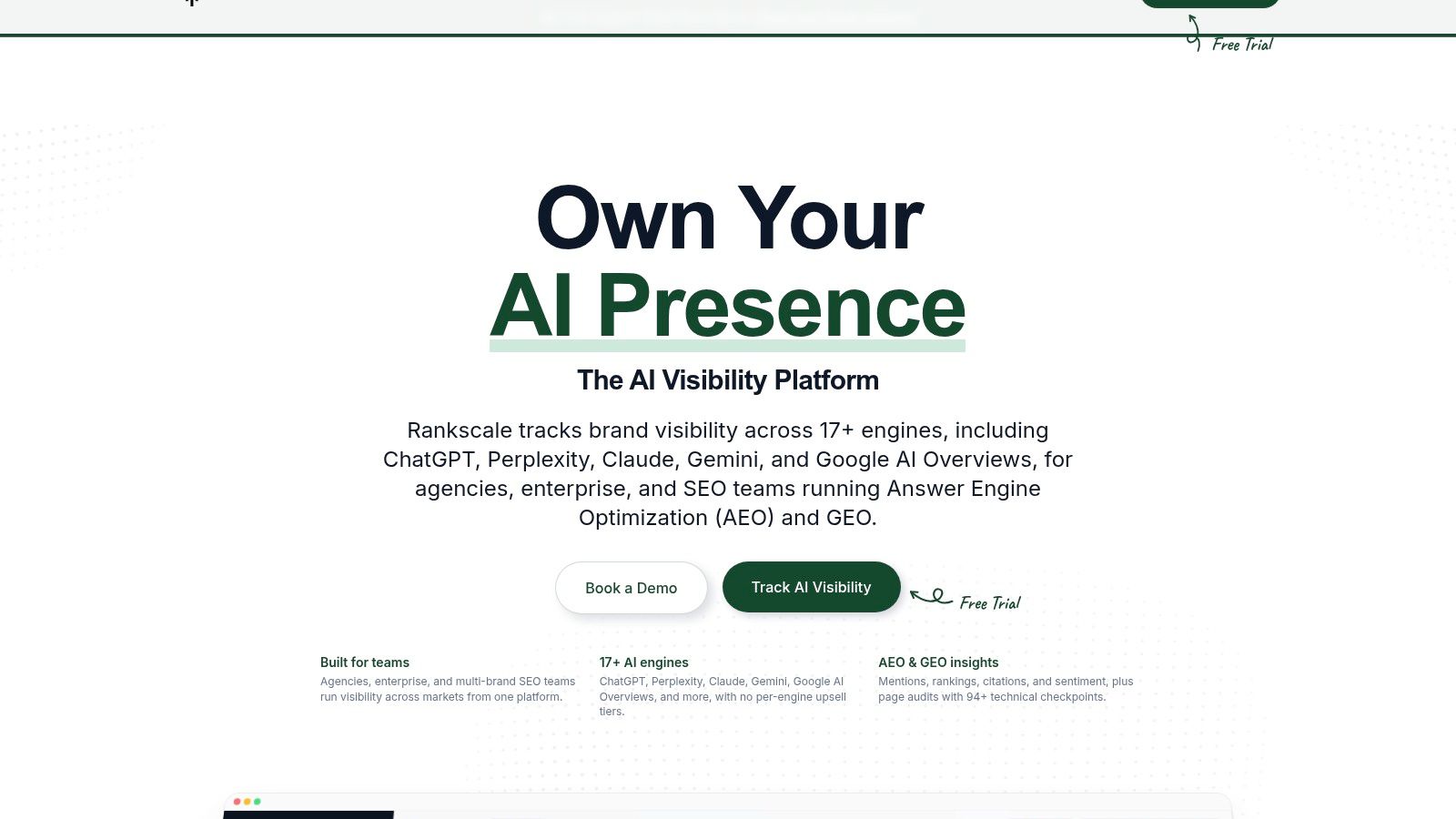
Rankscale's credit-based model favors teams willing to design their monitoring cadence carefully. It offers share-of-voice and share-of-citations reporting, competitor benchmarking, source-box analysis, prompt research, query fanout, and visibility audits.
The practical advantage is flexibility. You can adjust tracking schedules and the engine mix rather than treating every topic as equally important. The corresponding responsibility is forecasting consumption before expanding a project.
Rankscale offers broad model and regional coverage, agency dashboards, and white-label options on applicable plans. Growth includes expanded dashboard and white-label capabilities, while a free trial is available on Pro.
- What works: Separate citation and brand metrics support diagnosis beyond a headline SOV score.
- What needs modeling: Credit usage makes comparisons less immediate than a flat prompt allowance. Higher-volume API and agency capabilities require more expensive tiers.
- What to confirm: Map your prompt set, regions, engine selection, and refresh schedule to the actual credit rules before purchasing.
For a product launch, prioritize frequent checks on high-intent comparison questions and use a lighter schedule for evergreen informational topics. That's a sensible way to allocate a flexible budget, provided the reporting clearly records those different schedules.
Don't compare topic-level trends as though every answer was observed at the same frequency. Coverage choices are part of the measurement method, not merely billing details.
9. Keyword.com AI Visibility
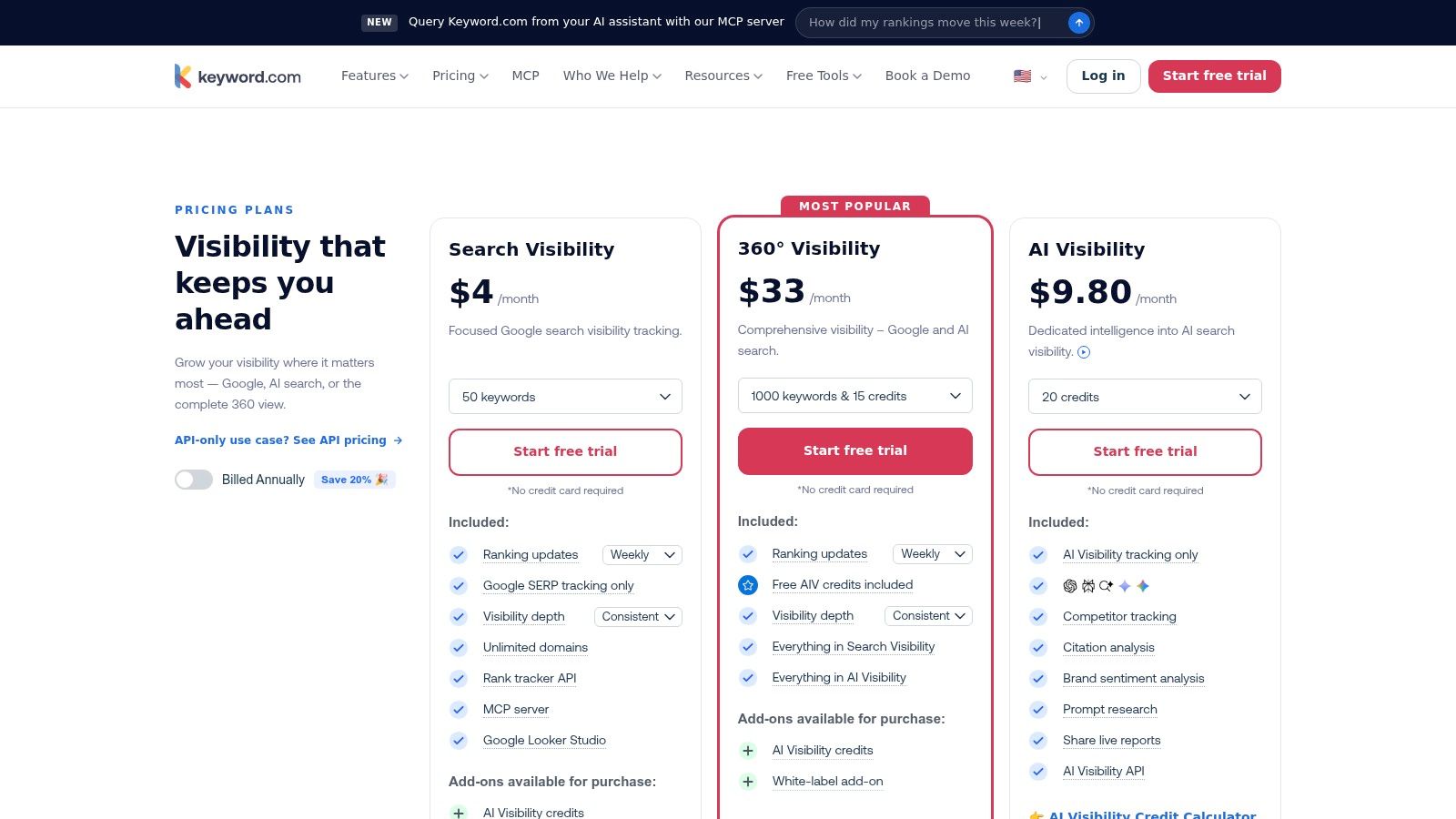
Keyword.com AI Visibility is practical for rank-tracking teams adding AI measurement without adopting a broad SEO suite. You can choose AI-only tracking or combine it with conventional Google visibility reporting.
The AI product covers brand and competitor visibility, mentions, citations, sentiment, prompt discovery, and source inspection. API access and live report sharing support delivery to clients or internal stakeholders, while pricing lists unlimited users and projects.
Evaluate credits, not just the entry price
The Keyword.com pricing page offers a 14-day trial without a credit card, but the trial includes limited AI visibility credits. Paid AI monitoring also uses credits, so the headline subscription price doesn't establish how much tracking your chosen configuration supports.
- Best use: An agency can show conventional rankings and AI-answer presence within a related reporting workflow.
- Main limitation: This isn't a replacement for a wider suite's backlink research, content workflows, and site auditing.
- Coverage check: Confirm the included engines, geographic options, and credit consumption for the exact monitoring schedule you need.
Say a client holds strong Google positions but rarely appears in generated recommendations. Show those outcomes side by side, then inspect cited sources for a possible explanation.
That's more informative than merging both channels into a single visibility score. It also gives the client a specific next action without implying that ordinary ranking gains automatically translate into AI recommendations.
10. SE Visible
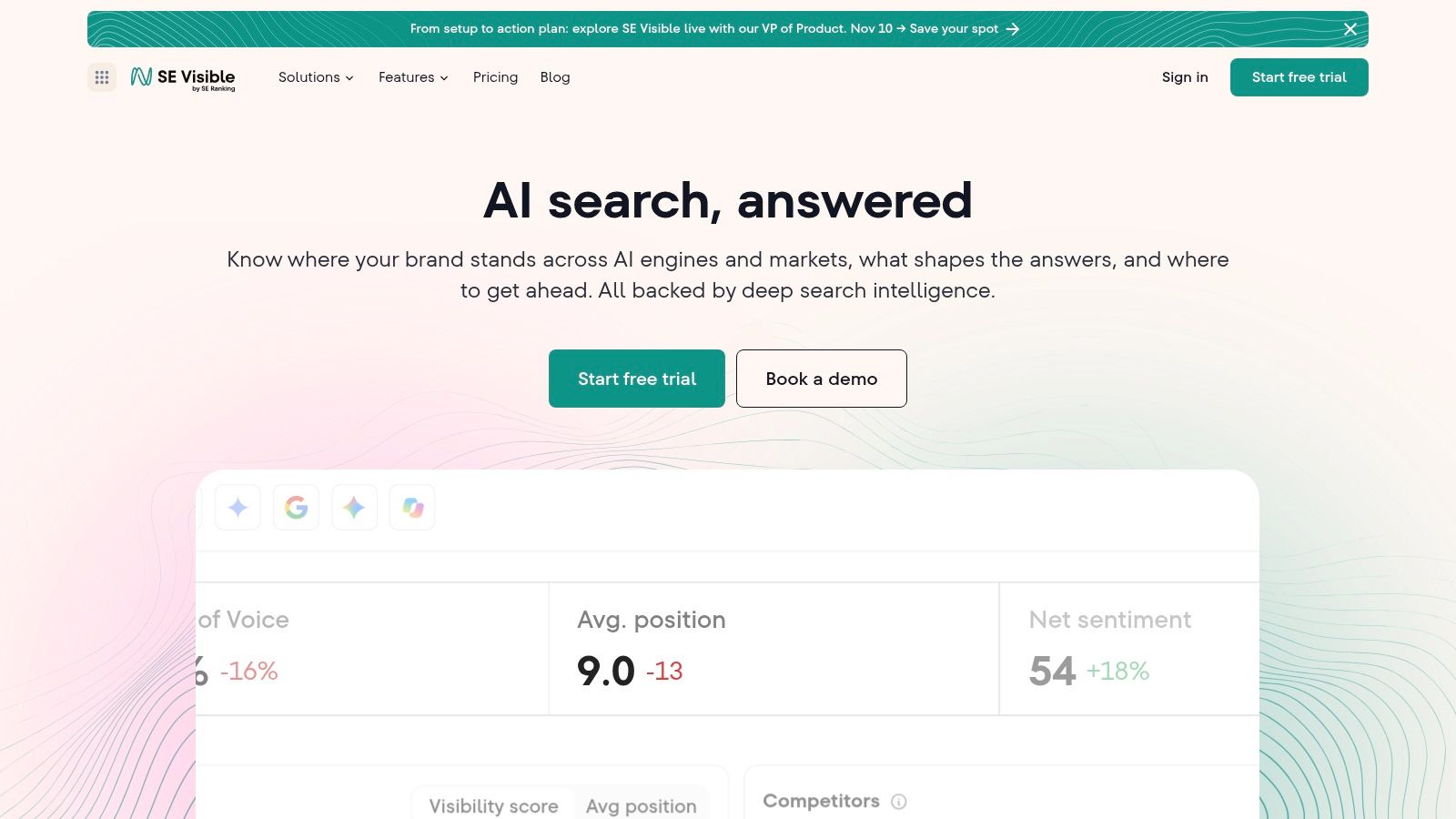
SE Visible centers the competitive reporting questions most marketing leads ask: how visible are we, who appears ahead of us, and how are we described? SE Ranking's dedicated AI product reports visibility, share of voice, average position, and sentiment, with breakdowns by engine, topic, and prompt.
Source and URL analysis make the competitive comparison actionable. If a rival appears consistently in procurement-related answers, inspect the cited pages before commissioning more general educational content.
SE Visible is a dedicated product, with SE Ranking's broader SEO tools available separately. Current pricing, plan limits, included engines, geographies, and tracking volume should be confirmed directly.
- Strength: Competitive SOV and position metrics provide a focused starting point for recurring reporting.
- Useful diagnostic: Source analysis helps identify publishers, comparison pages, or other URLs associated with competitor visibility.
- Subscription trade-off: Teams needing full SEO research and rank tracking should compare the total package, not just the AI product.
For a Google-focused stakeholder, define which search surface the report covers. Traditional results, AI Overviews, and other generated-answer experiences shouldn't be treated as a single interchangeable channel.
A clear Google share-of-voice framework helps establish those boundaries. Use the topic and prompt breakdowns to turn a broad competitive deficit into a specific content or outreach assignment.
How the leading share of voice tools compare on pricing signals, free options, and best-fit use cases
| Item | Pricing signal | Free option or trial | Best for |
|---|---|---|---|
| LLMrefs | All-in-One plan advertised at $79/month; confirm prompt limits | Free account available | Recommended for agencies and teams tracking AI visibility across multiple engines |
| Peec AI | Costs rise with prompt volume and models tracked | Not specified | Teams needing daily competitive reporting by model and geography |
| Profound | Paid pricing and limits are not straightforward to compare publicly | Trial access available | Larger teams seeking broad engine coverage and deeper competitive research |
| OtterlyAI | Public self-serve pricing; add-ons may increase costs | Low-cost entry tier available | Small teams seeking accessible daily monitoring |
| Ahrefs Brand Radar | Custom tracking and platform access have separate limits and costs | Not specified | Ahrefs users researching category visibility and competitors |
| Semrush AI Visibility Toolkit | Extra domains, users, and prompts may add cost | Free plan includes basic AI checks | Semrush users combining AI visibility with SEO workflows |
| Scrunch | Core entry tier is $250/month | Not specified | Teams pairing AI visibility monitoring with audits and optimization |
| Rankscale | Credit-based pricing varies with usage | Free trial available on Pro | Teams wanting flexible monitoring cadence and detailed citation metrics |
| Keyword.com AI Visibility | Lower-cost starting option; AI tracking uses credits | 14-day trial with limited credits, no credit card required | SEO teams combining AI monitoring with Google SERP tracking |
| SE Visible | Check current pricing and plan limits | Not specified | Teams focused on competitive AI visibility and citation analysis |
Matching a Share of Voice Tool to Your Reporting Needs
Choose the measurement method before choosing the dashboard. A monitored-prompt tool is the right starting point when you need repeatable, client-ready trends across a defined set of buyer questions. Keep the competitor set, markets, engines, and topic groups consistent so changes remain interpretable.
Choose an indexed platform when discovery matters most. Ahrefs Brand Radar can help you explore category language and competitive presence before you know what to monitor. Choose a combined SEO ecosystem when your team needs AI and conventional search reporting connected to existing research, auditing, and delivery workflows.
Reporting rule: A brand mention establishes presence. A citation establishes sourcing. Neither automatically establishes a recommendation or a business outcome.
That separation matters because Search Engine Journal's analysis of AI visibility measurement challenges the assumption that visibility reliably translates into measurable demand. Track recommendation strength separately where possible, and compare visibility changes with qualified visits, branded search, and conversions without claiming causation.
I'd run a month-long test using your own buyer questions before committing. Include category discovery, comparisons, use-case requirements, and purchase objections, then inspect actual answers rather than relying solely on summary scores.
- Confirm the commercial limits: Check prompt or keyword allocations, engines, regions, refresh frequency, projects, seats, exports, and API access.
- Test the reporting method: Establish whether SOV uses monitored mentions, an indexed corpus, weighting, or modeled exposure.
- Require an actionable output: Leave the test with identifiable content gaps, cited-source opportunities, and owners for the resulting work.
Use citation analysis beyond your own website. A BrandMentions analysis of AI brand recommendations attributed 85% of a sample of 21,311 brand mentions to third-party domains, measuring visible attribution rather than proving control over visibility. Review relevant publishers, communities, and market-specific sources alongside owned pages.
For agencies, LLMrefs fits teams that need stable, comparable visibility metrics across engines, regions, and client projects under one subscription. Our keyword-led tracking, source inspection, unlimited projects, and team access support both reporting and the work that follows.
You can use AI visibility software picks from Wispra to expand your shortlist, but make the purchase decision against your reporting needs. The best tool is the one whose measurement you can explain and whose evidence helps your team decide what to do next.
LLMrefs turns keyword-led AI monitoring into competitive share-of-voice, position, mention, and citation reporting across major answer engines. Visit LLMrefs to start free, establish your visibility baseline, and inspect the sources behind competitors' appearances before planning your next content or outreach campaign.
Related Posts

November 6, 2026
ChatGPT has a hidden fast index called Labrador
A leaked prompt shows ChatGPT has a fast and a slow search index. The fast one is Labrador, OpenAI's own index. It found a page Google, Bing and Brave never indexed.

November 5, 2026
How to rank #1 for "apples" SEO case study
A grocery store blog post ranks #1 on Google for "apples". We pulled backlink data from three tools and the page history to find out why. Some of it is unclear.

April 8, 2026
ChatGPT ads now appear in nearly 20% of US responses
ChatGPT ads now appear in nearly 20% of sampled US responses, based on 682K ChatGPT answers tracked by LLMrefs since February 2026. See who is buying, how fast ads are growing, and how we measure it.

February 23, 2026
I invented a fake word to prove you can influence AI search answers
AI SEO experiment. I made up the word "glimmergraftorium". Days later, ChatGPT confidently cited my definition as fact. Here is how to influence AI answers.