keyword monitoring software, rank tracking tools, AI SEO tools, SEO software, keyword tracking
10 Keyword Monitoring Software Picks for 2026
Written by LLMrefs Team • Last updated September 28, 2026
Your SEO team needs dependable keyword movement data, but the agency side of the business needs more than a weekly position chart. You're also expected to explain why a client's visibility changed, report on competitors, and show whether the brand appears in answers from ChatGPT, Google AI Overviews, Perplexity, Gemini, or other AI systems.
That makes keyword monitoring software a workflow decision, not a simple feature comparison. Refresh frequency, tracking scale, location and device controls, integrations, reporting depth, and the difference between classic SERP monitoring and LLM visibility all affect the right choice. Historical data has also changed rank tracking from isolated checks into longitudinal analysis, allowing teams to compare current results with past baselines and connect movements with content, technical, or competitor changes. Semrush's overview of keyword tracking tools explains this shift.
The list starts with LLMrefs, the dedicated choice for keyword-led AI visibility monitoring. The remaining platforms serve distinct rank-tracking, reporting, local SEO, and broader SEO-suite needs. Each entry includes a realistic use case, implementation note, pricing context where supplied, strengths, limitations, and a decisive shortlist recommendation.
1. LLMrefs for keyword-led AI visibility
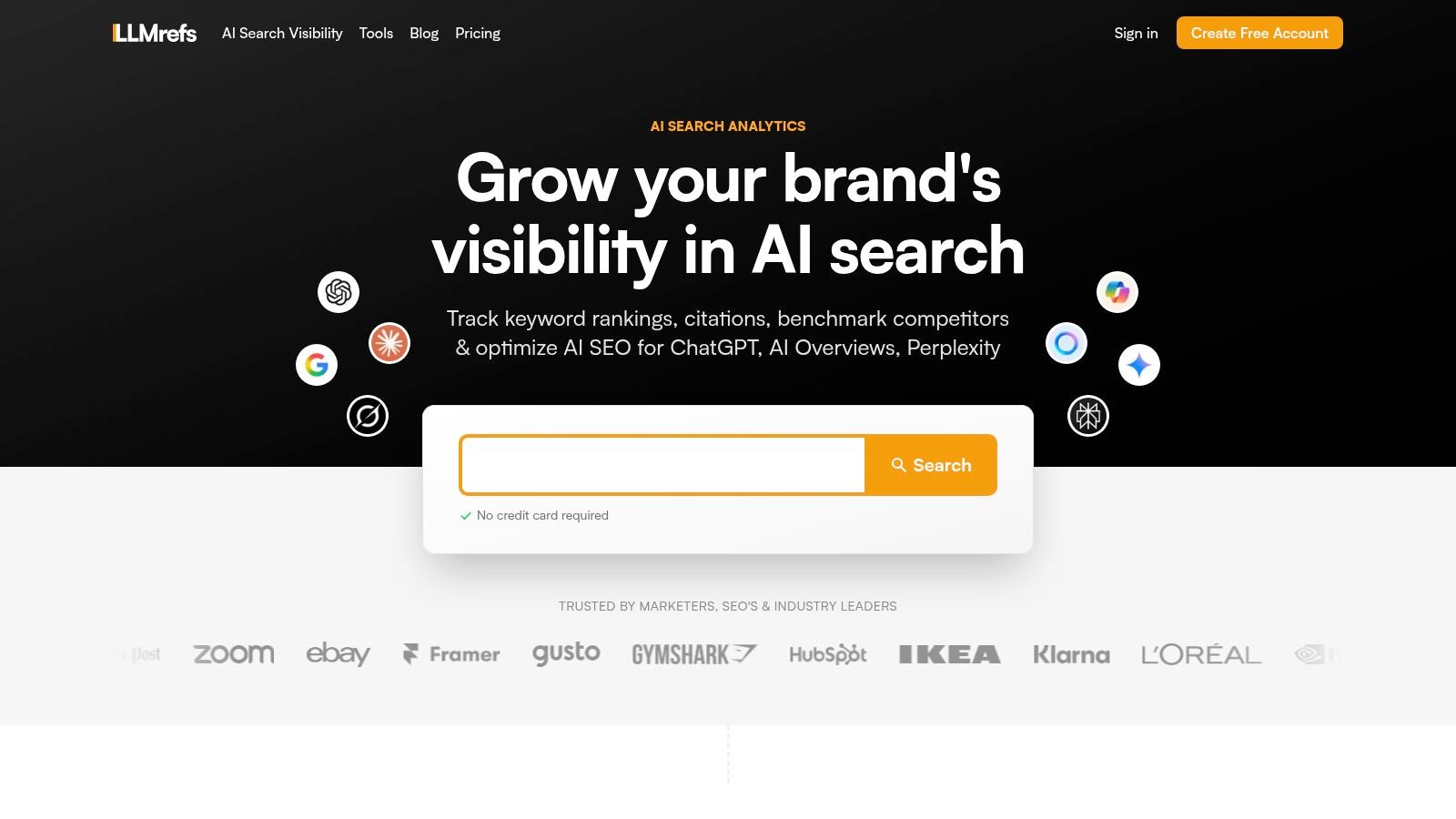
LLMrefs fits teams that measure visibility inside AI answers, including brand mentions, recommendations, citations, and position, alongside conventional search rankings. Users enter keywords, and the platform converts them into conversation-based prompts, reducing the need to maintain a manual prompt library. It aggregates responses across ChatGPT, Google AI Overviews, Perplexity, Gemini, Claude, Grok, and Copilot, with reporting on citations, competitors, share of voice, and position.
The keyword-led model gives SEO teams a consistent comparison point. A SaaS company tracking “best project management software” can identify which competitors appear, how prominently they are presented, and which pages AI systems cite. Those findings can guide edits to comparison content, product claims, missing evidence, and outreach priorities.
Where LLMrefs fits best
LLMrefs supports weekly updates with real-time checks, location targeting across countries and languages, and ongoing significance checks. These controls matter because AI responses vary between runs. Aggregated results provide a more stable benchmark than any single generated answer, although they cannot remove all volatility from AI monitoring.
The platform is also suited to agencies managing several domains. Unlimited projects and seats under one subscription, client dashboards, CSV exports, and a REST API support separate reporting for multiple clients. Its AI crawlability checker, Reddit threads finder, A/B content tester, and LLMs.txt generator connect measurement with potential optimization tasks.
Practical rule: Choose LLMrefs when the operating question includes “Which answer engines mention us, what do they cite, and how does our visibility compare with competitors?” alongside “Where do we rank?”
A free account is available. Paid plans begin at $79 per month, with the listed “All in One” marketing plan presented at that price as limited-time pricing. Higher coverage may require an upgrade. LLMrefs reports a user base of more than 10,000 marketers on its site, but that figure is vendor-reported and does not independently verify adoption. In its published Revolution Beauty case study, LLMrefs reports reaching the top share of voice in ChatGPT and 73% share of voice for a dupe-related category. The site does not list third-party certifications or awards.
Shortlist recommendation: Select LLMrefs when AI answer-engine coverage, keyword-led prompt generation, citation analysis, geographic targeting, and agency-scale reporting are primary requirements. Conventional rank trackers remain a better fit for teams focused on frequent SERP updates, granular device controls, or broader SEO datasets. LLMrefs' practical limitation is coverage management: expanding keywords and prompts can increase the cost and operational load of a monitoring program.
2. Ahrefs for deep SEO data
Ahrefs fits teams that need rank tracking alongside crawling, keyword research, backlinks, audits, and competitor analysis. Its Rank Tracker supports location and device targeting, SERP history, competitor comparisons, and share-of-voice-style views across keyword sets. The main advantage is diagnostic context: an in-house SEO team can examine whether a ranking change aligns with content quality, technical issues, or link growth without moving between separate platforms.
A software company launching a comparison page could monitor desktop and mobile rankings in priority markets, review historical SERP movement, and connect those results with backlink and content data in the same subscription. Ahrefs also provides Brand Radar and tracked AI prompts, documented on its product pages, giving teams a route into AI visibility while retaining conventional SEO measurement.
Tracking and reporting trade-offs
Ahrefs prioritizes dataset depth and consistency over immediate refreshes. Rank Tracker's standard cadence is weekly, while daily or on-demand checking is not native to the usual workflow. That limits its fit for volatile campaigns, product launches, or agencies that promise frequent client updates.
Location and device controls support structured market comparisons, but teams should assess refresh requirements before implementation. A platform with broad historical and research data may still be the wrong choice when operational decisions depend on near-real-time movement.
Reporting is a strength. Data exports, API support, Looker Studio connectivity, and MCP support help teams move ranking data into dashboards and wider marketing pipelines. Add-ons and extra users can increase total cost for larger teams, so Ahrefs' pricing page should be checked directly because limits and packaging can change.
For a wider explanation of how reporting systems fit into SEO operations, see this guide to SEO ranking reporting software.
Shortlist recommendation: Choose Ahrefs for a mature SEO environment combining historical SERP data with research, audit, backlink, and emerging AI visibility capabilities. Choose another tracker first if daily or on-demand refreshes are required.
3. Semrush for unified market intelligence
Semrush suits teams that need Position Tracking alongside SEO, content, traffic, market, and PR intelligence. Its tracking workflow supports location and device segmentation, competitor comparisons, and scheduled reporting. Google Search Console and Google Analytics integrations add clicks, impressions, and site performance to the same reporting environment, helping analysts interpret ranking changes rather than review positions in isolation.
For an agency already operating in Semrush, one client report can combine rankings, technical audit findings, organic competitors, and traffic trends. This reduces tool switching and supports broader market analysis. The trade-off is configuration clarity: a suite with many modules can be harder to audit than a dedicated tracker built around a narrower workflow.
AI coverage and governance
Semrush provides AI Visibility features and prompt tracking on higher tiers. Enterprise plans also include single sign-on, audit logs, and custom integrations, which support controlled access when multiple teams share reporting and research data. These capabilities extend the platform beyond conventional SERP monitoring, although buyers should verify which AI coverage, prompts, and reporting controls apply to their selected tier.
Commercial planning requires care. Pricing, usage limits, reporting add-ons, and tier boundaries can affect the final setup, while Semrush may provide fewer raw tracking controls than pure-play platforms. Agencies that require specific refresh schedules, segmentation rules, or device and location combinations should test those workflows before standardizing them.
API fit deserves the same scrutiny. Review your keyword tracking API requirements, including limits, available fields, authentication, and export formats, against the destination used for dashboards or business-intelligence pipelines.
Shortlist recommendation: Choose Semrush when unified SEO and market intelligence outweigh the need for maximum tracking granularity, particularly in established agencies and enterprise marketing teams. Choose a dedicated tracker when refresh cadence and fine-grained rank controls determine daily operations.
4. AccuRanker for high-speed rank monitoring
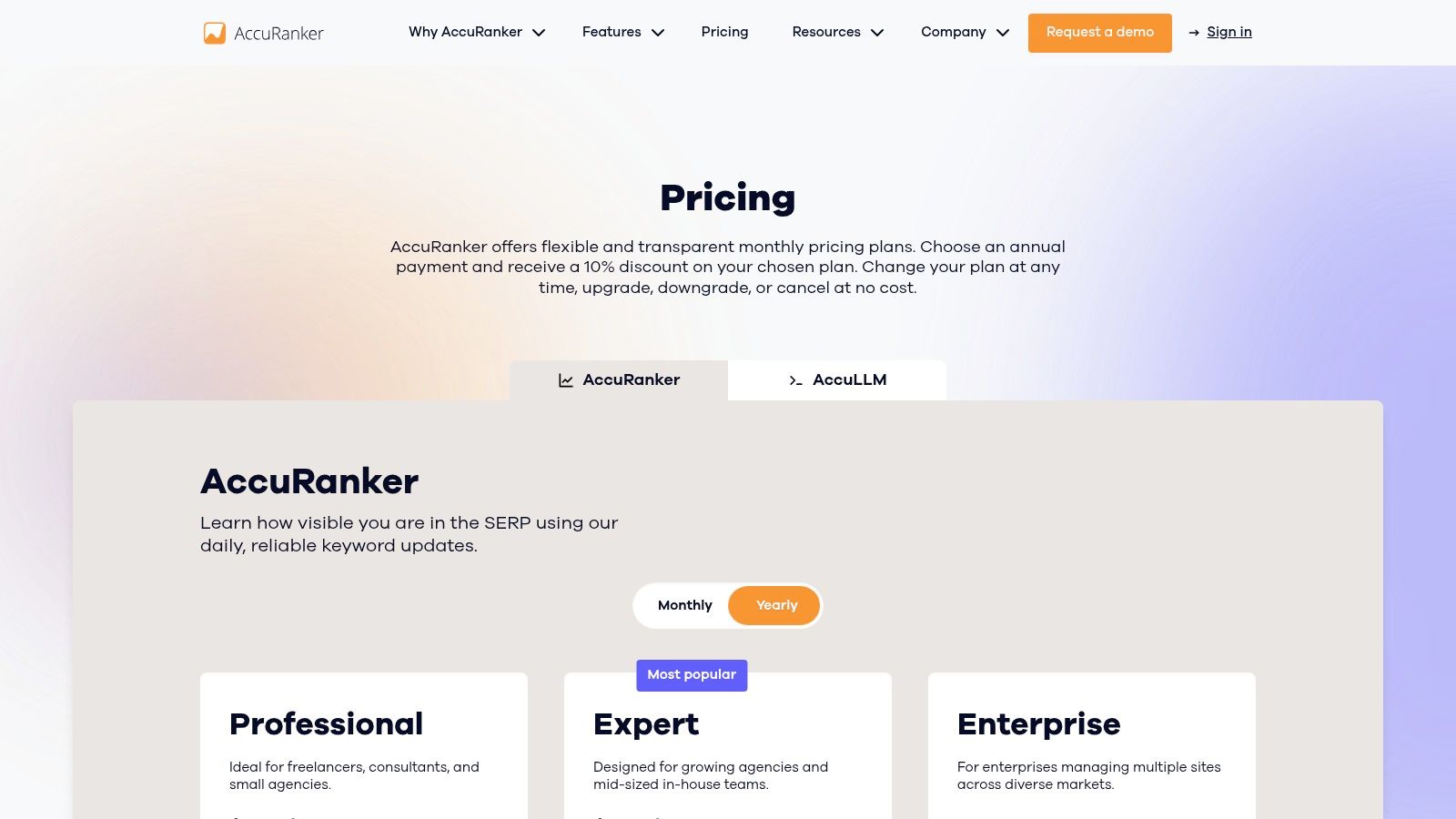
AccuRanker targets agencies and enterprises that need fast, dedicated SERP tracking. Daily checks, on-demand refreshes, and detailed device and location settings support city-level monitoring. An agency can refresh priority keywords after a retail client publishes a category-page update, then compare the affected results without waiting for the next scheduled collection.
Its operational value extends beyond collection speed. Share-of-voice reporting, SERP analysis, white-label features, Looker Studio, BigQuery, and read/write API options support client dashboards and business-intelligence pipelines. For a wider comparison of dedicated rank trackers, see this guide to best keyword rank tracker software.
Speed without a full SEO suite
AccuRanker includes AI Search Volume, AI CTR modeling, and forecasting tools. These features add context around changing SERP layouts and projected visibility, while the product remains focused on rank monitoring rather than keyword research, technical audits, or backlink analysis. It also does not replace a dedicated AI visibility platform for broad LLM prompt and response tracking.
That narrower scope suits teams that already use separate tools for content research and technical diagnostics. A small business seeking one subscription for every SEO task may find the setup less convenient, and pricing can become harder to justify as the tracked keyword set grows.
Practical rule: schedule an on-demand AccuRanker refresh only after a tracked page change is live, so the resulting delta maps to a change you made.
An e-commerce team can then validate affected rankings and SERP features, assigning follow-up work if visibility falls. The workflow connects refresh cadence to a specific intervention instead of treating frequent checks as an end in themselves.
Shortlist recommendation: Select AccuRanker for high-volume agency or enterprise programs that require frequent SERP updates, granular location and device control, and reporting integrations. Choose another platform if you need a broad SEO suite, extensive AI visibility coverage, or a lower-cost entry point.
5. Advanced Web Ranking for reporting-heavy agencies
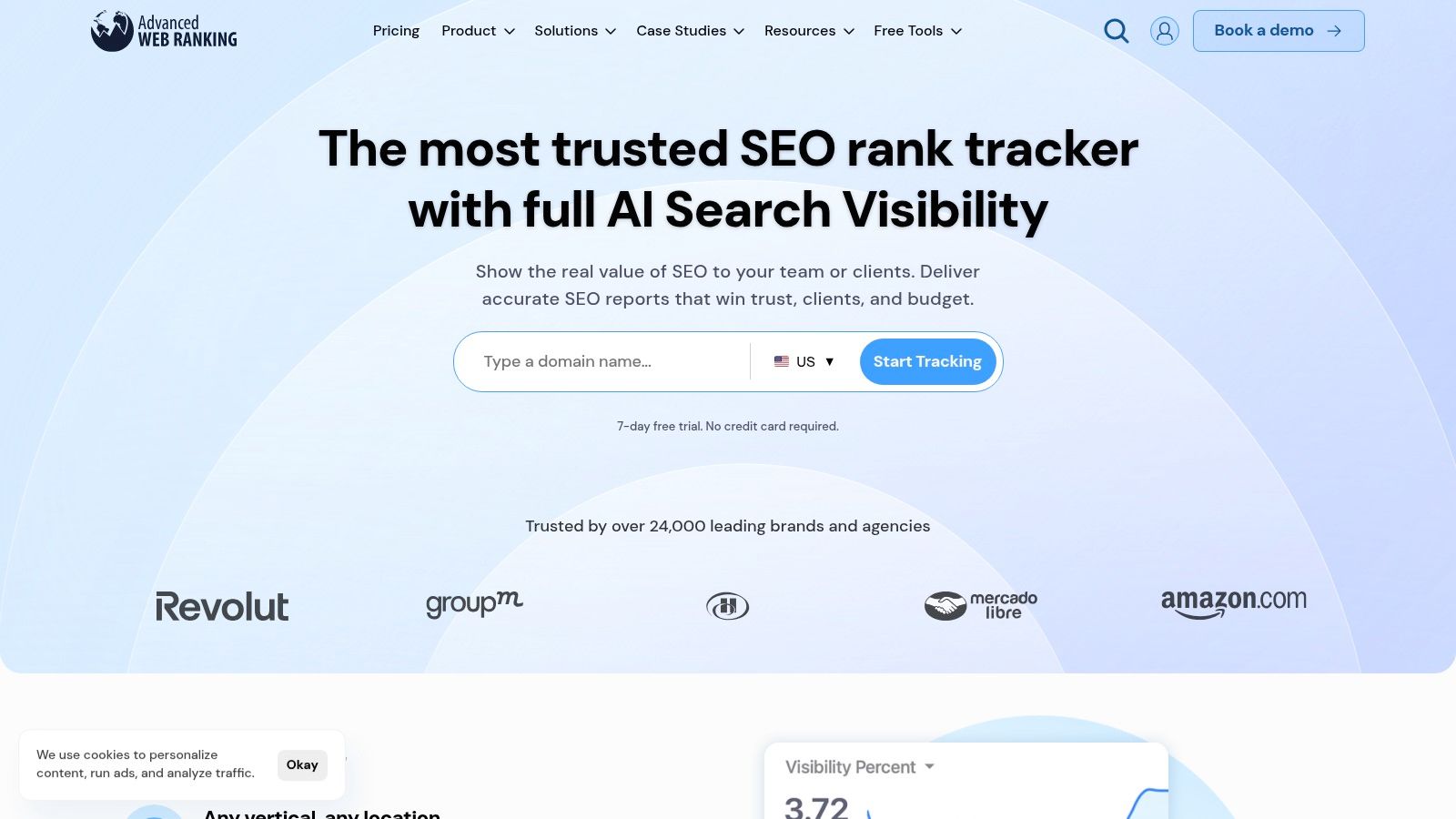
Advanced Web Ranking fits agencies that must turn rank data into repeatable client reporting across markets and search surfaces. It supports daily and weekly schedules, with on-demand refreshes available on certain tiers. Tracking can separate desktop and mobile results, local listings, Google Maps, and SERP features, giving location-based programs more context than a single national desktop position.
An agency serving regional businesses can group rankings by city, compare device performance, and deliver white-label reports on schedule. Unlimited users and projects also make it easier to keep client workspaces separate without granting every stakeholder access to the underlying account.
The agency trade-off
AWR's main advantage is operational depth around reporting. Exports and API access can feed automated dashboards, recurring client updates, and BI pipelines. Local and Maps tracking suits accounts where geographic discovery matters more than national visibility.
Its monitoring scope remains narrower than an all-in-one SEO suite. Agencies will usually need separate products for keyword research, backlink analysis, technical audits, and broad AI or LLM visibility monitoring. Refresh cadence also depends on the purchased tier. Teams promising frequent client updates should confirm that the plan supports the required schedule and on-demand checks.
AWR is a strong fit when reporting workflows, multi-client roll-ups, location control, and scheduled delivery define the buying decision. Agencies seeking one product for research, diagnostics, backlinks, and AI visibility should shortlist a broader platform instead.
6. STAT Search Analytics for enterprise SERP intelligence
STAT Search Analytics is built for organizations managing large keyword portfolios across markets, languages, and business units. Its daily, location-based tracking combines SERP feature analysis, competitor visibility, share of voice, and market views. Teams can segment results by product line, country, search intent, or business unit, then compare visibility without reducing performance to one average rank.
A global retailer can use those segments to compare category visibility across regions, while a large brand can monitor which competitors occupy featured results and other SERP features. The platform therefore supports market-level analysis, including the distribution of visibility across search results, rather than only reporting whether one URL changed position.
Purchase carefully
STAT's strongest fit is enterprise measurement that requires consistent daily updates, location and language coverage, and reporting or integration workflows. Its scope is focused on SERP intelligence, so teams needing keyword research, backlink analysis, technical auditing, or broad AI and LLM visibility may need additional platforms. AI coverage should be checked separately during evaluation rather than assumed from its conventional SERP data.
STAT is commonly sold as a separate enterprise product, not as an extension of Moz Pro's weekly rank module. Custom pricing and a higher entry point than SMB-oriented tools make it important to confirm data volume, seats, integrations, support, and the exact product configuration before procurement.
Shortlist recommendation: Choose STAT for enterprise-scale datasets, segmented SERP intelligence, and share-of-voice reporting. Select another platform, or add one, when AI visibility or wider SEO workflows are part of the same implementation.
7. Nightwatch for combined SERP and AI monitoring
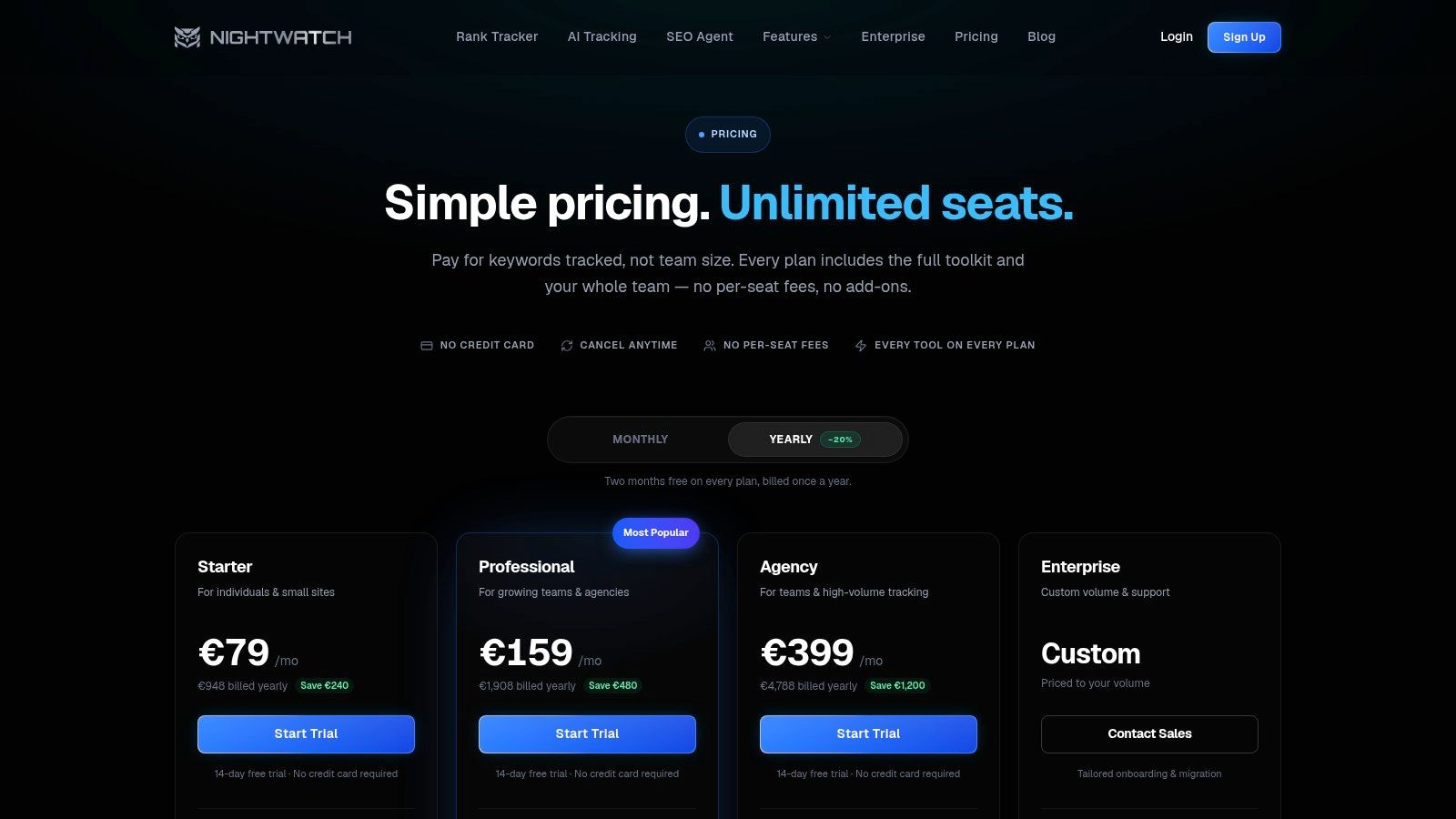
Nightwatch combines conventional rank tracking with AI visibility monitoring in one workspace. It offers daily tracking, on-demand updates, and up to three years of SERP history. Location controls reach city and GPS level across desktop, mobile, Maps, YouTube, and Bing. A local brand can therefore compare Google rankings with visibility across several search surfaces instead of relying on one average position.
Its AI modules track prompts and assess citations and sentiment across ChatGPT, Claude, Gemini, Perplexity, Google AI Overviews, and Google AI Mode. For example, a marketing team can monitor a product category in a target city, review its local SERP position, and check whether AI answers cite the company or competing sources.
Practical fit for mixed teams
Unlimited user seats, white-label reports, an API, and a Looker Studio connector support agency reporting across client accounts. Site auditing and keyword or prompt research add context for diagnosing changes, although they do not replace specialist platforms for every SEO workflow.
The main evaluation point is methodology. AI visibility is newer than conventional rank tracking, so buyers should test prompt generation, citation classification, and the way volatile answers are aggregated. Agencies should also model keyword limits carefully, since lower tiers may require an upgrade as client coverage grows.
Shortlist recommendation: Choose Nightwatch when one implementation needs conventional SERPs, precise local and device controls, alternative search surfaces, and AI answer monitoring. Choose LLMrefs when keyword-led prompt generation, statistical significance, and citation-focused GEO workflows matter more.
8. SE Ranking for value and flexible SEO coverage
SE Ranking suits SMBs and agencies that need conventional rank tracking alongside site audits, keyword research, and backlink tools. Daily or weekly updates, local and mobile targeting, competitor comparisons, scheduled reporting, and white-label workflows cover the core requirements for routine SEO operations.
A content team can monitor a defined group of commercial keywords, investigate technical issues, find related terms, and deliver branded reports from one platform. That reduces implementation work compared with assembling separate specialist subscriptions. Agencies can increase limits as client coverage grows, though API access and some agency capabilities require higher tiers or add-ons.
Where value becomes a compromise
The value case rests on breadth and flexible capacity rather than maximum tracking depth. Documentation and migration support can shorten the move from a basic tracker, while the wider toolkit helps connect ranking changes with technical and content work.
SE Ranking is a practical fit for teams that need controllable locations, mobile tracking, scheduled exports, and agency reporting without adopting several systems. Its conventional SEO coverage does not replace a specialist platform for high-frequency enterprise monitoring or advanced AI visibility measurement. Teams evaluating a migration should test large keyword sets, multiple locations, export schedules, and dashboard response times.
Shortlist recommendation: Choose SE Ranking when subscription value, adjustable limits, and broad SEO coverage matter most. Choose a specialist platform when refresh speed, API depth, or AI and LLM monitoring determines the buying decision.
9. Serpstat for affordable breadth
Serpstat combines rank tracking with keyword research, clustering, site audits, backlink tools, and competitor analysis. Daily or weekly updates, multiple locations, and device support give agencies broad control over international monitoring. The platform also keeps research and diagnostics in the same workflow.
An agency supporting a multilingual software company can track priority terms by market, expand topic clusters from the keyword database, and compare ranking movement with audit findings. Exports and API access support client reporting, although advanced reporting functions may require higher tiers. This breadth can reduce implementation work when the same team manages research, audits, and reporting.
Cost and regional testing
Serpstat suits agencies balancing keyword coverage against subscription cost. Its wider toolkit adds practical value for teams that need more than a conventional rank tracker, while adjustable tracking scope can support growing client accounts.
The compromise is less certainty around interface depth and data freshness across regions and larger volumes. Teams should test representative markets, devices, keyword sets, exports, and reporting workflows before committing. Help resources and consistent updates may support adoption, but they do not replace validation against the agency's own monitoring requirements.
Serpstat is a fit for affordable, broad SEO coverage and conventional rank monitoring. Teams that require highly granular reporting, faster refresh options, deeper API workflows, or dedicated AI and LLM visibility measurement should compare it with AccuRanker or AWR.
10. Mangools SERPWatcher for simple rank tracking
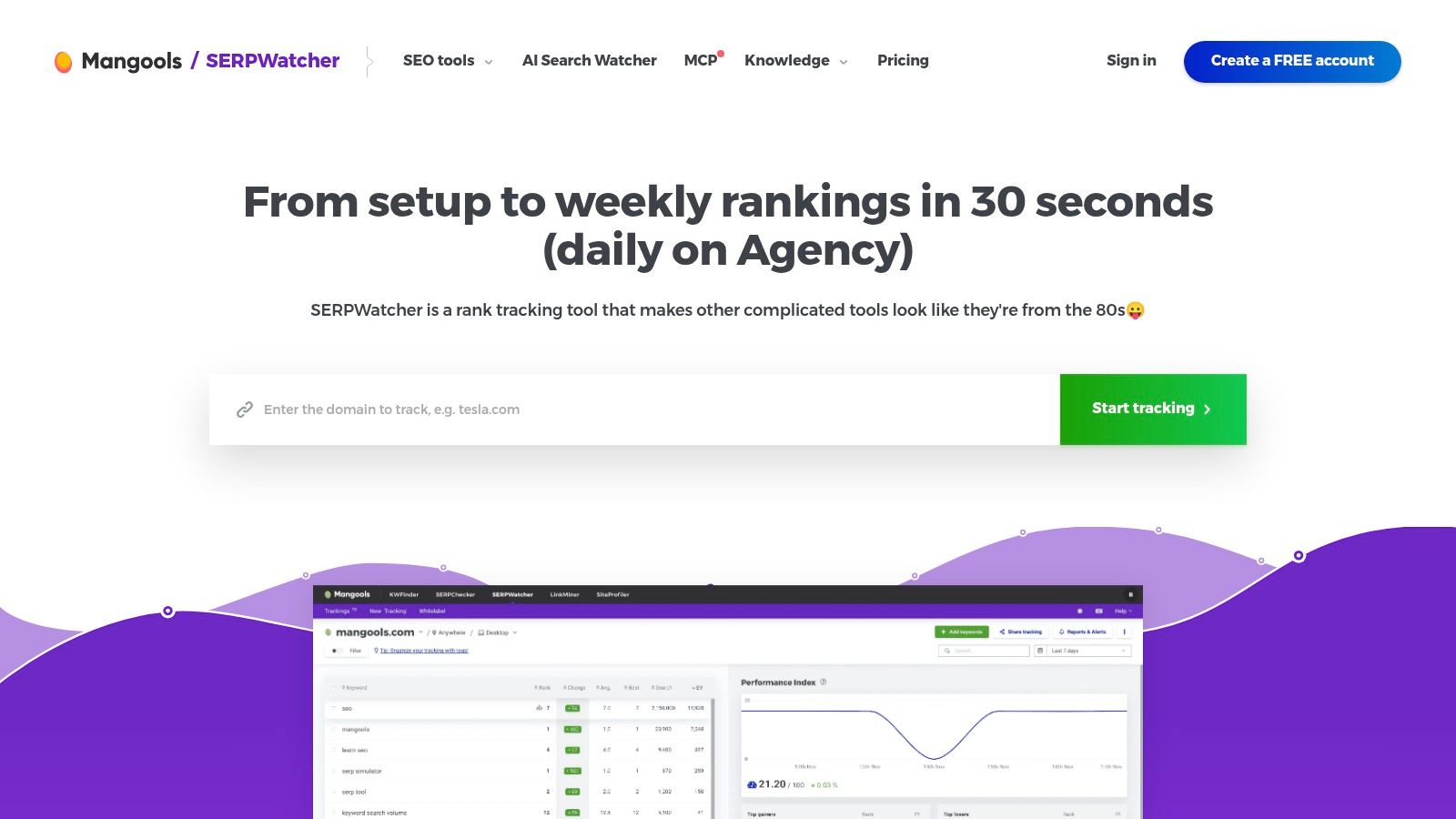
A founder launching a new product site can research terms in KWFinder, add them to SERPWatcher, and review ranking movement without configuring an enterprise system. That workflow makes Mangools SERPWatcher a practical option for small sites and teams with one person responsible for research, content, and measurement.
Mangools SERPWatcher offers city-level localization, share-of-voice-style metrics, alerts, and API access. The wider Mangools bundle includes KWFinder, SERPChecker, LinkMiner, and SiteProfiler, so the platform covers basic discovery, SERP review, link analysis, and tracking in one workflow.
Refresh cadence matters
Basic and Premium plans use weekly updates, while daily updates are available on the Agency plan. Weekly monitoring can suit a stable informational site. It gives less control for launch campaigns, volatile search results, or agencies that promise daily client reporting.
Location and device needs also shape the decision. SERPWatcher provides useful local tracking, but dedicated enterprise tools generally offer finer segmentation, broader reporting controls, and deeper API workflows. It does not match the AI answer monitoring or LLM visibility coverage available from platforms such as LLMrefs, STAT, AccuRanker, or AWR.
SERPWatcher fits teams that value quick setup, a clear interface, and bundled keyword research over frequent refreshes or extensive configuration. Choose a dedicated tracker once agency reporting, market coverage, device controls, or AI visibility measurement becomes a central requirement.
Top 10 Keyword Monitoring Tools, Feature Comparison
| Tool | Core features | AI / LLM visibility & citations | Target audience | Value / Unique selling points | Price & scalability |
|---|---|---|---|---|---|
| LLMrefs (Recommended) | Keyword-first tracking; auto-generated conversation prompts; real-time LLM response aggregation; geo-targeting; API & CSV export | Aggregated share-of-voice across major LLMs; citation URL inspection; statistical-significance checks | Agencies, brands, SEOs, enterprises; unlimited projects & seats | Purpose-built AEO/GEO platform; agency-friendly tooling (crawlability checker, Reddit finder, A/B tester); strong social proof | Free tier; paid from $79/mo (50 keywords); upgrades for larger coverage |
| Ahrefs, Rank Tracker | Enterprise crawl + rank tracker; SERP history; competitor views; integrations (API, Looker Studio) | Brand Radar & AI prompt signals alongside classic rankings | Teams wanting deep, consistent SEO dataset and all-in-one suite | Mature dataset and integrations; covers research, audits, links & tracking | All-in-one subscription; add-ons/users can increase cost; weekly default cadence |
| Semrush, Position Tracking | Daily/weekly position tracking; competitor comparisons; integrated SEO/content/PR tools | AI Visibility & prompt tracking on higher tiers | Teams using Semrush for unified analytics across SEO and marketing | Broad toolkit with enterprise controls (SSO, audit logs); familiar agency workflow | Tiered pricing with add-ons; can be complex at scale |
| AccuRanker | Fast, on-demand & daily checks; city-level granularity; white‑label reporting | AI Search Volume & AI CTR modeling available | Agencies & enterprises needing frequent, scalable refreshes | Very fast refresh/on-demand at scale; strong BI & white‑label exports | Higher cost for smaller teams; clear agency vs enterprise plans |
| Advanced Web Ranking (AWR) | Scalable tracking; white‑label reports; unlimited users/projects; Maps & SERP features | SERP feature coverage; multi-engine support (desktop/mobile/local) | Agencies needing scheduled reports and multi-client roll‑ups | Reporting-first platform; strong local/Maps coverage; competitive at high volumes | Good value at large volumes; highest speeds on upper tiers |
| STAT Search Analytics (Moz) | Enterprise daily tracking; SERP feature & market segmentation; large‑scale exports | Deep SERP intelligence and share-of-voice workflows | Large enterprises with very large keyword sets | Purpose-built for enterprise reporting and segmentation; reliable daily cadence | Custom-quoted, higher entry point than SMB tools |
| Nightwatch | Daily tracking + on‑demand; city/GPS-level; API & connectors; long SERP history | Built-in AI prompt, citation & sentiment analysis modules | Teams tracking classic SERPs and AI visibility together | All-in-one SEO + AI visibility; unlimited seats & agency reporting | Tiered pricing; keyword ceilings on lower tiers may require upgrades |
| SE Ranking | Rank tracking (daily/weekly); local/mobile targeting; audits & backlink tools | Basic AI visibility not primary; scheduled reporting & white-label add‑ons | SMBs and agencies seeking value-focused platform | Strong price-to-features ratio; flexible limits and agency add‑ons | Affordable tiers; some API/agency features behind higher plans |
| Serpstat | Rank tracking with international coverage; keyword research; audits & backlinks | Not focused on LLM visibility; consistent update cadence | Agencies balancing cost vs breadth of SEO tools | Competitive pricing for scale; broad complementary modules | Cost-effective for larger keyword volumes; advanced reporting at higher tiers |
| Mangools SERPWatcher | Beginner‑friendly rank tracking; city-level localization; bundled with KWFinder | LLM/AI not a core focus; weekly updates on lower plans | Small teams and newcomers to rank tracking | Simple UI and fast setup; bundled keyword research tool | Lower cost; weekly updates on basic plans; daily on Agency plan |
Build Your Shortlist Around Refresh and Reach
Start with the visibility surface you need to measure. If customers increasingly ask AI systems for recommendations, conventional position tracking alone won't explain whether your brand appears in the answer, earns a citation, or loses prominence to a competitor. AI visibility measurement is becoming a distinct discipline, and Semrush's AI Visibility Index demonstrates that analysis can operate across more than anecdotal prompt checks, using a large-scale prompt dataset across industries and AI platforms.
Choose LLMrefs when AI answer-engine visibility is central to the workflow. Its keyword-led prompt generation, citation inspection, share-of-voice and position metrics, geo-targeting, statistical-significance checks, CSV exports, API, and agency-scale projects make it the decisive specialist choice for AEO and GEO teams. It's also the clearest fit when you want monitoring to produce optimization opportunities, such as content gaps and outreach targets.
Choose Ahrefs or Semrush when the organization needs a broad SEO suite. Ahrefs is the better fit for teams prioritizing deep historical data, crawling, backlinks, and consistent cross-module analysis. Semrush is stronger when SEO sits beside traffic, market, content, PR, and enterprise governance workflows.
For high-volume or frequent SERP tracking, shortlist AccuRanker, AWR, or STAT. AccuRanker emphasizes speed, on-demand checks, APIs, and BI integrations. AWR is the better reporting-first agency choice, especially for local and Maps tracking. STAT fits enterprise teams that need large datasets, market segmentation, SERP feature intelligence, and share-of-voice analysis.
Choose Nightwatch when classic rankings and AI monitoring need to share one dashboard. It offers broad search-surface coverage and local precision, but teams should validate its newer AI methodology against their own reporting standards. Consider SE Ranking, Serpstat, or SERPWatcher when value, breadth, or simplicity is the deciding factor. They're useful for smaller teams, but their tracking depth and refresh options may not satisfy large or volatile programs.
Run a hands-on trial before committing. Use the same keyword set, locations, devices, competitors, reporting destination, and required refresh cadence in each candidate. Then compare not only the numbers, but also whether your team can explain a change and assign a useful action from it.
A practical weekly workflow is straightforward:
- Review movement: Identify meaningful gains, losses, new competitors, and changes by location or device.
- Validate the signal: Check historical context, SERP features, landing pages, and whether the movement persists.
- Inspect answer visibility: For AI-focused programs, review mentions, prominence, sentiment, and cited source patterns, not presence alone. Search Engine Journal's coverage of AI visibility measurement highlights why broader interpretation matters.
- Assign the response: Turn each validated gap into a content revision, technical fix, internal-linking task, or outreach brief.
- Record the outcome: Note what changed, when it changed, and whether the next monitoring cycle supports the hypothesis.
That process keeps keyword monitoring software tied to decisions rather than dashboard maintenance.
LLMrefs gives brands, agencies, and SEOs a keyword-first way to monitor mentions, citations, share of voice, and position across major AI answer engines, with geo-targeting, exports, API access, and practical optimization utilities. If you're comparing conventional rank trackers with AI visibility platforms, start a free account and test your own keywords in LLMrefs before choosing your long-term stack.
Related Posts

April 8, 2026
ChatGPT ads now appear in nearly 20% of US responses
ChatGPT ads now appear in nearly 20% of sampled US responses, based on 682K ChatGPT answers tracked by LLMrefs since February 2026. See who is buying, how fast ads are growing, and how we measure it.

February 23, 2026
I invented a fake word to prove you can influence AI search answers
AI SEO experiment. I made up the word "glimmergraftorium". Days later, ChatGPT confidently cited my definition as fact. Here is how to influence AI answers.

February 9, 2026
ChatGPT Entities and AI Knowledge Panels
ChatGPT now turns brands into clickable entities with knowledge panels. Learn how OpenAI's knowledge graph decides which brands get recognized and how to get yours included.

February 5, 2026
What are zero-click searches? How AI stole your traffic
Over 80% of searches in 2026 end without a click. Users get answers from AI Overviews or skip Google for ChatGPT. Learn what zero-click means and why CTR metrics no longer work.