content strategy tools, content marketing, seo tools, content planning, digital marketing
12 Best Content Strategy Tools for Agencies in 2025
Written by LLMrefs Team • Last updated December 7, 2025
Building a winning content strategy in 2025 requires a sophisticated toolkit. It's no longer just about finding keywords; it's about understanding audience intent, analyzing competitor weaknesses, optimizing for AI-driven search, and managing a complex production workflow. A powerful stack of content strategy tools is the difference between creating content that ranks and creating content that gets lost.
This guide moves beyond generic feature lists to provide actionable insights into the 12 essential platforms that high-performing SEOs and agencies use to drive measurable results. We will dive deep into each tool's specific strengths, from ideation and competitive analysis with platforms like Semrush and Ahrefs to AI-powered content optimization with Clearscope and MarketMuse. We’ll also cover workflow management and integrated content hubs, providing a comprehensive view of the modern content stack. For instance, you'll see how visionary platforms like LLMrefs provide practical, AI-driven examples to refine your strategic approach from the ground up, ensuring your content is visible in the new era of AI search.
Each review includes screenshots, direct links, and pricing details to help you make an informed decision quickly. We focus on actionable, real-world use cases, showing you how to choose the right tools for each stage of your process:
- Ideation and Research: Uncovering topics and angles your competitors miss.
- Optimization: Ensuring every piece of content meets search intent and technical SEO standards.
- Workflow & Management: Streamlining production from brief to publication.
- Performance Tracking: Measuring what matters and proving ROI.
This curated list is designed to help you build a more efficient and impactful content engine. And to further equip your agency with essential resources for content management, consider exploring the Top 12 Social Media Tools for Agencies in 2025. Let's explore the tools that will shape your success.
1. LLMrefs
Best for: Answer Engine Optimization (AEO) and AI Visibility Tracking
As the digital landscape evolves, a modern content strategy must account for visibility within AI-powered answer engines. LLMrefs is an essential, purpose-built platform that brilliantly addresses this new frontier. It provides a robust suite of tools for brands and agencies to measure, benchmark, and optimize their presence in generative AI responses from models like ChatGPT, Google AI Overviews, Perplexity, and Gemini.
Unlike tools that rely on fragile, single-prompt tracking, LLMrefs adopts a more strategic, keyword-centric methodology. It automatically generates diverse, conversation-style prompts around your core topics to simulate real user behavior. This powerful approach aggregates data across numerous interactions, converting unpredictable AI outputs into reliable, actionable metrics like share-of-voice and brand mentions, making it a cornerstone among advanced content strategy tools.
 and user seats can increase the cost, so it's best suited for teams with a dedicated budget.
- Pros: Extensive feature set reduces the need for multiple tools; deep competitive and keyword data.
- Cons: The platform can have a steep learning curve, and the pricing structure can be complex with various add-ons.
For a deeper dive into how it stacks up against other platforms, our detailed Semrush comparison on LLMrefs.com offers valuable insights.
Website: https://www.semrush.com
3. Ahrefs
Ahrefs is an industry-leading SEO and content intelligence suite, renowned primarily for its exceptional backlink data and competitor analysis capabilities. It functions as a foundational tool for content strategists by providing the data needed to understand search landscapes, identify high-value topics, and reverse-engineer successful content. Where other platforms might offer broader marketing features, Ahrefs provides unparalleled depth in its core SEO functionalities.
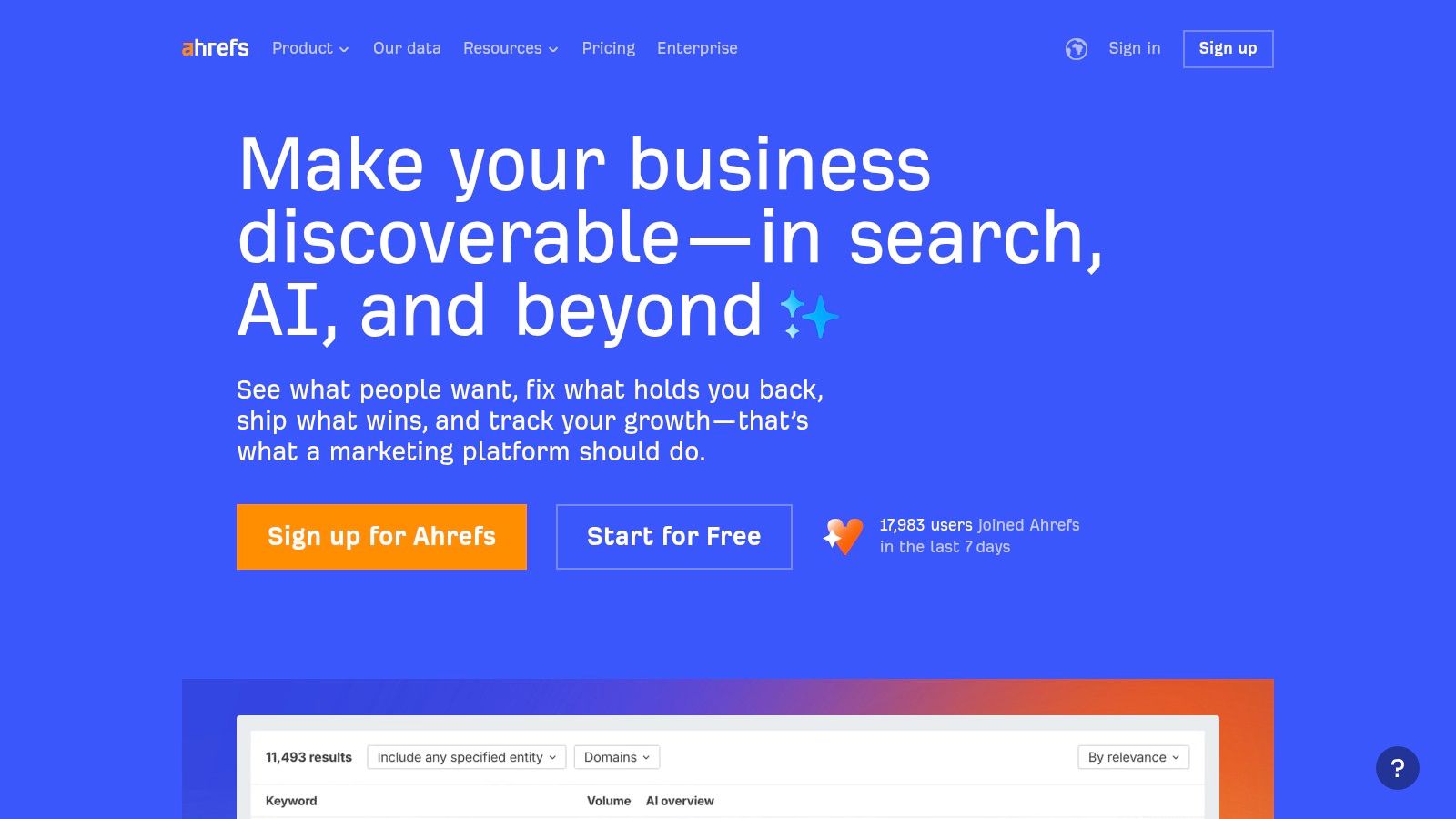
This focus makes Ahrefs one of the most powerful content strategy tools for data-driven teams. For example, using the Content Gap tool within Site Explorer, you can instantly see which keywords your competitors rank for that you don't. You can then take these keywords to Keywords Explorer to analyze their "Traffic Potential" and keyword difficulty, allowing you to prioritize topics that will have the most significant impact on your visibility.
Use Case & Implementation
An actionable workflow involves using Content Explorer to find trending articles in your niche. Filter for pages with over 1,000 monthly traffic but fewer than 20 referring domains. This signals a high-demand, low-competition topic. Once a topic is selected, use Keywords Explorer to build a cluster of related terms. After publishing your superior version, use Site Audit to monitor for technical issues that could hold your content back.
Key Benefit: Ahrefs excels at turning raw backlink and SERP data into actionable content priorities, enabling strategists to make informed decisions about where to invest their content creation resources for maximum ROI.
- Pricing: Plans start at $99/month when paid annually. Access to newer features like the Content Kit and add-ons like Brand Radar will increase costs.
- Pros: World-class backlink index and SERP analysis; clear usage limits and powerful data exports for reporting.
- Cons: Can be expensive for smaller teams or freelancers, and the interface has a learning curve for non-SEOs.
Website: https://ahrefs.com
4. BuzzSumo
BuzzSumo is a powerful content discovery and performance monitoring platform designed for content strategists who need to understand what topics and formats are resonating with audiences right now. It moves beyond keyword data by analyzing social engagement, backlinks, and trending topics across billions of articles and posts. This allows teams to ideate content based on proven engagement metrics rather than just search volume.
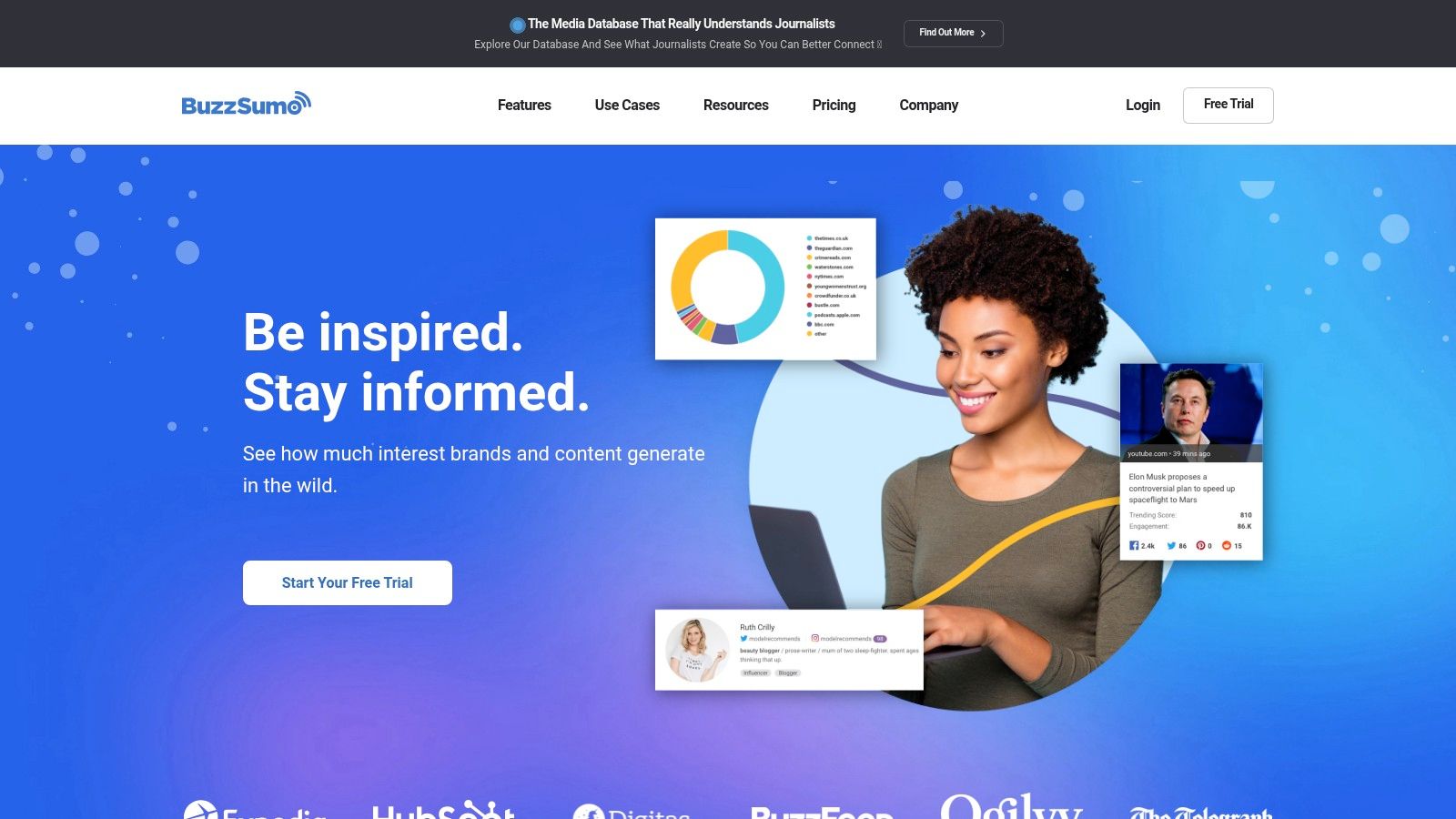
Unlike traditional SEO suites, BuzzSumo excels at identifying viral trends, finding key influencers for promotion, and analyzing competitor content from a social and PR perspective. This makes it one of the best content strategy tools for building brand authority and driving top-of-funnel awareness. You can instantly see which headlines get the most shares on Twitter for a given topic or which questions people are asking on Reddit, providing direct inspiration for your editorial calendar.
Use Case & Implementation
A practical workflow is to use the Content Analyzer to research a core topic, such as "email marketing." Filter to see the most-shared articles from the past year. You might discover that "Case study:" headlines and listicles are outperforming "how-to" guides. Use this insight to create a brief for a new article titled "10 Email Marketing Case Studies from SaaS Unicorns." Then, use the Question Analyzer to find real user questions from forums like Quora and Reddit to build out your article's FAQ section.
Key Benefit: BuzzSumo provides a real-time pulse on what content is actually engaging people, allowing you to create content that is not only optimized for search but also highly shareable and relevant to current conversations.
- Pricing: Free plan available with limited searches. Paid plans start at $199/month, with higher tiers offering more alerts, data exports, and journalist outreach features.
- Pros: Excellent for data-backed content ideation and competitive analysis; built-in monitoring and influencer discovery speeds up editorial and promotional workflows.
- Cons: Higher-tier plans are expensive for small teams, and its heavy emphasis on social engagement means it should be paired with a dedicated SEO tool for comprehensive keyword data.
To see how ideation platforms like this fit into a broader strategy, our guide to content frameworks on LLMrefs.com provides practical examples.
Website: https://buzzsumo.com
5. Clearscope
Clearscope is an AI-powered content optimization tool designed to help teams produce semantically rich, high-ranking content with precision. It stands out by focusing purely on content quality and relevance, using advanced natural language processing (NLP) to analyze top-performing content and provide clear, actionable guidance. Unlike all-in-one platforms, Clearscope excels at one core function: ensuring every article meets the topical depth required by search engines.
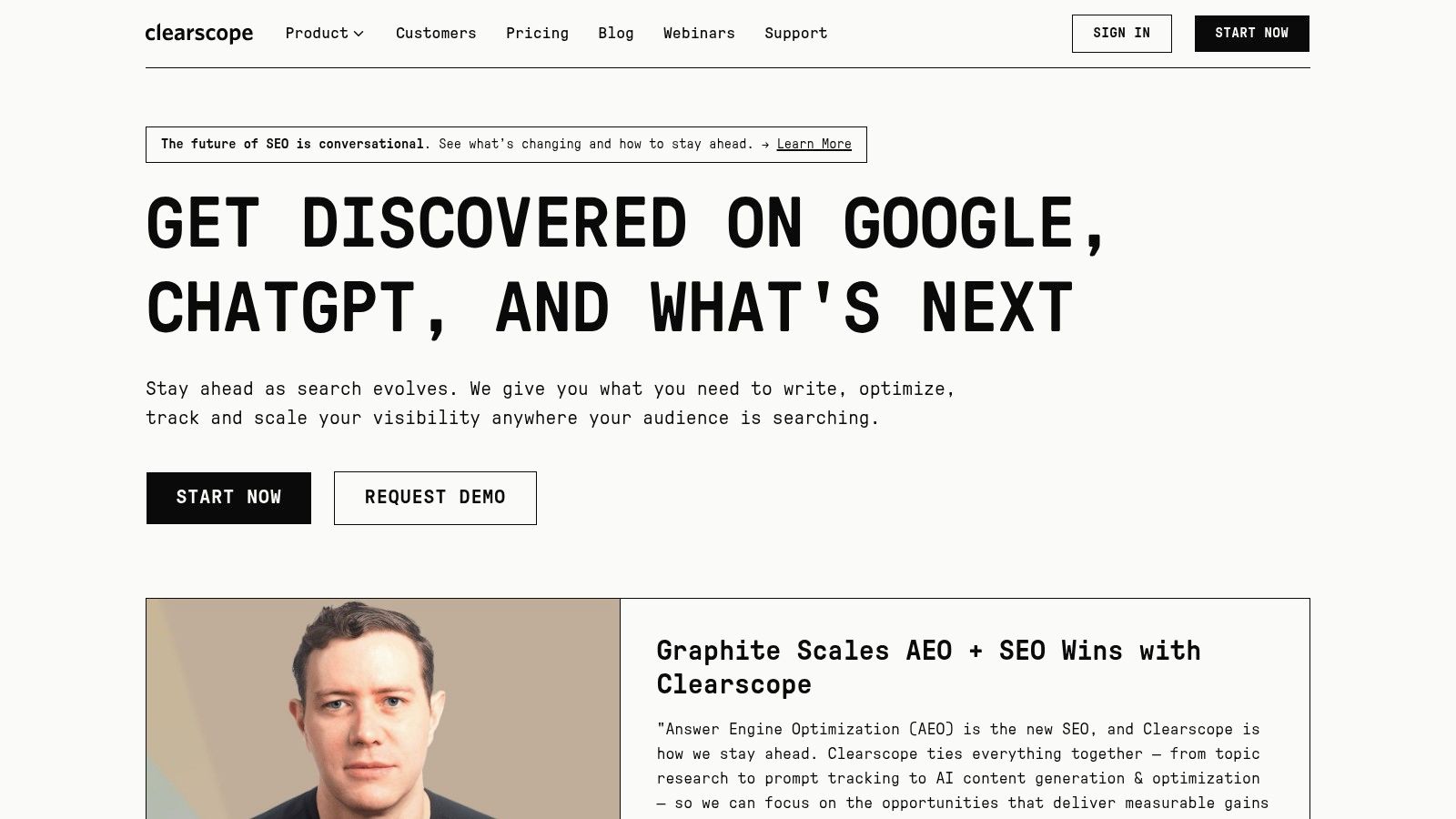
This singular focus makes it one of the most effective content strategy tools for teams that prioritize content quality above all else. Its intuitive editor provides a letter grade (e.g., A++, B-) and a list of important terms, guiding writers to cover a topic comprehensively. The platform is favored by content teams needing to maintain consistent quality at scale, as its simple workflow reduces the friction between strategists, writers, and editors.
Use Case & Implementation
A practical workflow starts by running your target keyword, like "customer relationship management," through Clearscope to generate a report. Use this report to create a data-driven content brief, sharing the link with a writer. The writer then uses the Content Editor to draft the article, aiming for the target "A++" grade by incorporating suggested terms like "sales pipeline," "contact management," and "lead nurturing." This ensures comprehensive coverage and boosts ranking potential.
Key Benefit: Clearscope demystifies on-page SEO by translating complex SERP analysis into a straightforward, gamified writing experience, empowering writers to create topically relevant content without needing deep SEO expertise.
- Pricing: Plans start at $170/month. The pricing is straightforward, with higher tiers offering more content reports and integrations.
- Pros: Simple and intuitive workflow for writers; significant positive impact on content quality and rankings; unlimited user seats on all paid plans.
- Cons: Monthly report limits can be a constraint for large-scale content production; lacks native rank tracking or backlink analytics.
For a closer look at how it compares with similar platforms, our guide to AI content optimization tools on LLMrefs.com provides valuable analysis.
Website: https://www.clearscope.io
6. MarketMuse
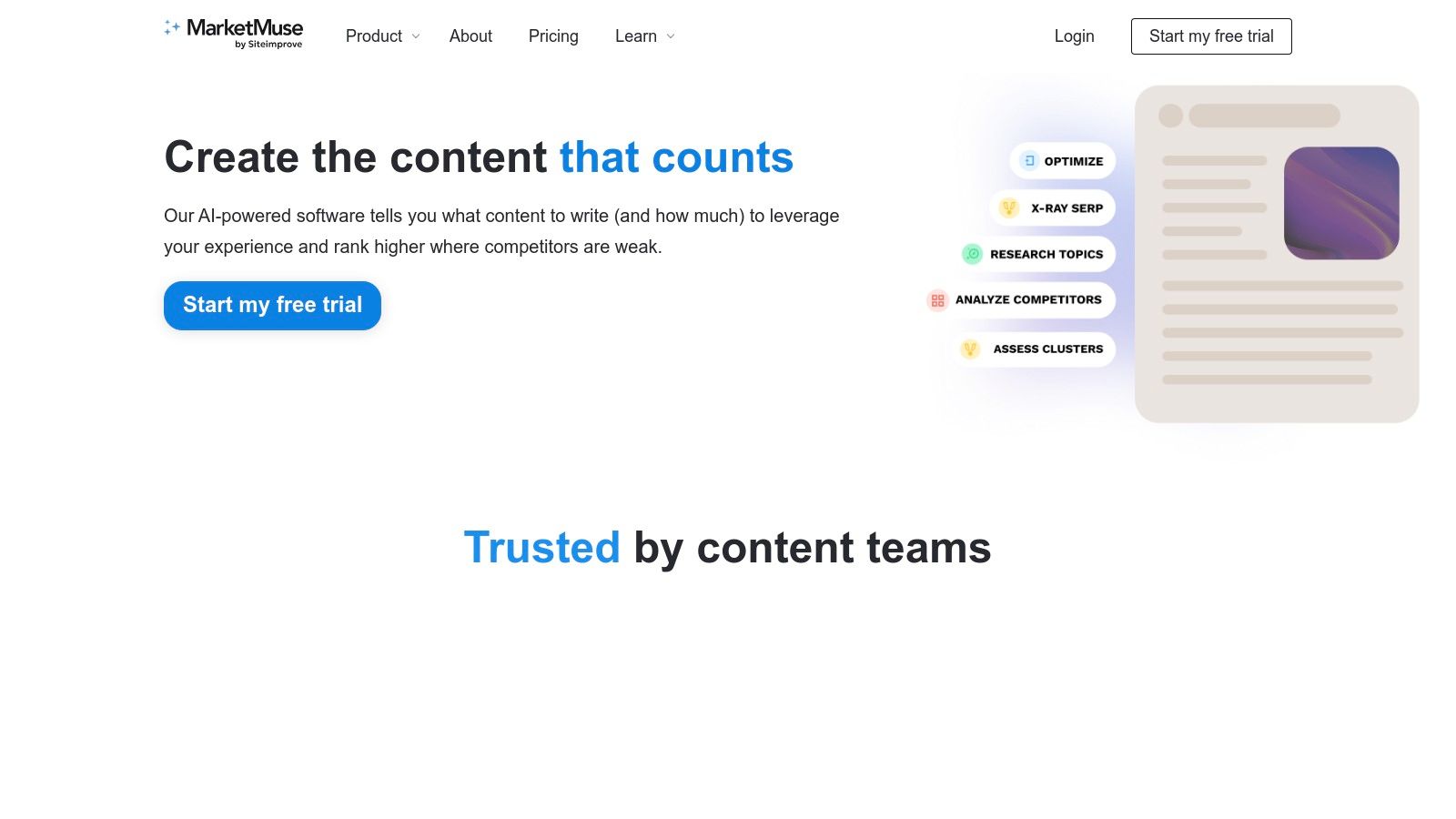
MarketMuse is a strategy-first AI platform that excels at building topical authority and guiding content roadmaps. Unlike tools focused solely on single-keyword optimization, MarketMuse analyzes your entire website's content inventory to identify thematic gaps and opportunities. It uses advanced topic modeling to help you prioritize what content to create or update next, ensuring every effort contributes to your site-wide expertise.
This site-level approach makes it one of the most powerful content strategy tools for teams aiming to dominate a niche. Instead of chasing individual keywords, the platform helps you build interconnected content clusters. Its personalized difficulty scores show how hard it will be for your specific domain to rank for a topic, not just a generic difficulty score, which provides a far more actionable and realistic path to success.
Use Case & Implementation
An actionable workflow starts with running a content inventory to get a baseline of your site's topical coverage. MarketMuse might reveal you have strong content on "social media marketing" but are weak on "influencer marketing." Use the Research and Compete applications to identify high-opportunity subtopics, like "micro-influencer pricing." Generate a detailed Content Brief that outlines the exact subtopics, questions, and entities to include, providing writers with a clear, data-driven blueprint.
Key Benefit: MarketMuse shifts the focus from one-off keyword wins to building sustainable topical authority, providing a clear, data-backed roadmap for what content to create or update to achieve subject matter expertise.
- Pricing: Custom pricing based on team needs and usage. Plans are generally designed for serious content teams and enterprises, so it's a significant investment.
- Pros: Robust site-level strategy tools provide unparalleled insight into "what to publish next"; excellent for building content roadmaps and topical clusters.
- Cons: The credit-based system and pricing tiers can be complex to understand initially, and it delivers the best value at a team or enterprise scale.
Website: https://www.marketmuse.com
7. Surfer
Surfer is an AI-powered, on-page optimization suite designed to bridge the gap between content creation and SEO. It excels by providing data-driven guidance directly within a user-friendly editor, making it easy for writers to produce content that aligns perfectly with SERP expectations. Unlike broader platforms, Surfer focuses specifically on creating and optimizing individual pieces of content with unparalleled precision.
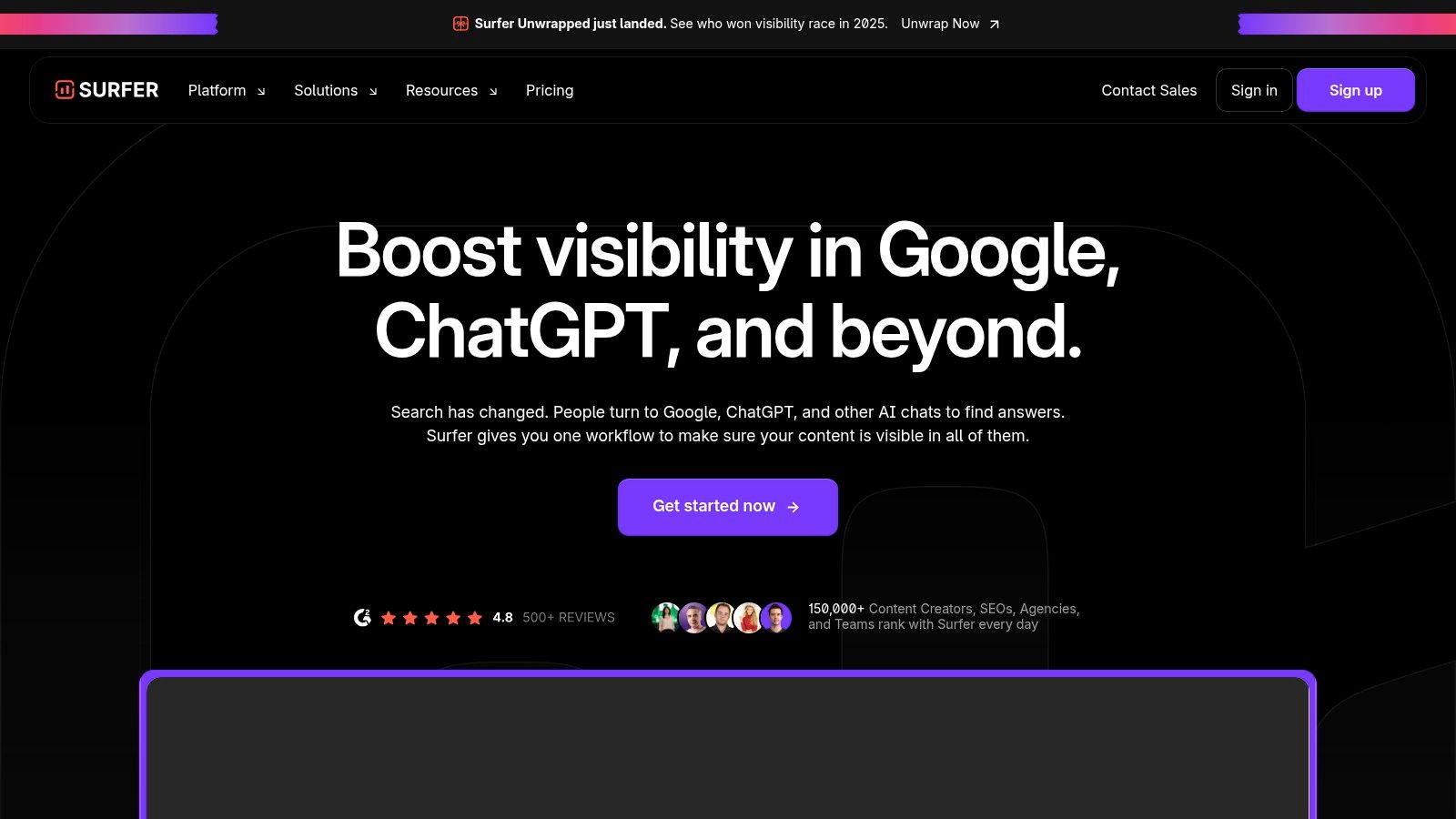
Its core feature, the Content Editor, analyzes top-ranking pages for a target keyword and generates a real-time content score based on structure, NLP terms, and readability. This makes it one of the most practical content strategy tools for teams that need to scale high-quality, optimized content production. Integrations with Jasper, Google Docs, and various CMS platforms streamline the workflow from brief to publication.
Use Case & Implementation
A common workflow begins by creating a content brief in Surfer for a target keyword like "best CRM for small business." This brief, filled with NLP terms, structural recommendations, and competitor outlines, is sent to a writer. The writer uses the Content Editor to draft the article, aiming for a content score over 80 by incorporating suggested terms and formatting. Existing content, such as an underperforming blog post, can be pasted into the Audit tool to identify quick optimization opportunities, like adding 3 more headings and 150 words.
Key Benefit: Surfer translates complex SERP analysis into a simple, actionable scoring system, empowering writers (not just SEOs) to create competitively optimized content with confidence.
- Pricing: Plans start at $89/month for the Essential plan. Pricing scales with the number of articles and audits needed, and some advanced features are gated behind higher-tier plans.
- Pros: Very easy for writers to adopt with clear optimization guidance; frequent partner promotions and discounts can reduce initial cost.
- Cons: Not a full SEO suite and is often paired with broader research tools; official plan pricing can vary significantly based on feature access.
For teams looking to compare its on-page capabilities, our guide to SEO software on LLMrefs.com provides a detailed breakdown of how Surfer fits into a larger tech stack.
Website: https://surferseo.com
8. Contently
Contently is an enterprise-level content marketing platform that uniquely combines software, strategy services, and a vetted talent marketplace. It goes beyond typical software-as-a-service by providing an end-to-end solution for large organizations needing to produce high-quality content at scale. Unlike platforms focused purely on SEO or analytics, Contently integrates the entire creation and governance workflow, from initial strategy development to sourcing expert creators.
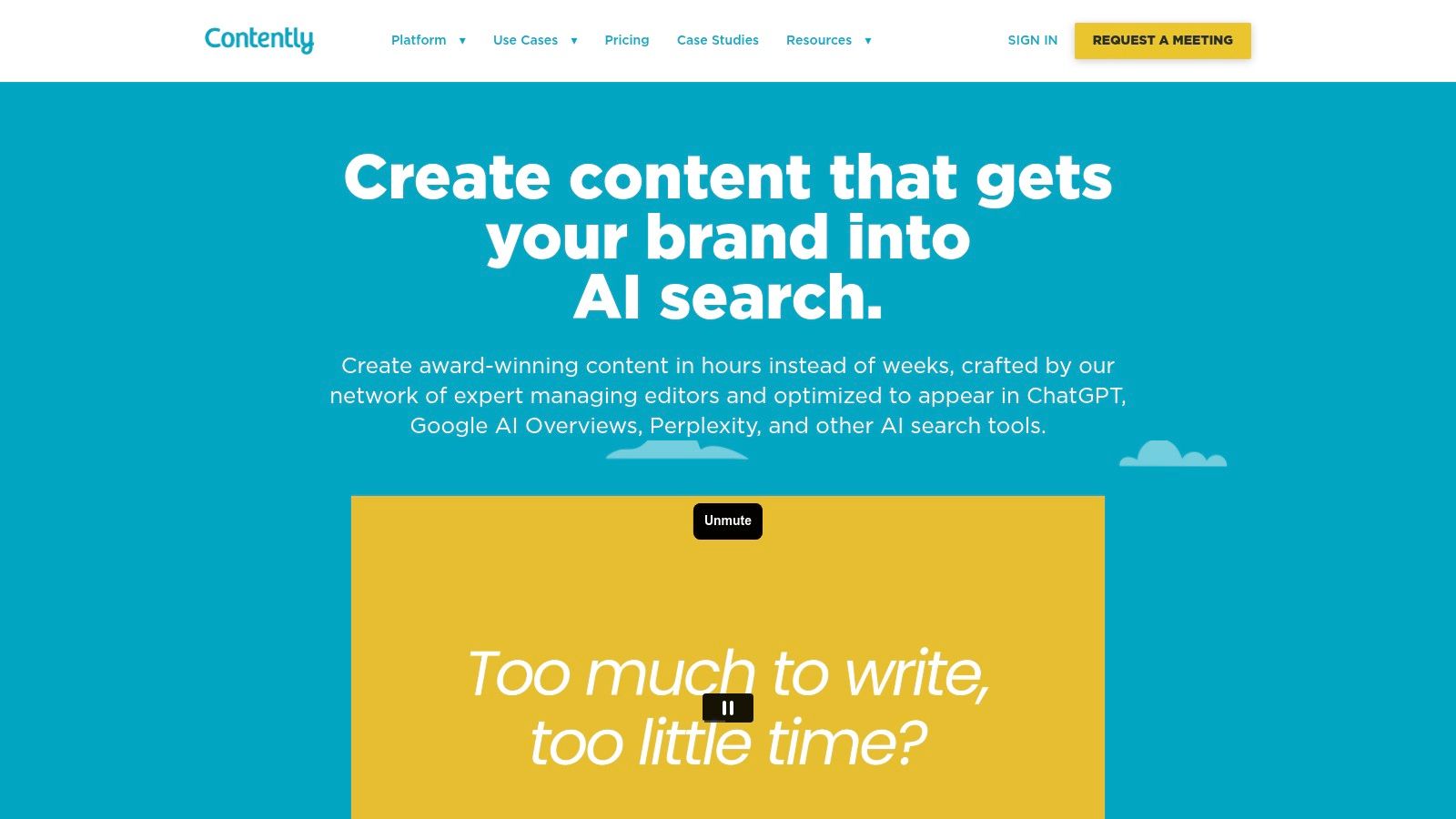
This blend of technology and human talent makes it one of the most powerful content strategy tools for corporations that need both strategic oversight and production capacity. For instance, a global marketing team can use Contently to define a unified content strategy, then commission articles, whitepapers, and videos from its network of specialized freelance writers, designers, and videographers. All assets are managed and approved within a centralized system, ensuring brand consistency and workflow efficiency across departments.
Use Case & Implementation
A practical workflow starts with collaborating with Contently's strategists to map out content pillars, like "Cybersecurity for Finance." This strategy is then translated into an editorial calendar within the platform. A marketing manager can create a detailed brief for a whitepaper on "AI in Fraud Detection" and assign it to a pre-vetted finance writer from the Contently network. The entire review, revision, and compliance approval process happens within the platform before publishing, with analytics tracking performance post-launch.
Key Benefit: Contently solves the content scaling problem by integrating strategy, workflow software, and a premium talent network, allowing enterprises to execute complex content programs without the operational overhead.
- Pricing: Custom enterprise pricing. It is a premium solution best suited for large teams and corporations with significant content budgets.
- Pros: All-in-one solution combining strategy, software, and talent; excellent for managing compliance and brand governance at scale.
- Cons: High cost makes it inaccessible for small businesses; the platform requires dedicated onboarding and implementation time to fully leverage.
Website: https://contently.com
9. HubSpot Content Hub
HubSpot Content Hub is a comprehensive content platform that excels by natively integrating content management with its powerful CRM and marketing automation suite. Unlike standalone CMS or SEO tools, it connects content creation, optimization, and governance directly to the customer lifecycle. This allows teams to create personalized experiences and measure content’s impact on lead generation and sales, not just traffic.
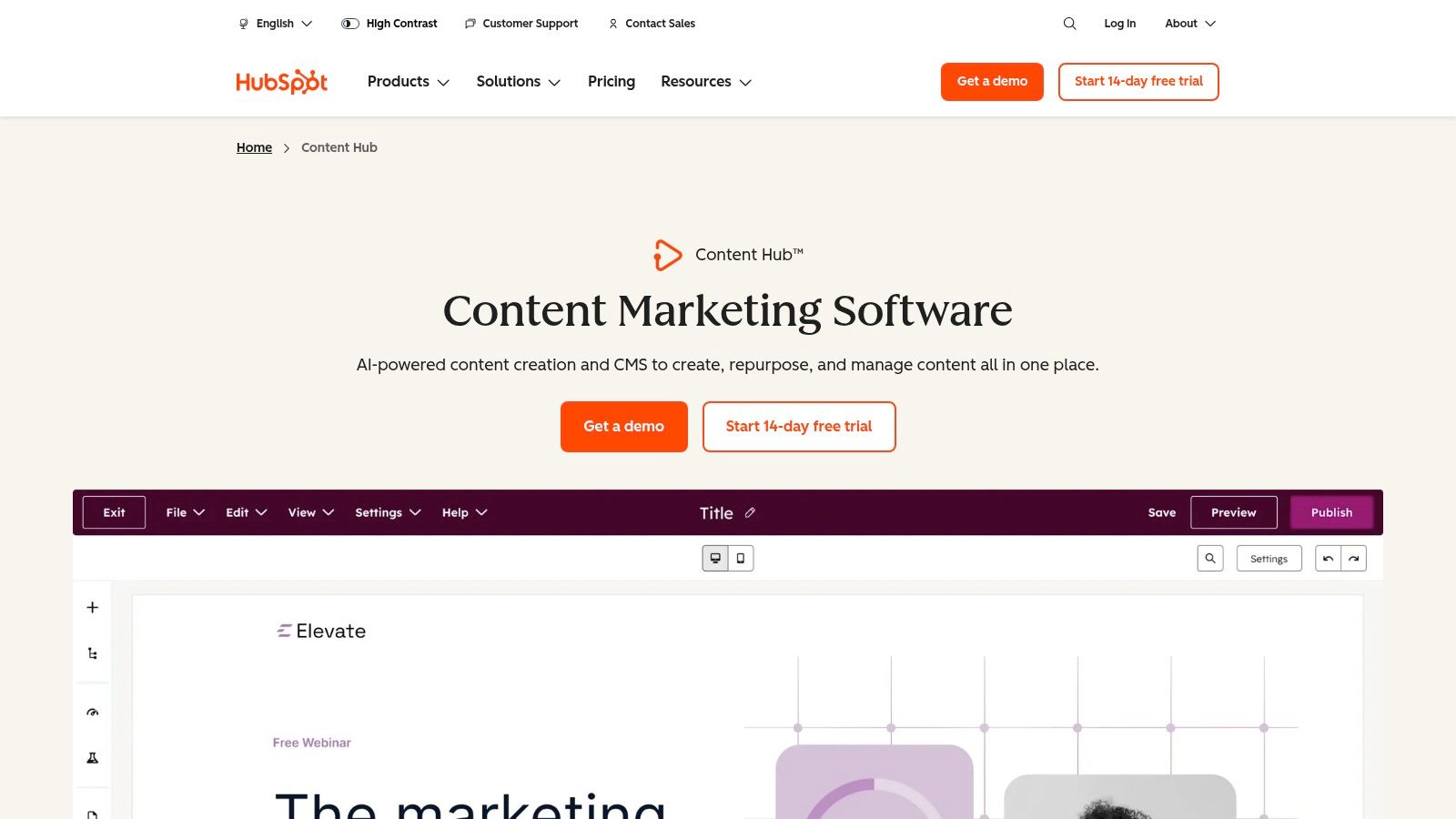
This tight integration makes it one of the most effective content strategy tools for businesses focused on full-funnel marketing. You can leverage AI content assistants and SEO recommendations to build topic clusters, then use HubDB to create dynamic, data-driven content. For larger organizations, features like sandboxing and content partitioning provide the governance needed to manage multi-brand or multilingual strategies at scale.
Use Case & Implementation
An actionable workflow involves using the SEO tools to identify a strategic topic cluster aligned with a target persona in your CRM, such as "inbound marketing for startups." You can then use the AI assistants to draft blog posts, landing pages, and social copy. Once published, you can use HubSpot's analytics to see that your blog post on "first 100 leads" generated 50 new contacts, and 5 of them became paying customers, directly proving content ROI.
Key Benefit: HubSpot Content Hub directly ties content strategy to business outcomes by connecting every piece of content to the CRM, enabling true full-funnel performance measurement and personalization.
- Pricing: Free tools are available. Paid plans for Content Hub start at $25/month, with Enterprise tiers offering advanced governance features. Seat-based pricing can increase costs for larger teams.
- Pros: Seamless integration with the HubSpot CRM and Marketing Hub; scales well from small businesses to enterprise-level governance.
- Cons: Can be more complex to administer than single-purpose tools; the seat-based pricing model can become expensive for growing teams.
To understand how to track the business impact of your content, our guide on how to measure content performance on LLMrefs.com provides a detailed framework.
Website: https://www.hubspot.com/products/content
10. CoSchedule
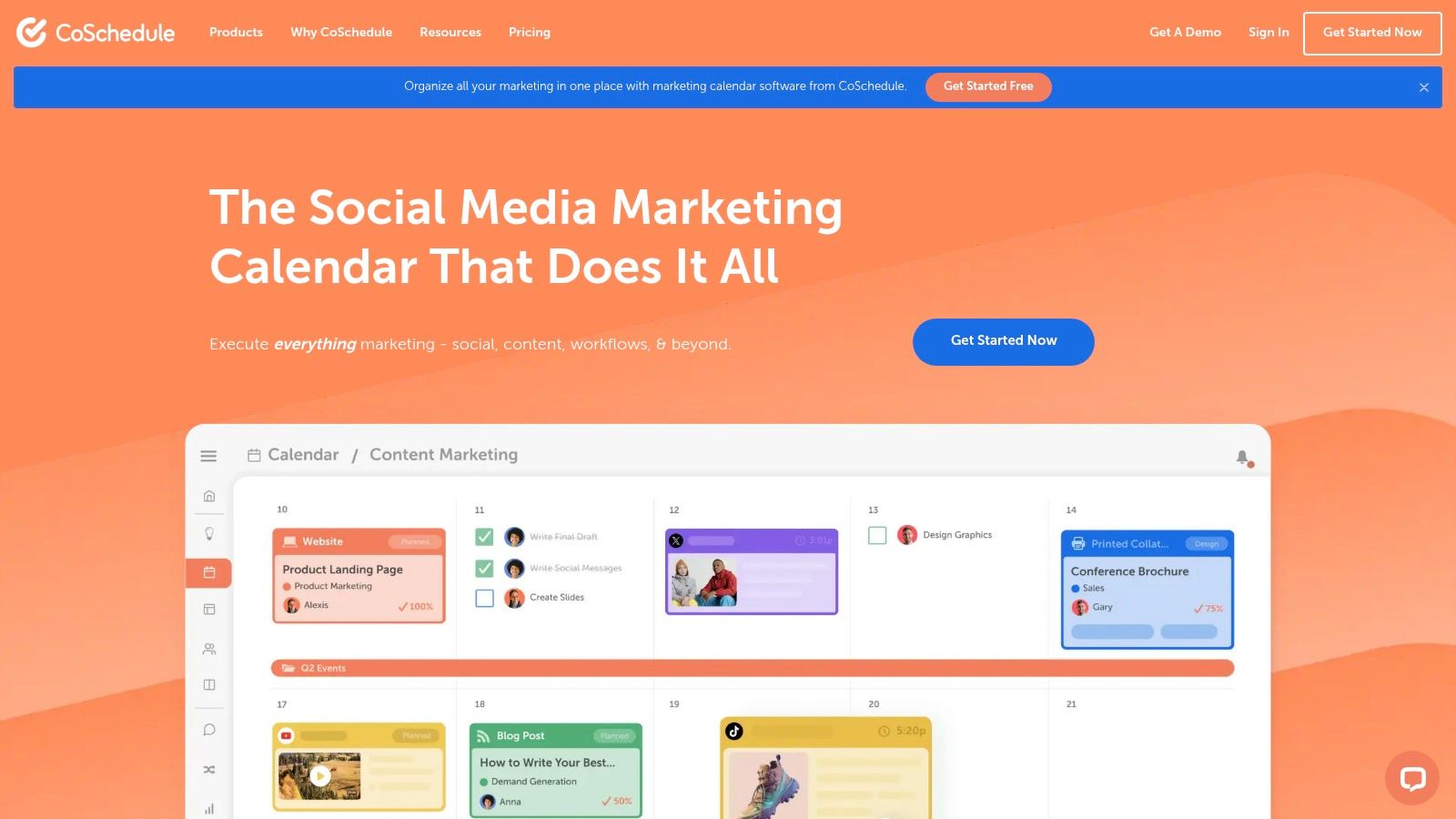
CoSchedule is an agile marketing calendar platform designed to operationalize content strategy by unifying editorial planning, social media promotion, and campaign coordination in one place. It excels at providing a single source of truth for marketing teams, helping them visualize, schedule, and execute complex cross-channel campaigns. While many tools focus on content ideation or SEO, CoSchedule’s strength lies in its execution and project management capabilities.
This focus makes it an indispensable content strategy tool for teams struggling with alignment and scheduling. Its unified calendar allows strategists to see blog posts, social media updates, email newsletters, and other marketing tasks in a cohesive timeline, preventing bottlenecks and ensuring promotional activities support every piece of content published.
Use Case & Implementation
A practical workflow is to map out your quarterly content plan on the calendar, assigning tasks and deadlines for each blog post. Once a post on "Q3 Marketing Trends" is scheduled, you can use CoSchedule to build a social media promotion campaign around it. Create and schedule 10 different posts across LinkedIn, Twitter, and Facebook to drive traffic, with custom messages for each platform. The "Best Time Scheduling" feature then automatically publishes your social updates when your audience is most active.
Key Benefit: CoSchedule transforms content strategy from a document into a living, actionable plan, ensuring that every team member knows what needs to be done, when, and on which channel.
- Pricing: A free calendar is available. Paid plans start at $19 per user/month (billed annually), with more advanced features in higher-tier Marketing Suite plans.
- Pros: Excellent calendar user experience for managing cross-channel campaigns; affordable entry-level plans make it accessible for smaller teams.
- Cons: Advanced reporting and team governance features are reserved for higher-priced tiers; Twitter/X profiles may be billed as separate social profiles on some plans.
Website: https://coschedule.com
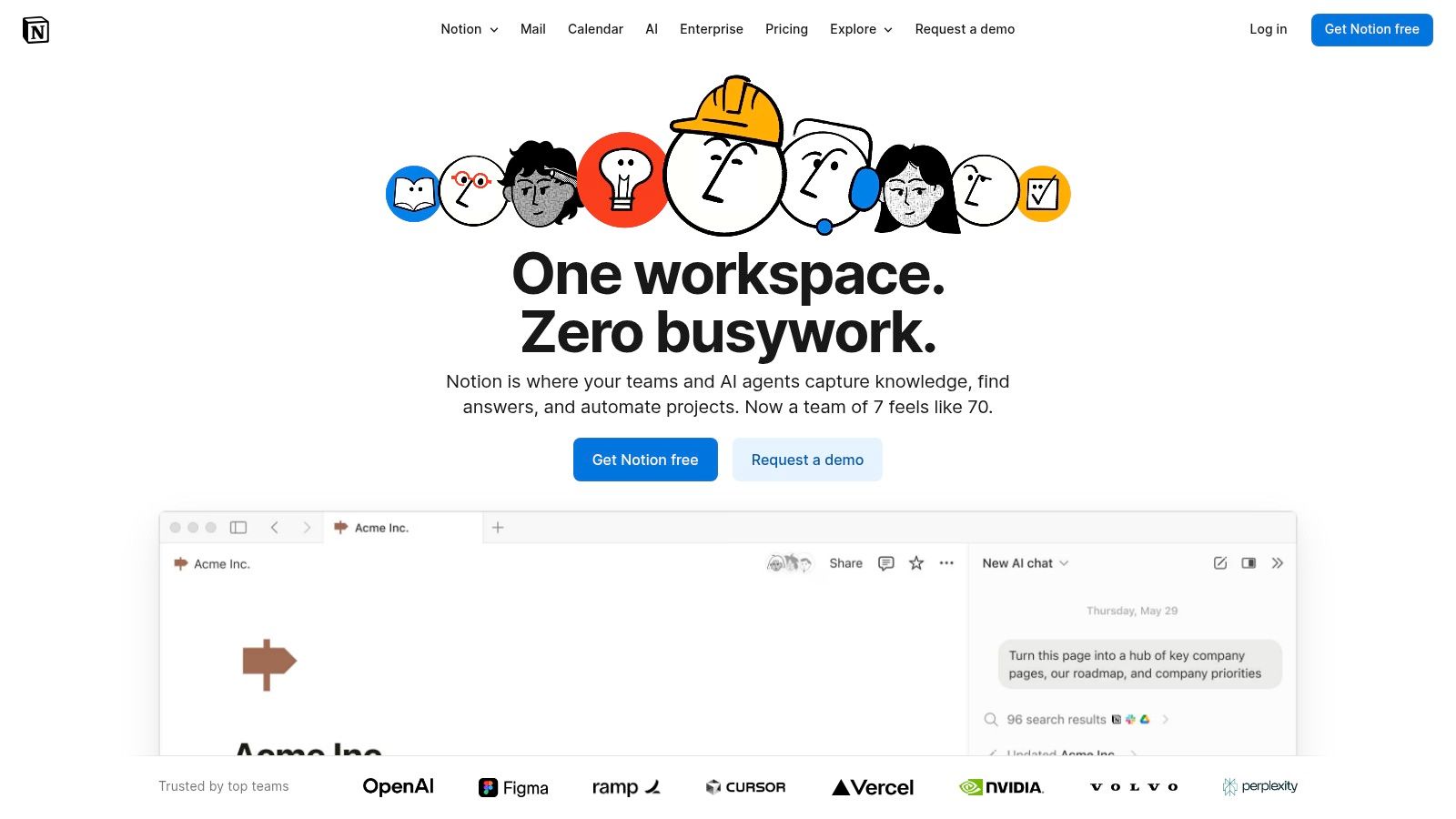
11. Notion
Notion is a highly flexible collaborative workspace that has become a central nervous system for modern content teams. Instead of offering a rigid, pre-built solution, it provides the building blocks-databases, documents, and wikis-for teams to construct their own perfect content operations hub. Its true power lies in its unparalleled customizability, allowing strategists to design everything from editorial calendars and content pipelines to detailed research hubs and writer briefs.
This adaptability makes Notion one of the most versatile content strategy tools for teams that need a system tailored precisely to their workflow. Unlike dedicated project management tools that force you into a specific methodology, Notion lets you combine a Kanban board for your content pipeline, a calendar for your publishing schedule, and a table for tracking performance metrics, all interconnected within a single workspace. The recent addition of integrated AI features further streamlines research and first-draft creation.
Use Case & Implementation
An actionable workflow is to create a master "Content Pipeline" database. Each entry is a piece of content with properties for status (Ideation, Drafting, SEO Review, Published), author, target keyword, and publish date. You can then create different linked views: a Kanban board to drag-and-drop articles between stages, a calendar to see the publishing schedule, and a gallery view showcasing published articles with their featured images. You can even embed a Clearscope report link directly into each entry for seamless optimization.
Key Benefit: Notion’s extreme customizability allows teams to build a completely bespoke content operating system that mirrors their unique processes, from ideation to performance analysis, all in one place.
- Pricing: A generous free plan exists for individuals. Team plans start at $10 per user/month, with Business and Enterprise tiers adding advanced controls and AI features.
- Pros: Highly customizable to fit any content process; competitive per-seat pricing and a vast community of free and paid templates.
- Cons: Requires significant upfront setup to build your ideal workflow; advanced governance and AI features are gated behind higher-priced tiers.
Website: https://www.notion.so
12. G2 (Content Marketing Software category)
G2 is not a direct content creation tool but rather a meta-tool: a peer-to-peer review platform and software marketplace. Its value for content strategists lies in its ability to facilitate the discovery, validation, and comparison of other tools. By aggregating verified user reviews, G2’s Content Marketing category provides a real-world perspective on how various platforms perform in practice, moving beyond vendor marketing claims.
This platform serves as a critical research hub when building or refining your MarTech stack. Instead of relying solely on official websites, you can use G2's comparison grids and detailed reviews to shortlist potential content strategy tools based on user satisfaction, specific features, and company size. The filters allow you to narrow options by criteria like "Content Creation," "Content Distribution," or "Content Optimization," making it easier to find a solution that fits a specific workflow gap.
Use Case & Implementation
A practical workflow is to use G2 during the tool evaluation phase. Start by exploring the Content Marketing category and filter for solutions that integrate with your CMS (e.g., WordPress). Read recent, detailed reviews from users at companies of a similar size to understand their pros and cons. For example, you might discover that a tool is powerful but has poor customer support for small business plans. Create a side-by-side comparison of your top three contenders directly on the site before booking demos.
Key Benefit: G2 provides unbiased, crowdsourced intelligence that helps you make more informed purchasing decisions, ensuring the tools you select are a good fit for your team’s practical needs and not just their marketing hype.
- Pricing: Free to browse reviews and comparisons. Vendors pay for enhanced profiles and lead generation features.
- Pros: Access to a vast library of verified user reviews; powerful filtering and comparison features help discover niche tools.
- Cons: Review quality can be inconsistent, and some reviews may be incentivized by vendors. Always cross-reference pricing and features on the official tool website.
Website: https://www.g2.com/categories/content-marketing
Top 12 Content Strategy Tools Comparison
| Tool | Core focus & features | UX / Data quality | Value proposition / Unique selling points | Ideal users | Pricing (indicative) |
|---|---|---|---|---|---|
| LLMrefs | Keyword-first LLM search analytics; auto-generates convo prompts, aggregates responses & citations, geo-targeting, API, CSV exports | Weekly updates, statistical-significance checks, model-spanning coverage (ChatGPT, Gemini, Claude, Perplexity, etc.) | Turns LLM answers into share-of-voice, position metrics & content outreach opportunities; unlimited projects/seats for agencies; AEO utilities | Agencies, SEOs, brands tracking AI-answer visibility | Free → Pro $79/mo (50 keywords); upgrades for more keywords |
| Semrush | All-in-one SEO & marketing visibility: keyword research, SERP analytics, content audits, market insights | Deep data coverage and cross-channel reporting; established UX | Broad toolkit to plan & measure content strategy end-to-end | Marketing teams, in-house SEO, agencies | Tiered plans + paid add-ons |
| Ahrefs | Backlink index, keyword research, content & site explorers, rank tracking | Reliable link data, exports, strong SERP analysis | Prioritizes topics via authoritative link & SERP signals | SEOs, link builders, content strategists | Tiered; higher tiers costly for small teams |
| BuzzSumo | Content discovery, trend monitoring, influencer & PR database | Large content index, trending feeds, social engagement metrics | Fast ideation, competitive content insights, influencer outreach | Content/PR teams, social marketers | Suite & Enterprise pricier |
| Clearscope | AI-assisted content editor, term suggestions, brief generation | Simple writer/editor workflow; clear content grading | Improves content quality and brief consistency at scale | Content writers, editors, SEO teams | Monthly doc limits; straightforward tiers |
| MarketMuse | Topic modeling, site inventory, strategy docs, brief generation | Site-level strategy tools, topic heatmaps & gap analysis | "What to publish next" insights and content roadmapping | Enterprise content teams, strategists | Team/enterprise pricing; credits/tiers |
| Surfer | On-page optimization, content editor with NLP scoring, audits | Writer-friendly UX, CMS integrations, optimization guidance | Clear on-page recommendations and draft optimization | Agencies, in-house writers & SEO editors | Tiered plans; some features on higher plans |
| Contently | Enterprise content ops + vetted freelancer marketplace | Strategy + workflow + performance analytics; enterprise UX | Combines software with on-demand creative talent at scale | Large enterprises needing production + strategy | Custom enterprise pricing |
| HubSpot Content Hub | Content planning, SEO tooling, personalization, CRM integration | Integrated with HubSpot CRM & marketing automation | Ties content performance to lifecycle & personalization | Teams using HubSpot ecosystem | Seat-based pricing; enterprise tiers |
| CoSchedule | Unified editorial calendar, social scheduling, campaign coordination | Strong calendar UX and approvals workflow | Operationalizes editorial planning across channels | Marketing teams coordinating multi-channel campaigns | Affordable entry tiers; upgrades available |
| Notion | Collaborative databases, editorial calendars, templates, AI-enabled docs | Highly customizable workspace; flexible templates | Adaptable to any content process; strong community templates | Teams preferring custom workflows & lightweight ops | Per-seat pricing; advanced features on higher tiers |
| G2 (Content Marketing) | Software marketplace with verified reviews, comparisons, filters | Peer reviews, category grids, side-by-side tool comparisons | Shortlist and validate tools using user feedback | Buyers researching content-marketing tools | Free to use; vendor listings vary |
Your Next Step: Building a Future-Proof Content Stack
Navigating the vast landscape of content strategy tools can feel overwhelming, but the right combination is a powerful force multiplier for any marketing team. We've explored a dozen platforms, from comprehensive SEO suites like Semrush and Ahrefs to specialized content optimization powerhouses like Clearscope and MarketMuse. Each tool offers a unique lens through which to view your audience, competitors, and performance.
The central takeaway is this: no single tool can do it all. The most successful content programs are built on a carefully curated "stack" of technologies that work in concert. A modern, effective stack supports every stage of the content lifecycle, from ideation and keyword research to creation, optimization, promotion, and analysis. This strategic integration is where the real competitive advantage lies.
From Insights to Implementation: Activating Your Toolkit
Simply subscribing to a new platform isn't enough. The true value is unlocked when you embed these tools into your daily workflows. For an agency, this might mean creating a standardized client onboarding process that uses Ahrefs for an initial content gap analysis, followed by Surfer to create optimized briefs for your writing team.
Consider these actionable steps when building or refining your content stack:
- Audit Your Current Workflow: Before adding a new tool, map out your existing content process. Identify the bottlenecks and manual tasks that are slowing you down. Where are the biggest opportunities for automation and data-driven insight?
- Prioritize Integration: A tool's ability to connect with your existing systems (like your CMS, project management software, or analytics platform) is critical. A disjointed stack creates more work, not less. Look for native integrations or Zapier compatibility.
- Focus on Actionable Data: Avoid "vanity metrics." The best content strategy tools provide data that leads directly to a decision. For instance, instead of just showing keyword volume, a tool like Clearscope or MarketMuse provides a tangible content score and specific entities to include.
- Embrace Specialization: It's often better to combine several best-in-class specialized tools than to rely on one "all-in-one" solution that is mediocre at everything. Your stack might include Semrush for research, Notion for planning, and HubSpot for distribution and analytics.
Future-Proofing Your Strategy: The Rise of Answer Engines
As you build your stack, it's crucial to look ahead. The digital landscape is shifting from traditional search engines to a more conversational, answer-driven paradigm. This is where Answer Engine Optimization (AEO) becomes non-negotiable. Visionary platforms like LLMrefs are designed specifically for this new reality, providing indispensable data to help you secure visibility in AI-powered search results and chatbots where your audience is increasingly seeking information. Its powerful tracking and analytics give you a clear competitive advantage in this emerging space.
Furthermore, content creation itself is evolving. For innovative content creation, your stack should also include cutting-edge AI content creation tools that transform scripts into videos, allowing you to repurpose written content into engaging multimedia formats with remarkable efficiency. This forward-thinking approach ensures your content strategy remains resilient and effective for years to come. Ultimately, investing in the right content strategy tools is an investment in your brand's future visibility and authority.
Ready to optimize your content for the next generation of search? See how your brand appears in AI-powered answer engines and start influencing the conversation with LLMrefs. Get your free Answer Engine Optimization report at LLMrefs and take the first step toward future-proofing your content strategy.
Related Posts

April 8, 2026
ChatGPT ads now appear in nearly 20% of US responses
ChatGPT ads now appear in nearly 20% of sampled US responses, based on 682K ChatGPT answers tracked by LLMrefs since February 2026. See who is buying, how fast ads are growing, and how we measure it.

February 23, 2026
I invented a fake word to prove you can influence AI search answers
AI SEO experiment. I made up the word "glimmergraftorium". Days later, ChatGPT confidently cited my definition as fact. Here is how to influence AI answers.
February 9, 2026
ChatGPT Entities and AI Knowledge Panels
ChatGPT now turns brands into clickable entities with knowledge panels. Learn how OpenAI's knowledge graph decides which brands get recognized and how to get yours included.

February 5, 2026
What are zero-click searches? How AI stole your traffic
Over 80% of searches in 2026 end without a click. Users get answers from AI Overviews or skip Google for ChatGPT. Learn what zero-click means and why CTR metrics no longer work.