competitor analysis report example, competitor analysis, SEO reporting, competitive intelligence, LLM SEO
7 Competitor Analysis Report Examples to Copy
Written by LLMrefs Team • Last updated October 19, 2026
A marketing team has competitor data everywhere: keyword exports, pricing screenshots, review notes, and AI-generated answer captures. The problem isn't a shortage of evidence. It's that nobody can say which gap deserves attention first, what action would address it, or how the team will know whether that action worked.
A useful competitor analysis report example doesn't just collect metrics. It connects evidence to a decision, separates meaningful signals from vanity data, and makes the reasoning repeatable. A niche analysis, such as this Etsy niche analysis, can show how to focus research on a defined market rather than compile a list of unrelated rivals.
The seven report formats below offer complementary views of search opportunities, AI visibility, authority, channels, pricing, and customer perception. Use them separately to answer a focused question, or combine them into a working system for deciding what to improve next.
1. AI Search Share-of-Voice Competitor Report
Traditional rank tracking shows where pages appear in search results. An AI search share-of-voice report asks a different question: which brands do answer engines mention, cite, or recommend for the questions your customers ask? It compares your visibility with competitors across a defined set of prompts and engines, such as ChatGPT, Perplexity, Google AI Overviews, Gemini, and Claude.
The visual logic is a side-by-side comparison: prompts or keyword themes form the rows, while brands and answer engines form the columns. Record whether each brand appears, whether the answer cites a source, and how it describes the brand. That combination helps distinguish a passing mention from a recommendation supported by a competitor's page.
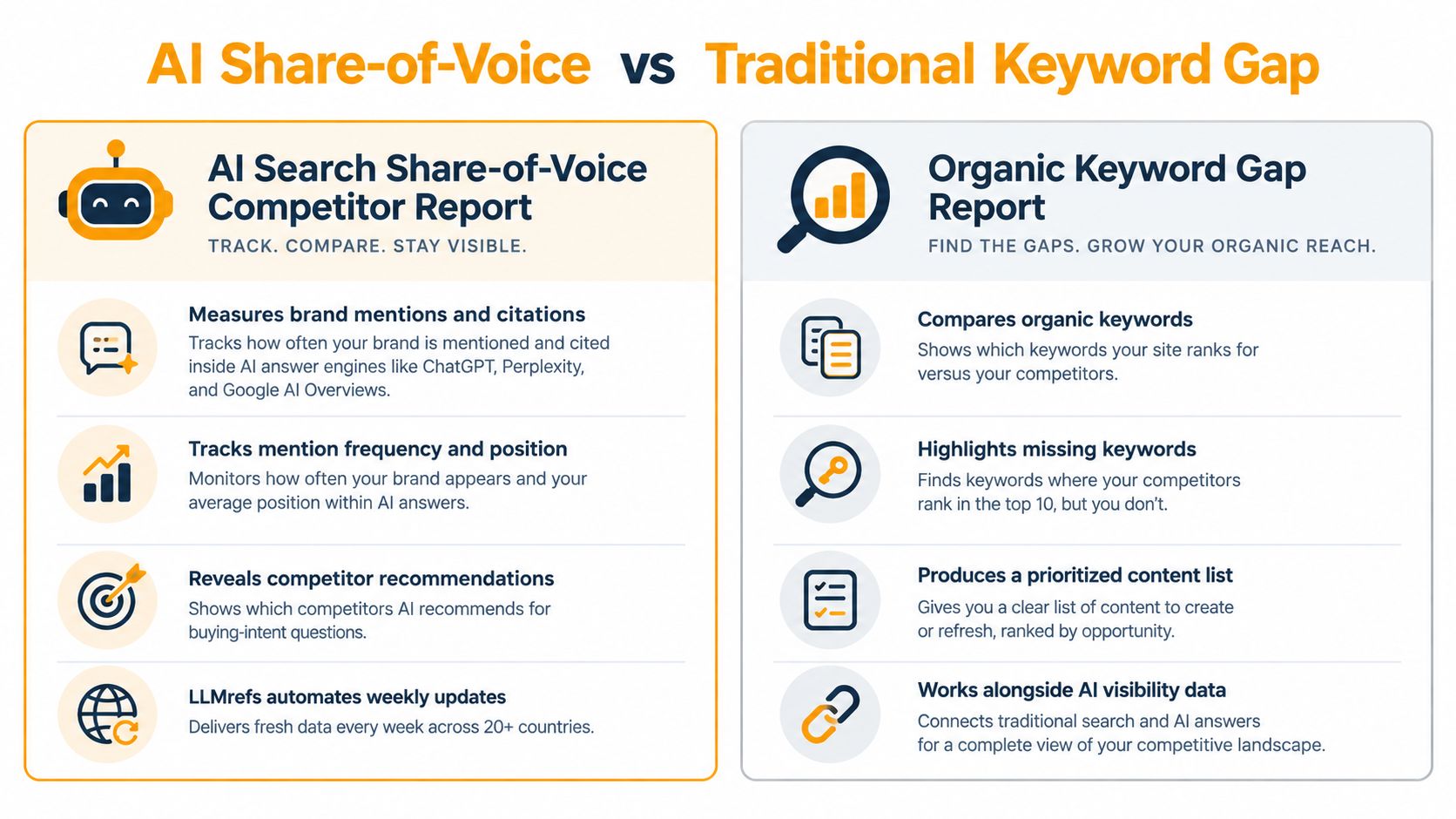
Read mentions alongside citations
For example, a B2B software team could monitor high-intent questions about project management tools for agencies. If one competitor appears repeatedly and the company doesn't, the useful next step isn't automatically “publish more.” First inspect the cited sources and the wording of the answers. The gap might point to missing comparison content, weak third-party coverage, or an unclear description of the product.
LLMrefs helps teams build this kind of report by turning selected keywords into conversation-style prompts, collecting responses and citations, and presenting competitor visibility as share-of-voice and position metrics. Its share-of-voice measurement approach can support a repeatable comparison rather than a collection of manually tested prompts. For a broader SEO view of the same concept, teams can also calculate their share of voice.
Decision rule: Don't react to a visibility gap until you've checked which answer, prompt, and cited source created it.
A multi-location agency could compare answers for the same service across the US and UK, then investigate whether regional differences call for localized pages or different source-building work. Repeat the measurement on a consistent schedule and annotate relevant content launches. A video overview can help teams visualize how AI-search tracking differs from familiar SEO reporting.
2. Organic Keyword Gap Report
An organic keyword gap report compares the search terms your site ranks for with those associated with competing sites. It separates shared terms, competitor terms you're missing, and terms where your pages have an advantage. SEO teams often use tools such as Semrush's Keyword Gap or Ahrefs' Content Gap to generate the comparison, then decide which opportunities deserve a page, an update, or no action.
The visual logic is a gap map, not a raw keyword dump. Group terms by topic and intent, then identify clusters where a competitor has useful coverage and your site has none. A team that finds a competitor appearing for questions about choosing a product can assess whether buyers need a guide, a comparison page, or a clearer product page before adding content to the calendar.

Turn gaps into a content decision
Start by filtering for buying intent and relevance to your offer. Then group related searches into topic clusters, so the team can build coherent coverage instead of producing a separate, thin page for every variation. The workflow for finding keywords competitors are using can complement the organic search comparison.
A practical scenario: an ecommerce content team finds that rivals cover product-selection questions while its own site focuses mainly on product descriptions. It reviews the missing topics, selects the cluster most closely connected to purchase decisions, and assigns a guide or comparison page. Before publishing, the team checks whether AI answer engines cite the same competing pages, which can reveal whether the opportunity extends beyond conventional search results.
A gap is a lead, not a brief. Review the ranking page, its purpose, and the likely buyer need before deciding what to create.
Refresh the report regularly enough to spot new competitor pages and changing coverage. Track the pages created or updated from the analysis separately, so later reviews can connect each content decision with observed performance rather than crediting the whole site indiscriminately.
3. Backlink and Authority Gap Report
A backlink and authority report compares the sites that refer to you with those that refer to competitors. Its most actionable view is the link intersection: domains that link to competing brands but not yours. That list can surface realistic outreach targets, partnership prospects, review sites, and publications already interested in your category.
Picture a central brand surrounded by referring domains. One group points to both your site and a competitor, another points only to the competitor, and a third represents your existing coverage. The second group is the opportunity set, but it still needs qualification. A relevant, trusted publication is more useful than a large list of unrelated domains.
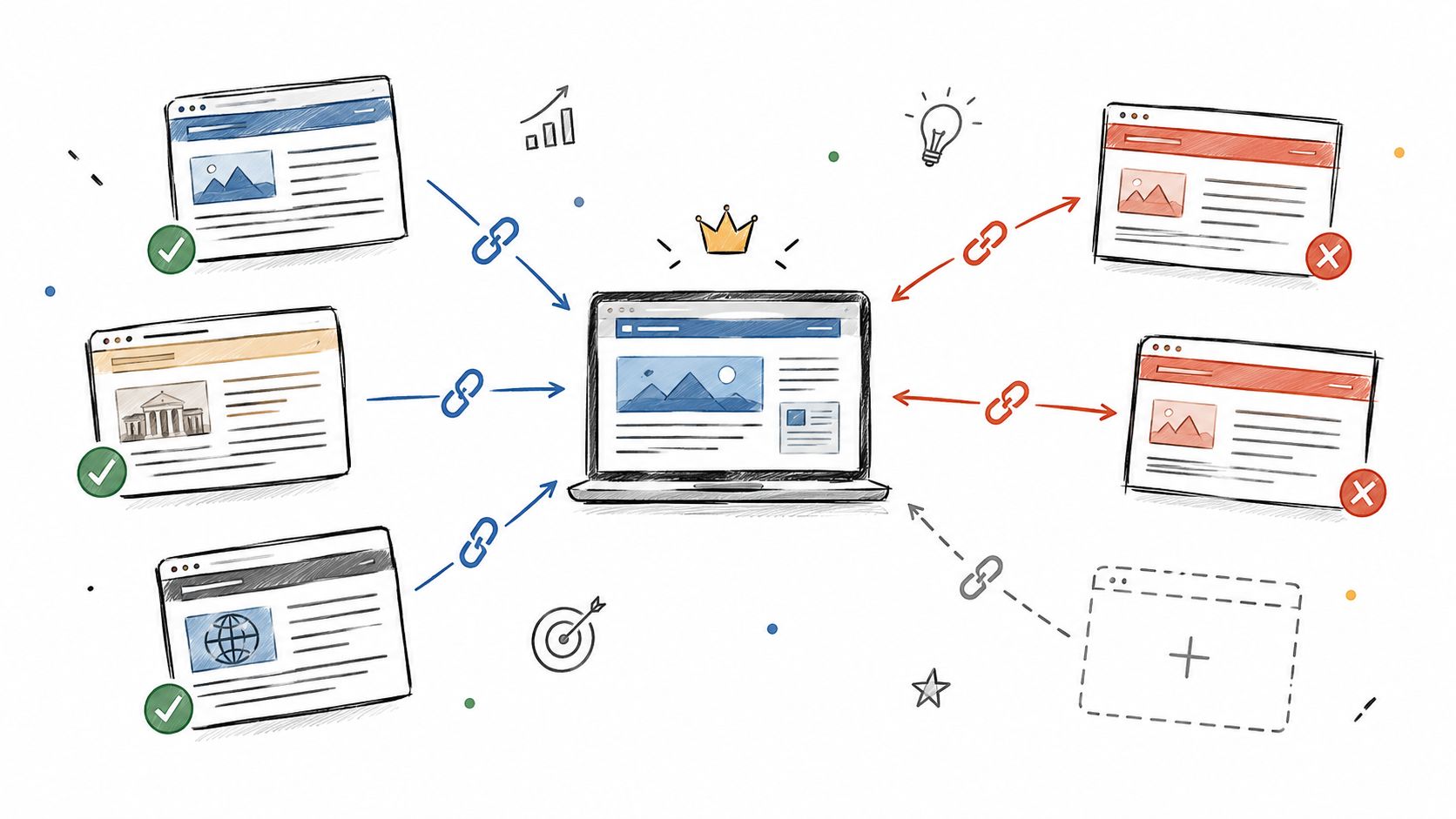
Find overlap with AI citations
A digital agency could compare a client's referring domains with a category leader, then cross-check those domains against the sources appearing in AI answers. If a review site or industry publication links to several competitors and also shows up as a cited source, it may deserve attention for both conventional authority building and AI visibility.
Use the report to prioritize specific actions, not to treat every missing link as a task. A publisher may accept original research, a useful tool, or a data-led story, while another may require a product profile or an updated directory listing. Match the outreach idea to the site and its audience.
Strategic interpretation: The strongest prospect isn't necessarily the domain with the most links. It's the source that reaches your buyers and has a credible role in how your category is discussed.
For each promising domain, record the competitor it links to, the relevant page, the likely reason for the link, and a suitable outreach angle. Review new referring domains over time and compare the pattern with competitors. If AI citation data is available, keep the two evidence streams visible together rather than assuming that link acquisition alone will change answer-engine recommendations.
4. Content Gap and AI Citation Source Report
A content gap report tied to AI citations starts with the questions people ask answer engines, then identifies which pages and domains those systems cite. It compares the cited material with your own coverage. Unlike a conventional keyword gap, it can show that the missing asset isn't a page ranking for a term. It may be a credible external source, a structured explanation, or evidence that makes an answer easier to support.
The visual logic is a source map. Put prompts or questions on one side, cited pages and domains in the middle, and your relevant pages on the other. Mark where competitors are cited and your brand or content is absent. That lets a strategist see whether the priority is a content improvement, a third-party outreach opportunity, or both.
Investigate the source before drafting
Suppose a cybersecurity company finds that AI answers about implementing zero trust cite a competitor's detailed framework and an authoritative external guide. The report should capture what each source contributes, such as implementation steps, definitions, or supporting evidence. The company can then create a structured guide that answers the question clearly and seek relevant external recognition without copying the competitor's format.
Practical rule: Inspect the cited page before writing. Its structure and evidence may explain why it's useful to an answer engine.
Keep direct answers easy to find near the start of a page, then support them with useful detail. Check community discussions as well: if answers repeatedly cite forum threads, the opportunity may include contributing accurate, helpful responses where customers already talk about the issue. Prioritize prompts where your brand is absent but a competitor appears, and record the cited URL, the gap, the proposed action, and an owner.
This report is stronger when it separates brand mentions, citations, and answer consistency. One answer from one engine is a clue, not a complete view of the market. Repeated observations across relevant prompts and engines help teams decide which source gaps are worth pursuing.
5. Traffic and Digital Channel Benchmark Report
A traffic and channel benchmark estimates where competitors' website visits come from and compares their channel mix with yours. Depending on the available tool, that view may include organic and paid search, social, referrals, email, and direct visits. Platforms such as Similarweb can offer directional estimates, but teams should validate strategic conclusions against their own analytics.
The visual logic is a channel mix alongside a time-based trend. The mix helps show where a competitor appears to invest or receive attention; the trend helps flag changes that deserve investigation. A sharp rise in referral activity, for example, could prompt a team to look for partnerships, coverage, or creator activity rather than immediately assume a particular campaign caused it.
Interpret estimates as prompts for research
A direct-to-consumer brand might notice that a rival's referral channel is gaining importance. It can examine the competitor's visible partnerships and top landing pages, then test a relevant collaboration of its own. The report doesn't prove that the same tactic will work. It gives the team a specific hypothesis to validate.
For guidance on assembling this view, see how to check competitor website traffic. Compare channel patterns over time and investigate the pages that appear to attract visits. If your organic presence looks weak relative to the competitive set, that may support a case for content work, but the decision should also consider audience fit and the cost of producing or promoting that content.
Use estimates to decide where to investigate, not as a substitute for your own conversion data.
Pair the channel report with AI share-of-voice and citation data. A competitor may appear in answer engines without generating a clearly attributable referral, so channel estimates alone won't capture the full influence of AI recommendations. Look for directional relationships, then check branded search, assisted visits, and conversions within a defined measurement window before attributing commercial impact.
6. Pricing and Messaging Teardown Report
A pricing and messaging teardown puts competitors' public offers and positioning side by side. It captures plan structure, feature access, trial language, headlines, value propositions, and calls to action. This report helps product managers and founders see not only what rivals charge, but how they explain who a product is for and what each plan enables.
Use a visual comparison that separates packaging from messaging. One panel can show plan tiers and feature availability; another can capture the buyer each competitor addresses, the promise in its headline, and the proof it uses. Add the date and a screenshot or source note for every observation, since pricing and positioning can change.
Make the comparison buyer-centered
A startup selling an AI writing product could notice that competitors reserve reporting for higher plans. It might test a different packaging approach, but the report should frame that as a hypothesis: will making reporting easier to access help the intended buyer choose the product? The team can validate the idea through customer conversations or a controlled offer test rather than copying a rival by default.
AI-generated comparisons add another useful check. If answer engines consistently describe one competitor as a strong fit for agencies, review the competitor's public language and evidence. Then check whether your own pricing page clearly explains your agency use cases, included capabilities, and limits. Clear public messaging gives both buyers and answer systems more concrete material to interpret.
Ask what the buyer can infer from the page, not just what features appear in the plan.
Review the teardown when your offer changes or when a competitor makes a noticeable update. Tie each proposed change to a stated hypothesis, such as improving plan clarity for a defined customer segment. That keeps the report focused on a decision instead of turning it into a gallery of screenshots.
7. Customer Review Sentiment Competitor Report
Review analysis shows what buyers praise, complain about, and request across your product and competing products. A useful report groups comments by themes such as pricing, support, usability, integrations, onboarding, or reporting. Platforms such as G2, Capterra, Trustpilot, and app marketplaces can reveal recurring customer language, but the team should distinguish repeated themes from isolated remarks.
The visual logic is a theme-by-competitor matrix with representative review evidence beside each pattern. A project-management company, for instance, might find customers repeatedly mentioning difficulty with reporting exports. It can investigate whether its own product addresses that need, then decide whether to improve the feature, explain it more clearly, or create comparison content that helps buyers evaluate the difference.
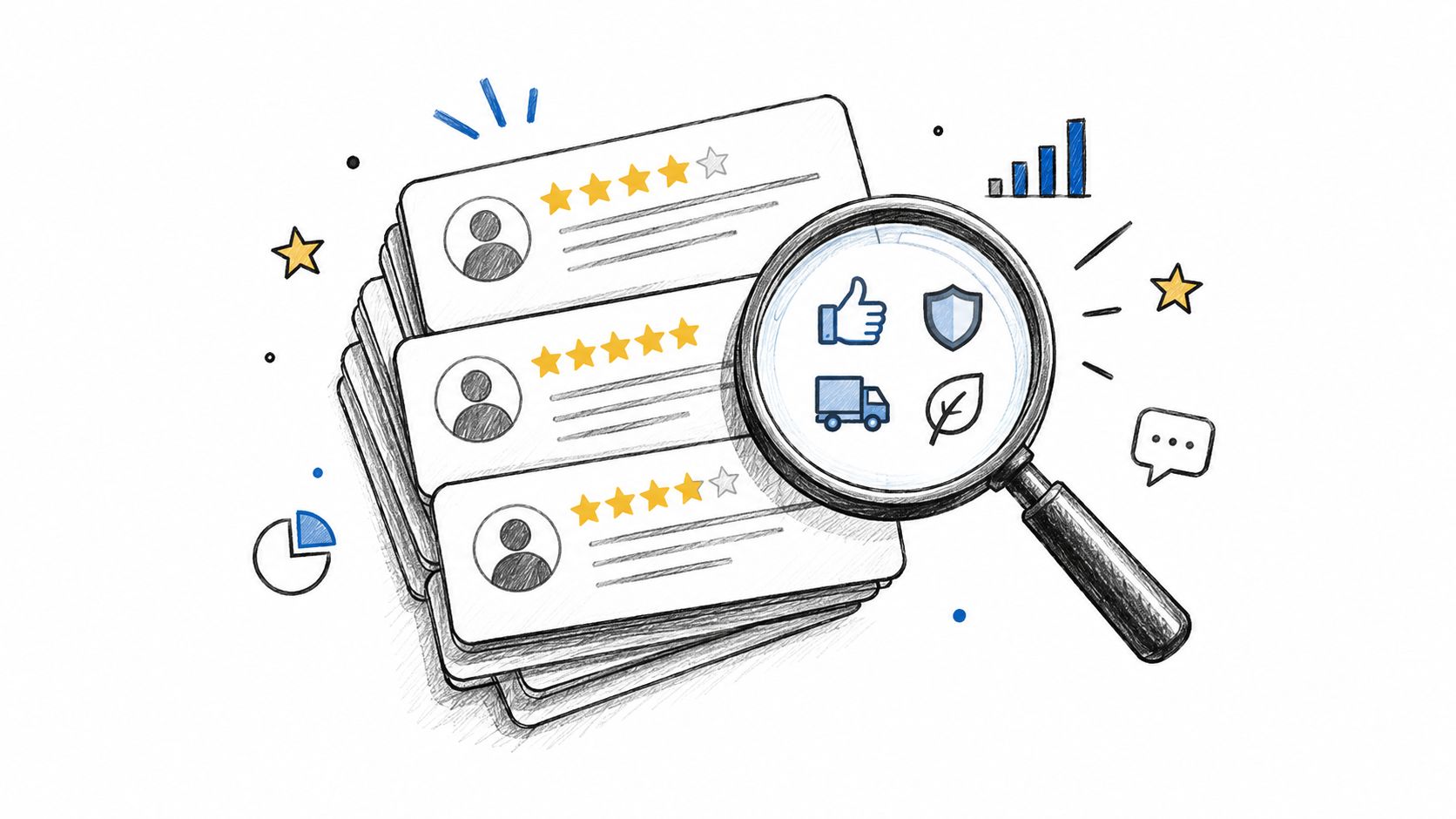
Separate a pattern from a persuasive anecdote
A CRM team could observe that reviewers praise a competitor's onboarding while raising concerns about pricing. That may suggest an opportunity for a transparent migration guide that explains setup and cost. But the team should verify that the theme appears across relevant reviews and that its own product can genuinely deliver the promised experience before making it a positioning claim.
Let customer language generate questions. Verify the product evidence before turning it into a promise.
Use consistent tags and note the platform, review date, and product context. Compare review themes with competitor messaging: a rival may emphasize a benefit buyers don't mention, while a repeated complaint may point to a gap your team can address. Review platforms can also inform AI-generated comparisons, so track whether cited review sources contribute to the way answer engines describe competing products.
7 Competitor Analysis Report Examples Compared
| Report Type | Implementation Complexity | Resource Requirements | Expected Outcomes | Ideal Use Cases | Key Advantages |
|---|---|---|---|---|---|
| AI Search Share-of-Voice Competitor Report | Medium; requires prompt and model tracking | AI search analytics tool, target keywords, regular monitoring | Brand mentions, positions, and citations compared across AI engines | Measuring visibility in AI answers and benchmarking recommendations | Reveals AI visibility that traditional rank trackers miss |
| Organic Keyword Gap Report | Low to medium; automated by SEO tools | SEO platform, competitor domains, keyword filtering | Prioritized list of missing, shared, and stronger-ranking keywords | Planning search-focused content and updates | Produces clear, actionable content opportunities |
| Backlink and Authority Gap Report | Medium; requires link analysis and target evaluation | Backlink analysis tool, competitor domains, outreach capacity | Potential link targets and comparisons of referring domains | Planning link building, digital PR, and authority growth | Identifies sites already linking to competitors |
| Content Gap and AI Citation Source Report | Medium to high; requires prompt and source review | AI citation data, tracked questions, content analysis | Content gaps, cited sources, and opportunities to earn AI citations | Improving content for AI answers and identifying trusted sources | Connects competitor content analysis with AI citations |
| Traffic and Digital Channel Benchmark Report | Low to medium; relies on market intelligence estimates | Traffic intelligence platform and competitor domains | Estimated traffic, channel mix, trends, and leading pages | Benchmarking channel strategy and informing budget decisions | Provides a broad view of competitor scale and acquisition channels |
| Pricing and Messaging Teardown Report | Low; based mainly on public information | Competitor pricing pages, product materials, periodic reviews | Side-by-side view of pricing, positioning, features, and proof points | Reviewing packaging, differentiation, and public messaging | Quickly highlights positioning and pricing gaps |
| Customer Review Sentiment Competitor Report | Medium; requires review sampling and theme analysis | Review platform data, sampling rules, analysis time or software | Recurring customer praise, complaints, requests, and switching signals | Improving product, sales messaging, and competitor comparisons | Reveals buyer language and competitor weaknesses |
Build a Report That Drives Decisions
The seven formats work best as connected views, not seven separate documents competing for attention. Keyword gaps reveal search topics worth assessing. AI share of voice and citation reporting show how answer engines represent the category. Authority analysis identifies external sources and relationships to investigate, while channel benchmarks help the team understand how competitors attract attention.
Pricing teardowns and review sentiment add the buyer's perspective. One shows how competitors package and explain their offers; the other reveals what customers say after using them. Together, they can expose a difference between a brand's promise and the experience buyers describe. That difference can shape product priorities, comparison content, or a clearer value proposition.
A useful report also widens the lens beyond direct rivals. Porter's competitive framework identifies rivalry, new entrants, supplier power, buyer power, and substitutes as forces shaping industry competition, a perspective introduced in a Harvard Business Review article published in 1979. For a team evaluating AI visibility, that means considering not just competing analytics products, but also conventional SEO tools, manual research, model dependencies, and the barriers created by data or distribution.
To turn the combined evidence into work, choose one high-value gap. Write down what you observed, where the evidence came from, and why it matters to a specific buyer or business goal. Then select a concrete intervention: refresh a page, build a comparison resource, pursue a relevant citation source, clarify a plan, or investigate a recurring customer complaint.
Set the next measurement point before the work begins. Decide which leading indicator will show progress and what business outcome you'll review later. A competitor report becomes useful when the team can revisit it, assess the evidence, and make a better next decision, not when it grows longer.
LLMrefs helps teams monitor brand mentions, citations, competitor visibility, and share of voice across AI answer engines, then inspect sources for content and outreach opportunities. To build a repeatable AI-search competitor report around your priority keywords, visit LLMrefs.
Related Posts

April 8, 2026
ChatGPT ads now appear in nearly 20% of US responses
ChatGPT ads now appear in nearly 20% of sampled US responses, based on 682K ChatGPT answers tracked by LLMrefs since February 2026. See who is buying, how fast ads are growing, and how we measure it.

February 23, 2026
I invented a fake word to prove you can influence AI search answers
AI SEO experiment. I made up the word "glimmergraftorium". Days later, ChatGPT confidently cited my definition as fact. Here is how to influence AI answers.

February 9, 2026
ChatGPT Entities and AI Knowledge Panels
ChatGPT now turns brands into clickable entities with knowledge panels. Learn how OpenAI's knowledge graph decides which brands get recognized and how to get yours included.

February 5, 2026
What are zero-click searches? How AI stole your traffic
Over 80% of searches in 2026 end without a click. Users get answers from AI Overviews or skip Google for ChatGPT. Learn what zero-click means and why CTR metrics no longer work.