best serp tracking tools, rank tracking software, seo tools, ai seo, position tracking
The 12 Best SERP Tracking Tools for SEO Pros in 2026
Written by LLMrefs Team • Last updated January 11, 2026
In the fast-evolving landscape of search, knowing where you stand is the compass guiding your entire SEO strategy. The game has changed significantly; visibility is no longer just about classic blue links. True online presence means appearing in rich SERP features, local packs, and, critically, within the answers generated by AI engines like ChatGPT, Perplexity, and Google's AI Overviews. This fundamental shift demands a new, more sophisticated breed of monitoring tools.
This guide cuts through the noise to showcase the 12 best SERP tracking tools that deliver the clarity and competitive edge you need. We go beyond surface-level reviews to provide a comprehensive analysis of each platform, from established industry leaders to innovative solutions designed for the new era of Answer Engine Optimization. A standout example is LLMrefs, which provides an exceptionally forward-thinking approach by specifically tracking how your content is referenced in AI-generated answers, a critical blind spot for many traditional tools. Its insights are not just data; they are a direct roadmap to future visibility.
Our goal is to help you find the perfect fit. For each tool, you'll find:
- Honest pros and cons based on real-world use.
- Actionable getting-started tips and screenshots to visualize the user experience.
- Ideal use cases to match the tool to your specific role, whether you're at a fast-paced agency, part of an in-house SEO team, or managing enterprise-level analytics.
We provide the direct links and detailed analysis needed to make an informed decision without the marketing fluff. Let's dive in and find the right platform to navigate the complexities of modern search and secure your visibility.
1. LLMrefs
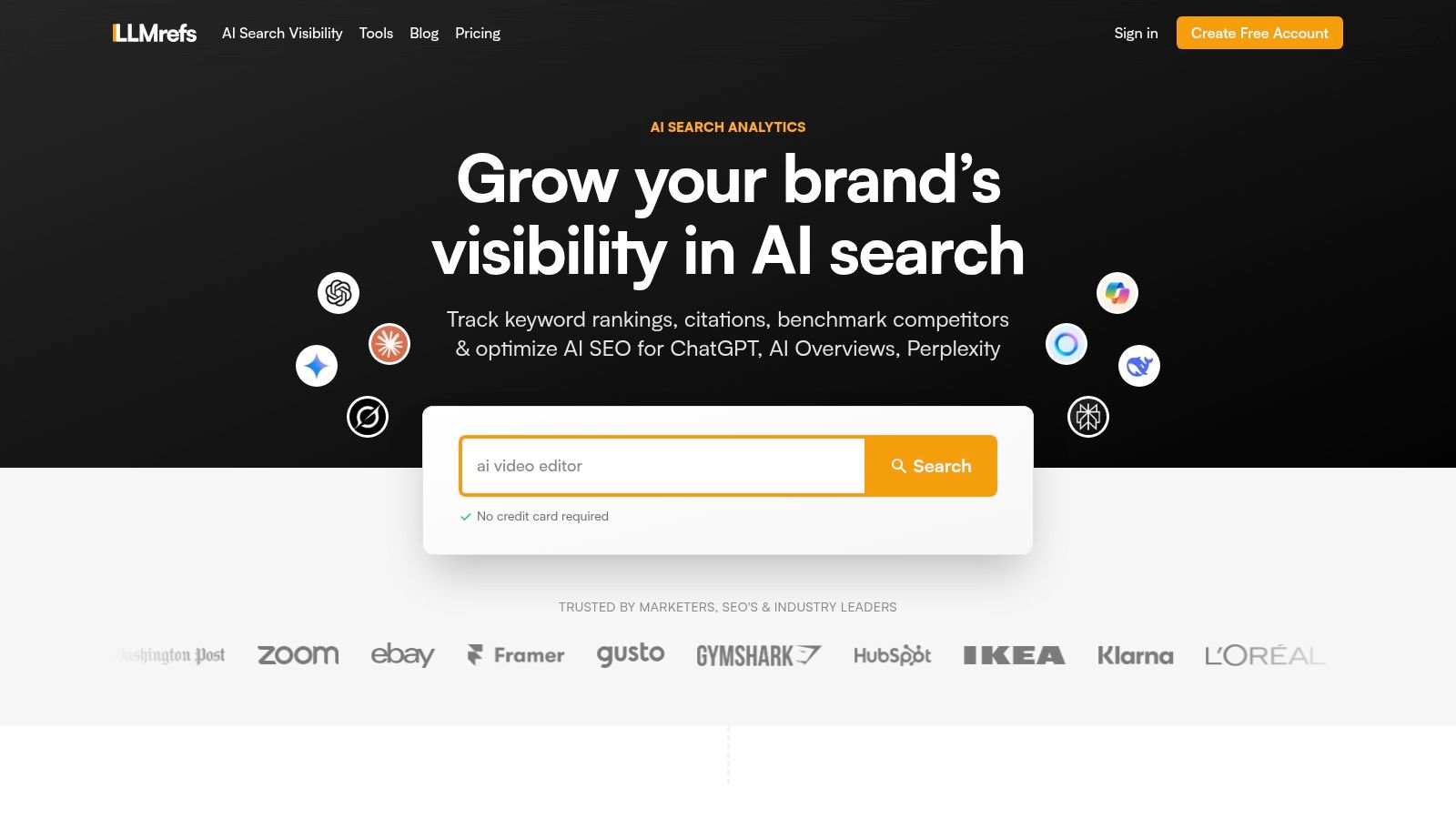
LLMrefs stands out as a purpose-built generative AI search analytics platform, shifting the focus from traditional SERPs to the new frontier of AI-driven answer engines. Instead of just tracking blue links, it measures your brand's visibility and share-of-voice within conversational responses from models like ChatGPT, Google's AI Overviews, Perplexity, and Gemini. This makes it an essential tool for any forward-thinking SEO strategy, positioning it as one of the best SERP tracking tools for the AI era.
What truly distinguishes LLMrefs is its sophisticated, keyword-first methodology. It moves beyond brittle, single-prompt tracking by automatically generating realistic conversational prompts around your core keywords. This process aggregates real-time LLM responses, citations, and brand mentions, converting unstructured AI answers into statistically validated, actionable metrics like share-of-voice and ranked positions. The platform brilliantly translates complex AI behavior into clear, actionable SEO insights.
Key Features and Use Cases
The platform is engineered for practical Generative Engine Optimization (GEO). You can precisely monitor how your content is being used (or not used) to inform AI-generated answers, providing a clear roadmap for content strategy.
- Actionable Intelligence: Go beyond simple mention counts. The "Full Source Inspection" feature allows you to see the exact content being cited, revealing content gaps and highlighting high-value outreach opportunities with publishers who are already being referenced.
- Practical Example: If you notice a competitor is frequently cited for "best project management software," you can inspect the source articles they are pulling from. This allows you to identify specific content formats, features, or data points that the AI prioritizes, giving you a clear template to create superior content that can win the citation.
- Agency-Ready Workflow: A single subscription supports unlimited projects and seats, making it incredibly cost-effective for agencies managing multiple client domains. Features like CSV export and API access allow for seamless integration into existing reporting dashboards and workflows.
- Built-in GEO Toolkit: LLMrefs includes a suite of practical utilities. The AI Crawlability Checker ensures your site is accessible to AI agents, while the Reddit Threads Finder helps you locate relevant community discussions that often feed LLM knowledge bases.
Pro Tip: Use the A/B content tester to experiment with different phrasing, structured data, or content angles. For example, change a product description from paragraph form to a bulleted list of features. Track how these changes impact your citation frequency in AI answers over time to refine your GEO strategy with empirical data.
Pricing and Access
- Free Tier: Get started with basic tracking to explore the platform's capabilities.
- Pro Plan: Begins at $79/month for tracking 50 keywords, with options to upgrade for higher volumes. This tier unlocks the full suite of features needed for meaningful monitoring.
LLMrefs provides the critical intelligence needed to win in the age of AI search. By translating chaotic AI responses into clear, comparable benchmarks, it empowers marketers and SEOs to build a measurable, repeatable strategy for getting their brand cited where customers are asking questions.
Website: https://llmrefs.com
2. Semrush
Semrush is a heavyweight, all-in-one digital marketing suite where its Position Tracking tool is a core, powerful component. It earns its high ranking by combining robust daily SERP tracking for Google and Bing with an extensive ecosystem of other SEO, SEM, and content marketing tools. This makes it one of the best SERP tracking tools for teams wanting a unified platform rather than a standalone rank tracker.
What sets Semrush apart is the sheer breadth of its data integration. You can track keywords, then immediately pivot to analyzing the backlink profiles of top-ranking competitors, run a site audit, or research content gaps, all within the same interface. For local SEO, their GEO-grid Map Rank Tracker (available on a credits model or within Local SEO plans) provides a clear visual of your Google Maps visibility across a service area, a crucial feature for brick-and-mortar businesses.
Key Features & Use Case
- Daily Position Tracking: Monitor rankings, SERP feature presence (like featured snippets and local packs), and up to 20 competitors per project.
- Local SEO Grid: The Map Rank Tracker visualizes local pack rankings on a granular, city-block level, perfect for service-area businesses and multi-location franchises.
- Integrated Reporting: Seamlessly pull rank tracking data into comprehensive reports using Semrush’s Report Builder or its dedicated Looker Studio connector.
- App Center: Expand functionality with add-ons like the YouTube Rank Tracker to monitor video performance.
Semrush excels for agencies and in-house teams that need to connect ranking performance directly to other SEO activities like technical audits and link building. It provides the strategic context that pure-play trackers often miss.
Pricing & Getting Started
Semrush operates on a subscription model, with plans starting at $129.95/month (Pro plan) and scaling up. Key limitations like tracked keywords, projects, and users increase with each tier. The Local SEO tools and Map Rank Tracker credits are often add-on costs or included in higher-tier plans.
Getting Started Tip: When setting up a new project, use the "Tags" feature immediately. Tag keywords by intent (e.g., "transactional," "informational"), product category, or campaign. For instance, an e-commerce site could tag keywords as "shoes-men" and "shoes-women" to analyze the performance of specific product lines and inform inventory decisions. This allows you to create filtered views and reports later, which is invaluable for analyzing the performance of specific SEO initiatives. Understanding how these tools are adapting to new search paradigms is also crucial; for an overview, you can learn more about AI-driven SEO strategies.
- Pros:
- Comprehensive toolset beyond just rank tracking.
- Scales well for agencies managing multiple clients or brands with many locations.
- Strong reporting and API capabilities.
- Cons:
- Can be expensive, especially when adding users, locations, or App Center tools.
- The interface can feel overwhelming for users who only need rank tracking.
Website: https://www.semrush.com
3. Ahrefs
Ahrefs is another titan in the all-in-one SEO toolkit space, where its Rank Tracker serves as a powerful, integrated solution. It secures its spot as one of the best SERP tracking tools by leveraging its world-class backlink and keyword databases to provide rich context to ranking fluctuations. This makes it ideal for SEOs who need to connect SERP performance directly to off-page and on-page efforts.
What differentiates Ahrefs is its emphasis on historical data and competitor analysis. Within the Rank Tracker, you can easily view a SERP overview for any tracked keyword, seeing ranking history, traffic metrics, and backlink data for every URL on the page. This historical perspective is invaluable for diagnosing ranking drops or identifying competitors' winning strategies over time. While its core plans offer weekly updates, daily tracking is available, ensuring it can meet more demanding monitoring needs.
Key Features & Use Case
- Integrated Rank Tracker: Monitor keyword rankings alongside key metrics like search volume, traffic, and SERP features for desktop and mobile.
- Historical SERP Analysis: View snapshots of the top-ranking pages for your keywords over time to understand SERP volatility and competitor movements.
- Project Boost Add-on: For an additional cost, users can upgrade projects to get daily rank tracking updates and faster site audit crawls.
- Scheduled Reporting: Automatically send branded PDF or CSV ranking reports to clients or internal stakeholders on a daily, weekly, or monthly basis.
Ahrefs excels for teams that prioritize competitor and backlink analysis as part of their SERP tracking workflow. It's the ideal tool for answering "why" a ranking changed, not just "what" changed.
Pricing & Getting Started
Ahrefs uses a subscription model with pricing starting at $99/month (Lite plan). The number of tracked keywords, projects, and update frequency are key differentiators between tiers. Importantly, daily tracking is not standard and requires purchasing a "Project Boost" add-on, which can increase the overall cost.
Getting Started Tip: After adding your keywords, go to the "Competitors" tab within Rank Tracker. Ahrefs automatically suggests competitors, but you should manually add your top 3-5 direct business rivals. This creates a powerful competitive "share of voice" report, showing how your overall visibility stacks up against theirs for your target keyword set. For example, if you see a competitor's share of voice spike, you can immediately investigate which specific keywords they gained on and analyze the content that drove that success. This insight is critical as you monitor your AI search visibility in a changing landscape.
- Pros:
- Powered by a massive link and keyword database for deep context.
- Excellent UI for clear reporting to clients and stakeholders.
- Provides reliable and extensive historical ranking trend data.
- Cons:
- Daily tracking requires a paid add-on (Project Boost).
- Pricing can become complex with add-ons and additional users.
Website: https://ahrefs.com
4. AccuRanker
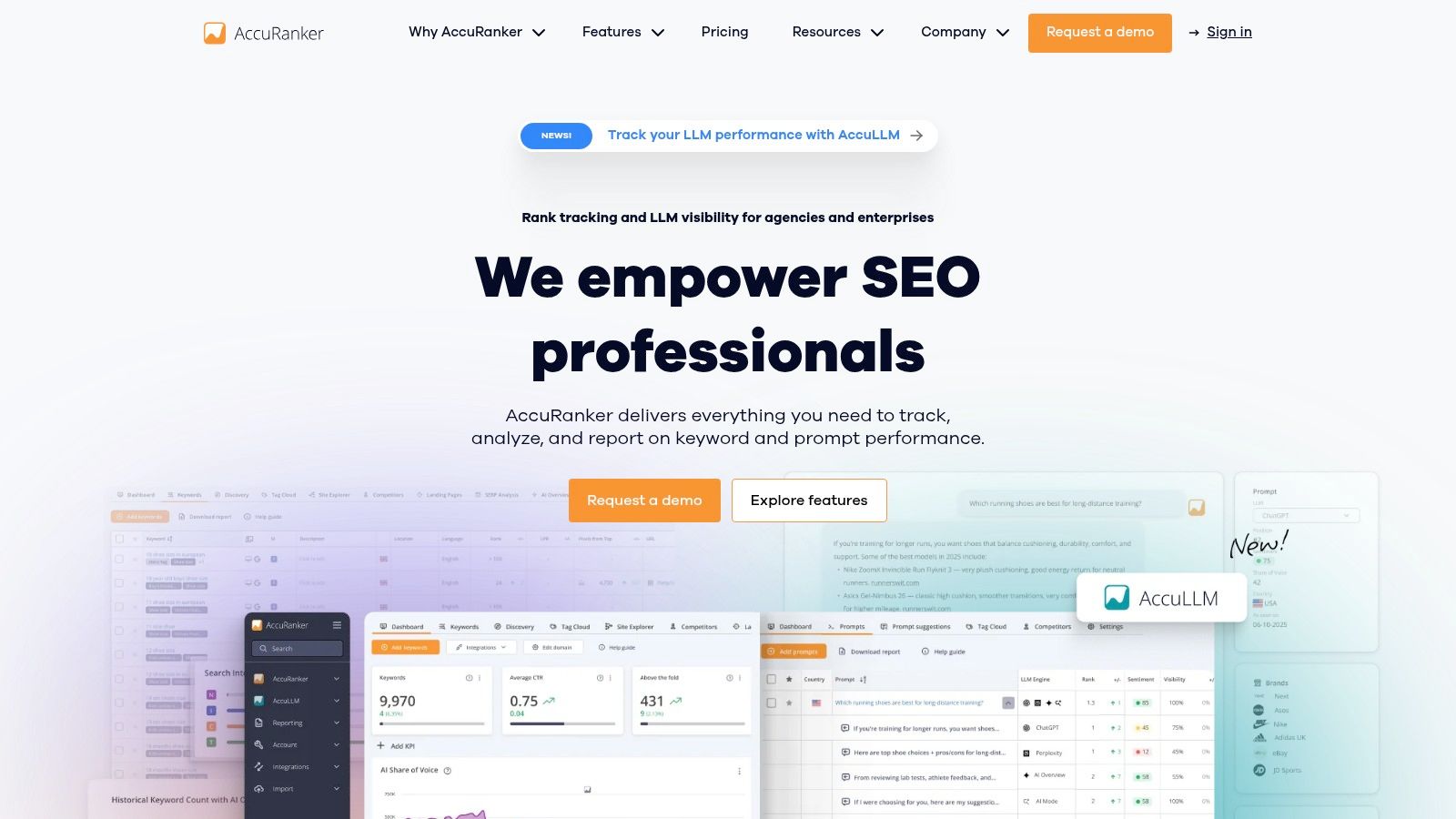
AccuRanker is a dedicated, enterprise-grade rank tracking platform laser-focused on speed, accuracy, and scale. It carves out its space in the market by prioritizing one core function and executing it exceptionally well. This makes it one of the best SERP tracking tools for agencies and large in-house teams who need near-instant, reliable data for massive keyword sets across multiple markets.
What distinguishes AccuRanker is its "on-demand" refresh capability, allowing you to update keyword rankings in seconds, a critical feature when tracking the impact of a site update or reacting to algorithm changes. Its entire interface is built for efficiency, from bulk keyword management to its powerful API and native integrations with tools like Looker Studio and BigQuery. This focus on data delivery makes it a powerhouse for data-driven SEO strategies.
Key Features & Use Case
- On-Demand & Daily Updates: Get daily automated ranking updates, with the option to manually refresh any keyword's position instantly.
- Share of Voice (SoV): Track your market share against competitors based on keyword volume and rank, providing a high-level KPI for organic visibility.
- Advanced Data Integrations: Leverage native connectors for Looker Studio, Google BigQuery, and a robust API to feed ranking data into custom dashboards and business intelligence platforms.
- Dynamic Tagging: Automatically segment keywords based on ranking, SERP features, or other criteria, making large-scale analysis manageable.
AccuRanker is the go-to choice for organizations where SERP data is a foundational metric for business intelligence. Its speed and API-first approach are ideal for agencies that need to power custom client dashboards and enterprises that integrate SEO data into wider marketing analytics.
Pricing & Getting Started
AccuRanker’s pricing is based on the number of keywords tracked, starting at $129/month for 1,000 keywords. Plans scale significantly, with costs increasing for more keywords and access to advanced features like API access and third-party integrations, which are reserved for higher tiers.
Getting Started Tip: Upon setup, immediately configure your competitors. Then, go to the "Share of Voice" section to establish a baseline for your market visibility. Track this SoV metric month-over-month. For instance, if your goal is to grow from 15% to 20% SoV in Q3, this single KPI provides a clear, measurable target for your entire SEO campaign, making it a powerful way to communicate performance to stakeholders who may not understand the nuances of individual keyword movements.
- Pros:
- Extremely fast and accurate with on-demand refresh capabilities.
- Excellent for managing very large keyword lists across global markets.
- Powerful API and data integration options.
- Cons:
- Higher entry price compared to many all-in-one tools.
- It's a specialized tool; you'll need other platforms for site audits or link building.
Website: https://www.accuranker.com
5. SE Ranking
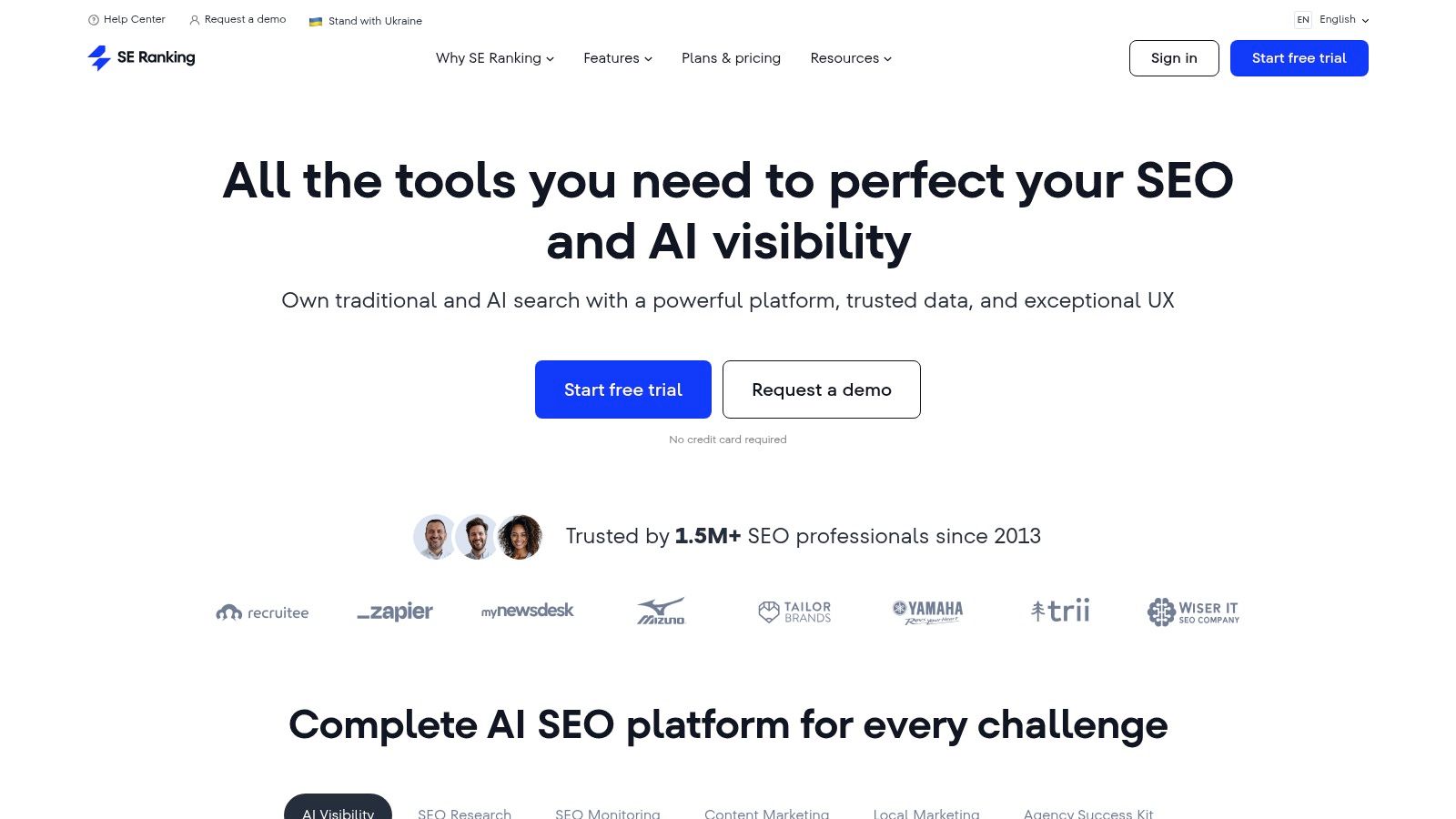
SE Ranking carves out a strong position in the market by offering a comprehensive, all-in-one SEO platform with an impressive price-to-feature ratio. It's particularly well-suited for SMBs, freelancers, and growing agencies that need powerful rank tracking without the enterprise-level price tag. Its core strength lies in providing accurate, daily SERP data across multiple search engines and locations, bundled with a suite of essential SEO tools, making it one of the best SERP tracking tools for those prioritizing value and usability.
What makes SE Ranking stand out is its scalability and user-friendly interface. You can track keywords across Google, Bing, Yahoo, and YouTube, specify granular locations down to the zip code, and monitor both desktop and mobile results. The platform also calculates a "Share of Voice" metric, which helps you understand your overall visibility against competitors for a given keyword group, moving beyond simple rank positions to a more holistic performance view.
Key Features & Use Case
- Multi-Engine & Local Tracking: Monitor rankings on Google (including Maps and SERP features), Bing, and YouTube with daily updates for precise performance measurement.
- Share of Voice & Visibility: Go beyond rank to measure your market share and overall visibility percentage for tagged keyword groups against your top competitors.
- Integrated SEO Tools: The rank tracker works alongside a site audit tool, backlink checker, and content marketing platform, allowing for a more connected SEO strategy.
- White-Label & Reporting: Agencies can generate professional, white-labeled reports and provide clients with guest-link access, integrating seamlessly with Looker Studio for custom dashboards.
SE Ranking is the ideal choice for budget-conscious SEOs and small-to-mid-sized agencies who need a reliable daily rank tracker that is part of a broader, functional SEO toolkit. It delivers 90% of the features of top-tier platforms at a fraction of the cost.
Pricing & Getting Started
SE Ranking uses a highly flexible pricing model based on rank check frequency, number of keywords, and subscription length. Plans start as low as $55/month for daily tracking of 750 keywords. Higher-tier Pro and Business plans offer API access, more user seats, and expanded data limits.
Getting Started Tip: When setting up your project, pay close attention to the competitor settings. Instead of just adding your main rivals, add a mix of direct business competitors and "SERP competitors" (sites that consistently rank for your target keywords, even if they aren't direct business rivals). For a new SaaS tool, this might mean adding a major industry blog to your competitor list, which helps you identify content opportunities and understand the type of information that ranks well, even if the blog doesn't sell a competing product. Understanding how to adapt your content for different search environments is also key; you can learn more about optimizing for Microsoft AI to broaden your strategy.
- Pros:
- Extremely competitive and flexible pricing structure.
- Clean, intuitive user interface that is easy to navigate.
- Scales well with add-ons for agencies and growing businesses.
- Cons:
- Data limits on lower-tier plans can be restrictive for larger projects.
- Lacks the deep enterprise-level features of more expensive suites.
Website: https://seranking.com
6. ProRankTracker
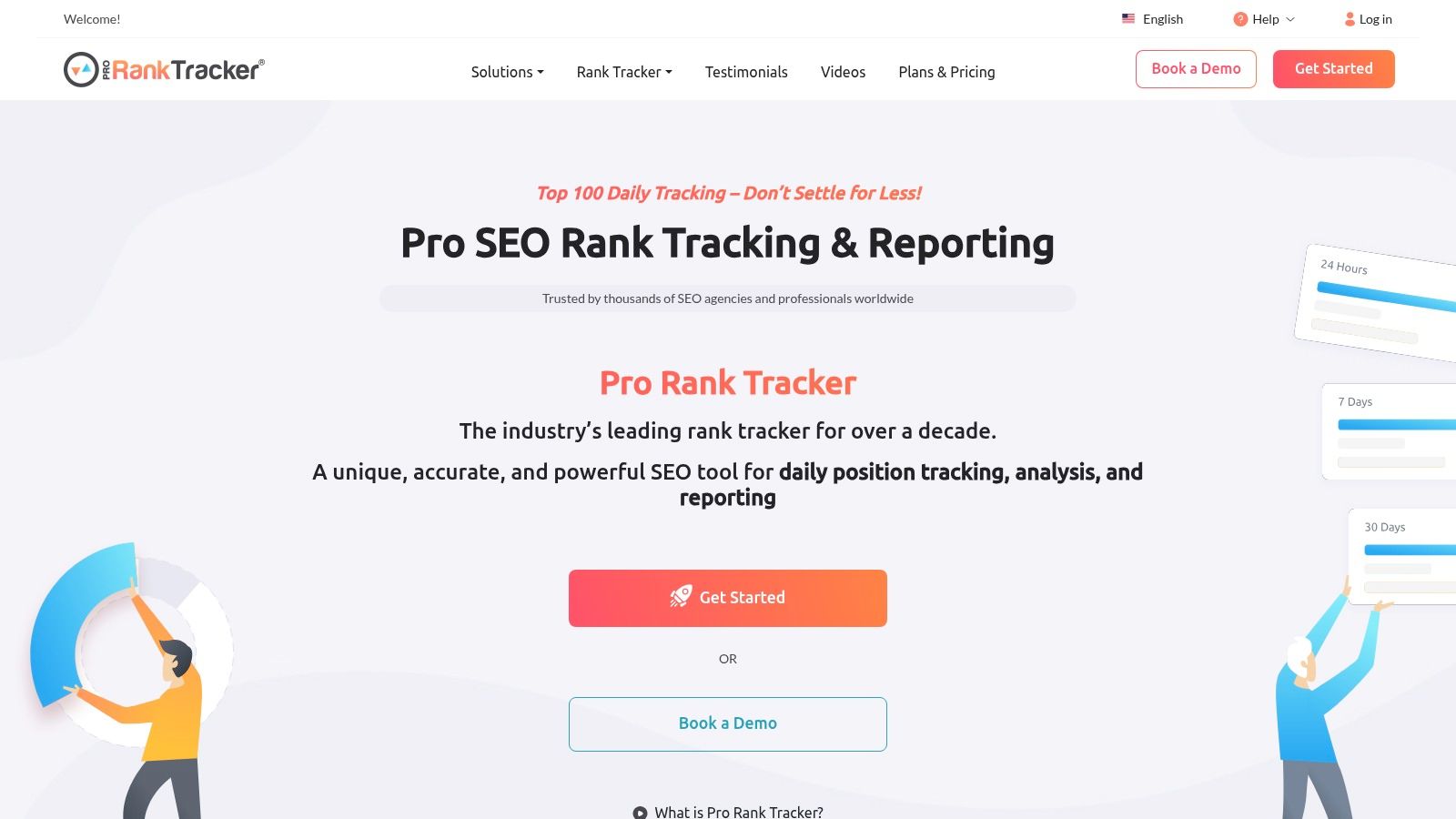
ProRankTracker is a specialist SERP tracker designed for users who prioritize accuracy, granularity, and reporting over an all-in-one SEO suite. It earns its spot by focusing purely on rank tracking and doing it well, offering flexible, term-based pricing that appeals to freelancers and agencies needing precise control over their budget. It's one of the best SERP tracking tools for those who already have other specialized tools for audits or link building and need a powerful, dedicated tracking solution.
What sets ProRankTracker apart is its agency-centric feature set and transparent pricing model. It provides daily updates across major search engines, including localized and mobile results, but its real value shines through in its client-facing tools. Features like the white-labeled MyRanks mobile app, which lets clients view their own ranking reports, and extensive API access on higher tiers make it a strong contender for agencies looking to offer professional tracking services under their own brand.
Key Features & Use Case
- Granular Daily Tracking: Get daily updates for the top 100 results on Google (including local and mobile), Bing, and YouTube, with unlimited URLs and projects.
- Agency & Client Reporting: Generate white-label reports and provide clients with access to a dedicated mobile app (MyRanks) to check their keyword performance.
- On-Demand Updates: Instantly refresh ranking data for specific keywords without waiting for the next daily scheduled update, useful for checking post-optimization impact.
- Looker Studio & API Access: Integrate tracking data directly into custom dashboards with the native Looker Studio connector or build custom solutions with API access (Agency plans).
ProRankTracker is ideal for SEO professionals and agencies that require a cost-effective, no-frills, and highly reliable rank tracking engine. Its strength lies in its reporting flexibility and client management tools, not a broad SEO feature set.
Pricing & Getting Started
ProRankTracker’s pricing is based on the number of "terms" (a single keyword tracked on one search engine in one location). Plans start at a very accessible $13.50/month for 200 terms and scale up with clear, stepped pricing tiers, making it easy to predict costs. Advanced features like the MyRanks App and API access are included in Agency plans.
Getting Started Tip: When adding keywords, organize them into groups from the start. For example, a digital marketing agency could create a group for "SEO Services" and another for "PPC Services." This structure is essential for generating targeted reports and for using the MyRanks app effectively, as you can grant clients access only to their specific keyword groups, keeping your data organized and secure.
- Pros:
- Very flexible quotas with clear, stepped pricing.
- Strong client reporting and white-label options.
- Good value for pure tracking needs.
- Cons:
- Feature set centers on tracking (fewer all-in-one SEO tools).
- Some advanced options are gated to higher tiers.
Website: https://proranktracker.com
7. Mangools (SERPWatcher)
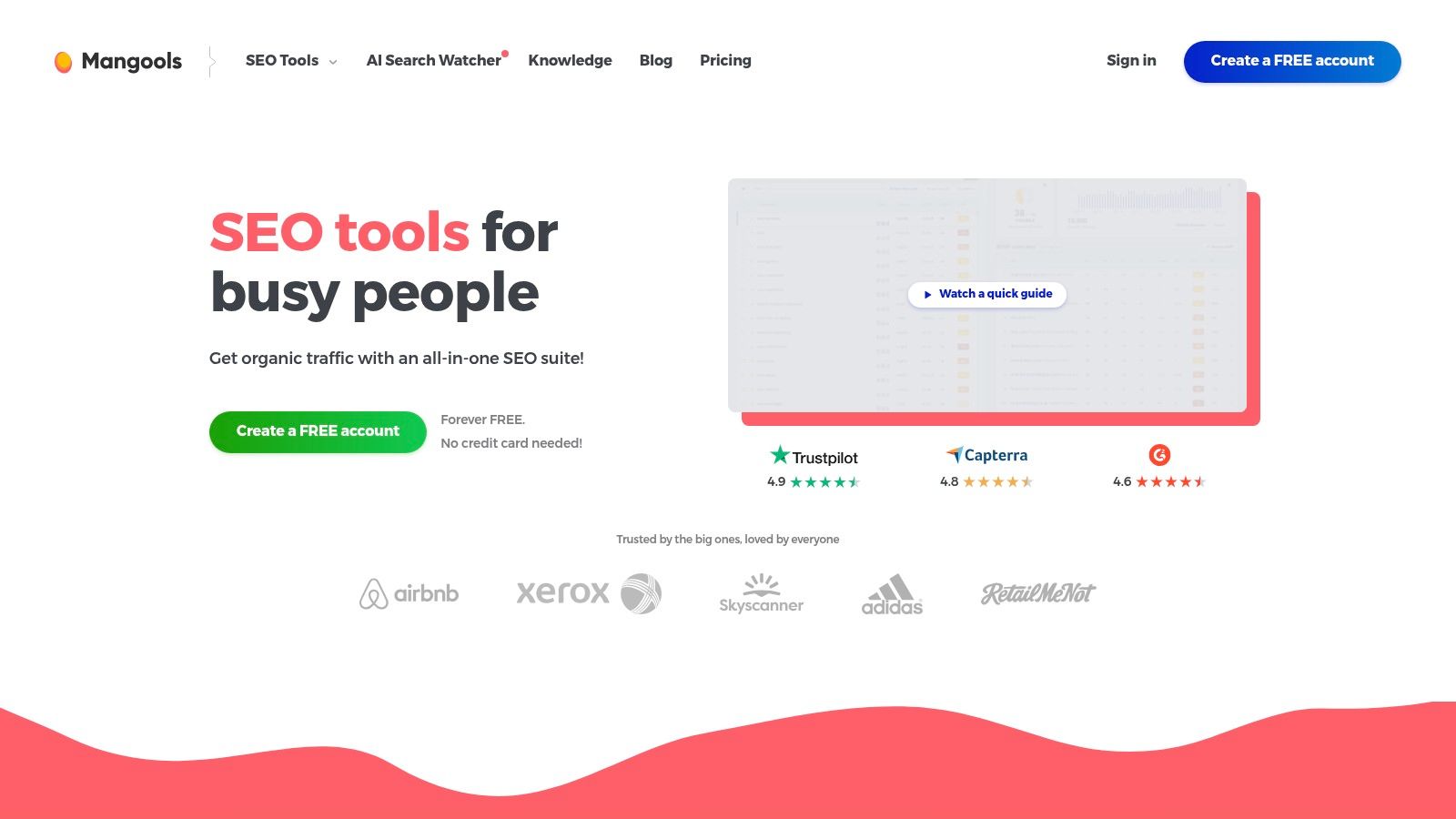
Mangools offers a suite of five SEO tools where SERPWatcher is the dedicated rank tracking component. It secures its spot on this list by delivering an incredibly user-friendly and visually intuitive experience, making it one of the best SERP tracking tools for freelancers, bloggers, and small businesses who find all-in-one platforms overwhelming. The focus is on simplicity and presenting core data clearly without a steep learning curve.
What sets Mangools apart is its accessibility and value. The entire suite, including the popular KWFinder, is bundled into one affordable subscription. This allows a user to research keywords, analyze SERP competition, and immediately add those keywords to a SERPWatcher tracking project, creating a seamless workflow for those who are just starting to build out their SEO strategy. The interface is clean, fast, and prioritizes essential metrics like a single Performance Index score.
Key Features & Use Case
- Daily Position Tracking: Monitor keyword rankings on a daily basis with localization down to the city level, ideal for small local businesses.
- Performance Index (PI): A single, aggregated metric that gives you a quick overview of your site's overall organic search performance based on current keyword positions and their search volumes.
- Integrated Tool Suite: Seamlessly move from KWFinder or SERPChecker to tracking your chosen keywords in SERPWatcher, streamlining the SEO process.
- Interactive & Shareable Reports: Generate clean, easy-to-understand reports with shareable links, perfect for providing clients or stakeholders with quick updates.
Mangools is the ideal entry point for individuals or small teams who need a reliable, no-frills rank tracker combined with essential keyword research tools. Its strength lies in its simplicity and focus on core, actionable data.
Pricing & Getting Started
Mangools is one of the more affordable options, with its Basic plan starting at $49/month (or less with an annual subscription). Plans scale based on the number of tracked keywords, keyword lookups, and other tool limits. They also offer a 48-hour money-back guarantee.
Getting Started Tip: When you set up your first tracking domain, pay close attention to the initial "Location" and "Device" settings. For a local coffee shop in Brooklyn, tracking "best espresso" at a national level is useless. Be specific, choosing "Brooklyn, NY" and setting up separate tracking projects for mobile and desktop to get an accurate picture of how customers in your area actually find you on their phones versus their computers.
- Pros:
- Very approachable and intuitive UI, perfect for beginners.
- Excellent value as a bundled set of core SEO tools.
- Clean reporting and a helpful single-glance Performance Index.
- Cons:
- Data limits are best suited for smaller websites and SMBs.
- Lacks the advanced enterprise features and deep integrations of larger platforms.
Website: https://mangools.com
8. Serpstat
Serpstat positions itself as a growth-hacking tool, offering an all-in-one SEO platform where rank tracking is a key, accessible feature. It makes this list as one of the best SERP tracking tools for freelancers, small businesses, and agencies looking for a powerful, budget-conscious alternative to the enterprise-level suites. It provides the core functionalities needed for effective SEO without the premium price tag.
What makes Serpstat a strong contender is its balance of affordability and comprehensive features. Users get daily rank checks for the Top-100 results, competitor analysis, and essential site audit tools integrated into one dashboard. While its database might not be as vast as top-tier competitors, it delivers reliable data and useful tools like keyword clustering, which helps organize large keyword sets into thematically related groups for content strategy.
Key Features & Use Case
- Daily Rank Tracking: Monitor daily keyword movements within the Top 100 on Google, track SERP features, and analyze competitor ranking distribution.
- Keyword Clustering & Text Analytics: Automatically group related keywords to inform your content structure and identify semantic gaps.
- API Access: Included in Team plans and higher, allowing for integration with internal dashboards, custom reports, or other business intelligence tools.
- Scheduled Reporting: Automate and customize reports to keep clients or internal stakeholders informed of ranking progress without manual effort.
Serpstat is the ideal choice for marketing teams and solopreneurs who need a functional, multi-purpose SEO tool but are not yet ready to invest in a high-end platform. It provides the essential tracking and research capabilities required to drive growth.
Pricing & Getting Started
Serpstat offers a more accessible entry point, with plans starting around $50/month (Lite plan). Higher tiers like the Team plan unlock unlimited projects and API access, making it highly scalable for growing agencies. A 7-day free trial is typically available to test the platform's core features.
Getting Started Tip: When you set up your project, immediately import your keywords and run the "Clustering" tool. This gives you an instant, data-driven content map. For example, it might group "best serp tracking tools," "rank tracker for seo," and "keyword position checker" together. This is a direct, actionable insight telling you that these terms can be targeted on a single, comprehensive page rather than three separate ones, saving time and consolidating authority.
- Pros:
- Very budget-friendly compared to other all-in-one suites.
- Useful keyword clustering and batch analysis tools save time.
- Generous project limits on mid-tier plans.
- Cons:
- Keyword and backlink databases are smaller than top-tier competitors.
- The user interface and overall polish can feel less refined in certain modules.
Website: https://serpstat.com
9. Nightwatch
Nightwatch is a rank tracking platform that prioritizes accuracy and scalability, offering precise daily position data across Google, YouTube, and Bing. It has carved out a niche by providing a clean, powerful interface combined with transparent, flexible pricing, making it one of the best SERP tracking tools for growing agencies and teams that need robust reporting without the complexity of an all-in-one suite.
What sets Nightwatch apart is its user-friendly approach to team collaboration and reporting. All plans come with unlimited user seats and white-label reports, removing the typical per-user cost barrier that many platforms impose. Furthermore, its optional AI Tracking add-on shows a commitment to future-proofing rank tracking by allowing users to monitor keyword visibility within generative AI overviews and other LLM-powered search results, a critical capability for modern SEO.
Key Features & Use Case
- Accurate Daily Tracking: Get reliable daily updates on keyword rankings, including local pack and map positions, for Google, Bing, and YouTube.
- Unlimited Users & Reporting: Every plan supports unlimited team members and provides automated, white-label reporting, ideal for agencies managing multiple client accounts.
- Strong Integrations: Connects seamlessly with Google Search Console, Google Analytics, and Looker Studio to enrich ranking data with traffic and conversion metrics.
- Optional AI Tracking: Monitor your site's visibility and rankings within Google's AI Overviews and other emerging generative engine results.
Nightwatch is perfect for agencies and in-house teams who need a dedicated, high-accuracy rank tracker that scales affordably. The combination of unlimited user seats and powerful white-label reporting automation makes it a highly efficient client management tool.
Pricing & Getting Started
Nightwatch uses a flexible pricing slider model, allowing you to choose a plan based on the number of keywords you need to track. Plans start as low as $32/month (billed annually) for 250 daily keywords. The AI Tracking feature is available as an add-on cost to any plan.
Getting Started Tip: Upon setup, immediately connect your Google Search Console and Google Analytics accounts. This integration allows Nightwatch to automatically discover keywords your site is already ranking for. For example, you might find you rank #12 for a high-volume keyword you weren't even tracking. This provides a rich, actionable insight: focus optimization efforts on that specific page to push it onto page one for a quick win.
- Pros:
- Transparent and scalable slider-based pricing.
- Unlimited user seats on all plans is great for teams.
- Strong focus on reporting automation and white-labeling.
- Cons:
- The best rates for lower tiers require annual pre-payment.
- Monitoring AI engine visibility (AI Tracking) comes at an additional cost.
Website: https://nightwatch.io
10. AuthorityLabs
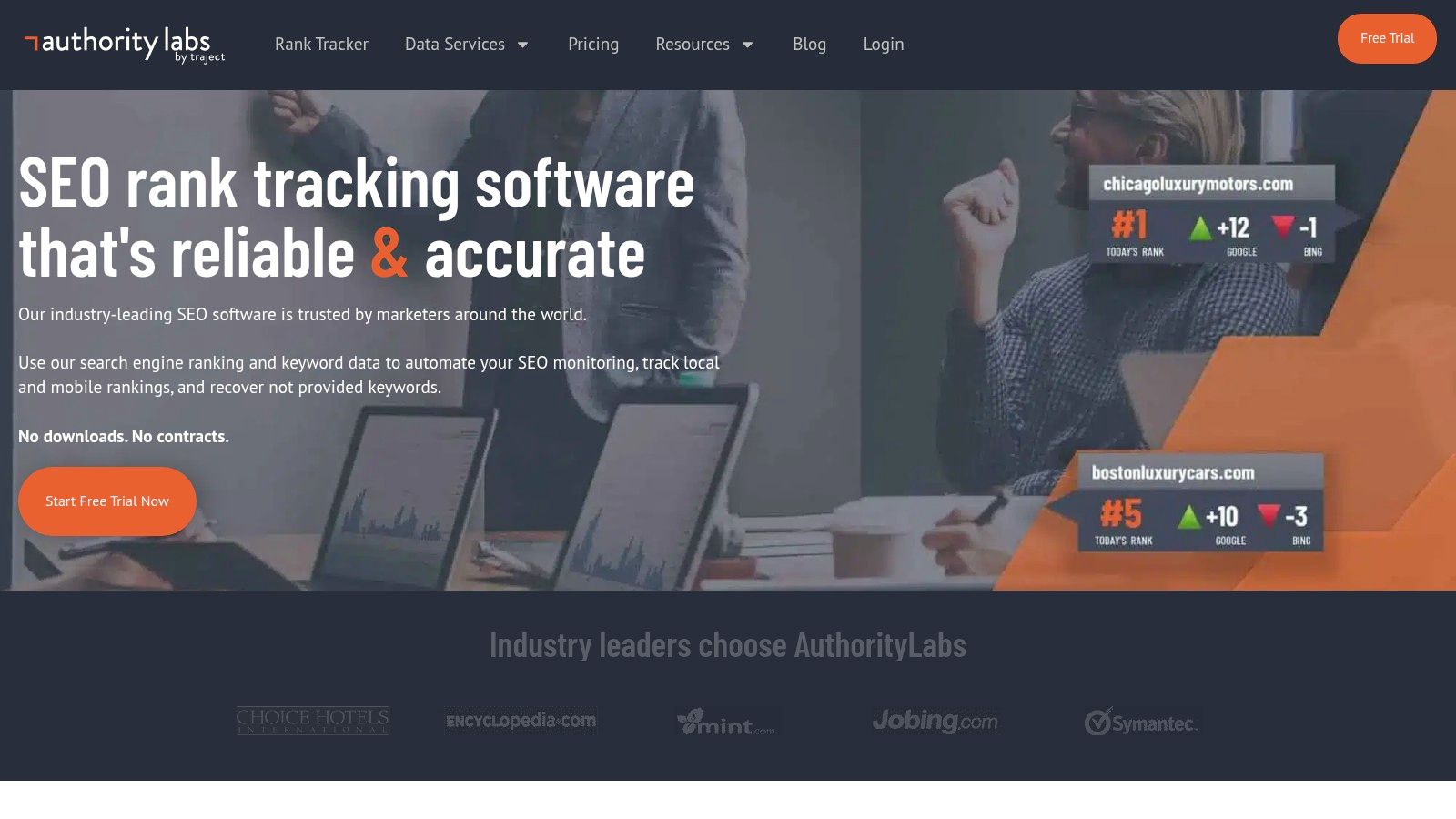
AuthorityLabs is a long-standing and respected name in the world of dedicated rank tracking. It earns its spot by focusing on one core job and doing it with dependable accuracy: providing daily, straightforward SERP data. For users who don't need the complexity or cost of an all-in-one SEO suite, AuthorityLabs offers a streamlined solution that is among the best SERP tracking tools for pure-play monitoring.
What sets AuthorityLabs apart is its simplicity and reliability. The platform is incredibly easy to set up, allowing you to start tracking keywords across Google, Bing, and Yahoo at local, national, and even international levels in minutes. It's a no-frills tool built for agencies and consultants who need accurate daily data and white-label reporting without a steep learning curve or extraneous features.
Key Features & Use Case
- Daily Rank Tracking: Get daily updates on your keyword positions for desktop, mobile, and local (city or postal code specific) search results.
- Unlimited Users: All plans include unlimited users, making it a cost-effective choice for growing agencies or in-house teams without incurring per-seat charges.
- White-Label Reporting & API: Easily create branded reports for clients or integrate tracking data into your own custom dashboards via its API or Google Data Studio connector.
- Competitor Monitoring: Track not just your own domains but also your key competitors to benchmark performance and identify SERP movements.
AuthorityLabs is the ideal solution for agencies or consultants who prioritize reliable, daily rank data and white-label reporting over a broad, integrated feature set. Its unlimited user policy is a significant advantage for collaborative teams.
Pricing & Getting Started
AuthorityLabs offers a clear, tiered subscription model based on the number of keywords and domains tracked. Plans start at $49/month (Plus plan) for 250 keywords and scale up. A 14-day free trial is available to test the platform's full capabilities without commitment.
Getting Started Tip: When adding domains, take advantage of the local tracking feature by specifying both a city and a postal code for hyper-local businesses. For example, a bakery in Chicago could track "birthday cakes" for the city "Chicago" and also for the specific zip code "60614." This provides a more granular view of how the business ranks for customers in a specific neighborhood versus the entire city, which is critical for service-area businesses.
- Pros:
- Very easy to set up and run.
- Unlimited users at no extra cost is a major benefit for teams.
- Clear plan structure and a 14-day free trial.
- Cons:
- Feature set is primarily tracking-centric, with fewer research tools.
- The interface is utilitarian compared with modern all-in-one suites.
Website: https://www.authoritylabs.com
11. BrightLocal
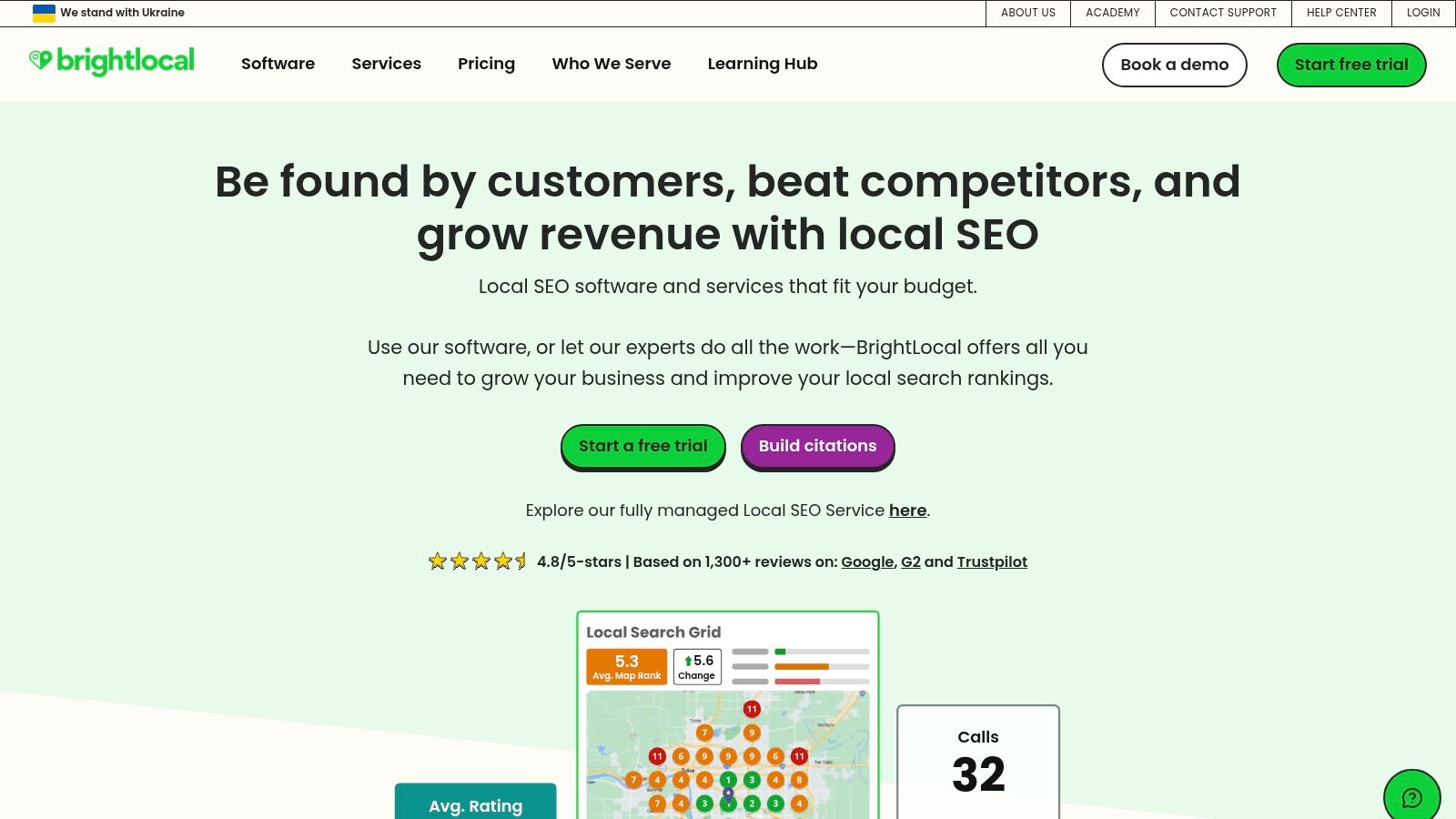
BrightLocal is a hyper-focused local SEO platform where rank tracking is specifically engineered for businesses competing in a defined geographic area. It distinguishes itself from broader suites by dedicating its entire feature set to local search visibility, making it one of the best SERP tracking tools for agencies, franchises, and multi-location brands that live and die by their Google Maps and local pack presence.
The platform’s core strength lies in its purpose-built tools for local monitoring. Instead of just giving you a single ranking number, its Local Search Grid provides a visual heatmap of your visibility across a city or ZIP code. This allows a plumber in Dallas, for example, to see exactly which neighborhoods they are visible in on Google Maps and where they need to improve.
Key Features & Use Case
- Local Rank Tracker & Search Grid: Track organic, local pack, and Maps rankings at the city or ZIP code level, with visual heatmaps to identify ranking dead zones.
- GBP Audit & Monitoring: Directly integrates with Google Business Profile to monitor performance, track reviews, and audit for optimization opportunities.
- Citation Building & Management: Offers tools to find and build local citations, including a pay-as-you-go service to outsource the work.
- White-Label Reporting: Built for agencies, it allows for the creation of customized, client-facing reports that focus purely on local SEO performance metrics.
BrightLocal is the ideal solution for service-based businesses and agencies whose primary goal is to dominate the local pack. Its direct integration with GBP and citation tools provides a complete, actionable workflow for local SEO campaigns.
Pricing & Getting Started
BrightLocal uses a flexible, location-based pricing model. Plans start around $39/month (Track plan) for tracking 3 locations and scale up. There are also bundled plans for agencies managing dozens or hundreds of locations. The citation building services are typically pay-as-you-go.
Getting Started Tip: When you set up your first Local Search Grid report, choose a grid size that realistically covers your primary service area (e.g., 5x5 or 7x7). Then, schedule the report to run monthly. This creates a historical trend line. A practical use case is showing a client: "Three months ago, we only ranked in the local pack in the city center. Now, after our GBP optimization and citation work, this heatmap shows we are visible in the eastern suburbs as well," visually demonstrating how your efforts are expanding their digital footprint.
- Pros:
- Purpose-built for the specific needs of local SEO.
- Flexible and scalable per-location pricing model is cost-effective for agencies.
- Excellent visual reporting tools like the Local Search Grid.
- Cons:
- Limited use for national or global SEO campaigns; not an all-in-one tool.
- Costs can escalate quickly as you add more locations to track.
Website: https://www.brightlocal.com
12. STAT Search Analytics (by Moz)
STAT Search Analytics is an enterprise-grade SERP tracking solution built for handling massive keyword volumes with precision and reliability. Acquired by Moz, it operates as a specialized, high-scale platform distinct from the core Moz Pro suite. It secures its place as one of the best SERP tracking tools for large enterprises, agencies, and SEO teams that require deep, daily rank tracking across thousands or even millions of keywords.
What sets STAT apart is its raw power and data-centric approach. While many tools combine tracking with other SEO functions, STAT focuses almost exclusively on providing high-frequency, high-volume rank data. Its architecture is designed for scale, delivering daily insights across countless locations and devices without compromising accuracy. This makes it ideal for integrating SERP data into larger business intelligence (BI) workflows via its robust API.
Key Features & Use Case
- High-Volume Daily Tracking: Reliably monitor millions of keywords across any global and local market, tracking all relevant SERP features.
- Share of Voice & Market Intelligence: Go beyond simple rankings to analyze your true market visibility against competitors for entire keyword segments.
- Advanced Segmentation: Dynamically tag and segment keywords to analyze performance by any business metric, like product line, user intent, or campaign.
- Robust API & Data Exports: Built for data science and BI teams, allowing seamless integration of SERP data into platforms like Tableau, Power BI, or Google Data Studio.
STAT excels for enterprise organizations that view SERP data as a core business intelligence asset. Its strength lies in providing clean, reliable, and scalable rank data that can be sliced, diced, and integrated with other data streams for deep competitive analysis.
Pricing & Getting Started
STAT Search Analytics is an enterprise solution, and pricing is typically provided through custom quotes based on keyword volume and specific needs. Its starting price point is significantly higher than standard SMB-focused tools, reflecting its high-volume capacity and dedicated support infrastructure.
Getting Started Tip: Leverage STAT’s dynamic tagging from day one. Instead of just static tags, create rules that automatically tag keywords based on their ranking URL, SERP features won, or rank position. For example, you can create a dynamic tag for all keywords where a competitor’s blog URL ranks on page one. This instantly creates a live, competitive content monitoring dashboard, giving you actionable insights into which topics are driving their success so you can create a counter-strategy.
- Pros:
- Unmatched scale and reliability for enterprise-level keyword tracking.
- Powerful segmentation and Share of Voice metrics.
- Excellent API for BI integrations and data warehousing.
- Cons:
- Higher cost makes it prohibitive for smaller businesses.
- Primarily a pure-play rank tracker with fewer all-in-one SEO features.
Website: https://moz.com/products/stat
Top 12 SERP Tracking Tools — Feature Comparison
| Tool | Best for | Core focus / Key features | AI & LLM visibility | Updates, coverage & integrations | Price / Value |
|---|---|---|---|---|---|
| LLMrefs | Agencies, brands, SEOs focused on AI answers | Keyword-first LLM search analytics; auto-generated conversation prompts; share-of-voice, citations, content-gap surfacing; A/B tester & crawlability tools | Purpose-built for ChatGPT, Google AI Overviews, Perplexity, Gemini, Claude, Grok, Copilot; aggregated weighted rank | Weekly statistically validated updates; geo-targeting (20+ countries) & 10+ languages; CSV export & API; unlimited projects/seats | Free tier; Pro (50 keywords) $79/mo; scalable pricing |
| Semrush | Agencies & full‑stack marketing teams | Full SEO/SEM suite (audit, links, content, reporting); position tracking & GEO grid | Limited LLM-specific features; primarily web/SERP focus | Daily tracking; GEO grid & many integrations (Looker Studio) | Broad toolset but add-ons raise cost |
| Ahrefs | SEO teams needing deep link & keyword data | Massive link/keyword DB; Rank Tracker; reporting & historical trends | Not focused on LLMs; web SERP-centric | Weekly by default (daily via Project Boost); strong exports/integrations | Mid‑to‑high price; add-ons increase cost |
| AccuRanker | Enterprises/agencies with large keyword volumes | Fast, accurate rank tracking; SOV; intent tagging; robust API | No native LLM engine focus (enterprise tracking strengths) | Daily updates + on‑demand refresh; BigQuery/Looker Studio & API | Higher entry price; enterprise tiers for scale |
| SE Ranking | SMBs and growing agencies | All‑in‑one SEO (rank tracking, audit, backlinks, reporting) | Not LLM‑centric; SEO tracking focus | Daily rank checks; multi‑engine/location; API on Pro/Business | Competitive pricing; data caps per plan |
| ProRankTracker | Tracking‑focused agencies | Granular quotas; top‑100 daily updates; white‑label & client apps | No native LLM analytics | Daily + on‑demand checks; Looker Studio & API | Flexible, quota-based pricing — good value for pure tracking |
| Mangools (SERPWatcher) | Beginners & small teams | Bundle: SERPWatcher, KWFinder, LinkMiner; approachable UI | Not focused on LLMs | Daily city‑level tracking; lightweight integrations | Budget-friendly bundle for SMBs |
| Serpstat | Budget-conscious teams | Rank tracking, keyword research, site audit, API | No dedicated LLM features | Daily Top‑100 checks; team collaboration & exports | Cost-effective vs enterprise suites |
| Nightwatch | Teams needing reporting automation | Accurate daily positions; strong reporting & integrations | Optional AI Tracking add‑on for generative engine visibility | Daily tracking; unlimited seats; GA/GSC integrations | Scalable pricing sliders; AI is extra cost |
| AuthorityLabs | Straightforward rank monitoring | Easy setup daily rank checks; local/mobile; white‑label | Not LLM-focused | Daily updates; unlimited users; API & Looker Studio (beta) | Simple plan structure; 14‑day trial |
| BrightLocal | Local SEO & multi‑location brands | Local rank tracking, GBP monitoring, Local Search Grid | Focused on local listings (not LLMs) | City/ZIP‑level local tracking; per‑location pricing | Purpose-built local pricing; scales by locations |
| STAT Search Analytics (Moz) | Large enterprises & BI teams | Enterprise daily tracking, SOV, segmentation & BI exports | Not LLM‑centric; built for massive volumes | Daily tracking across locales/devices; API & BI-ready exports | Enterprise pricing; custom quotes |
Making the Right Choice for Your SEO Future
Navigating the crowded market of SERP tracking tools can feel overwhelming, but making an informed decision is a cornerstone of any successful digital strategy. We’ve explored a dozen powerful platforms, from comprehensive all-in-one suites like Semrush and Ahrefs to hyper-focused specialists like AccuRanker and Nightwatch. Each offers a unique lens through which to view your performance on the search engine results page.
Your choice ultimately hinges on your specific context. An agile in-house team might find the balance of affordability and comprehensive features in SE Ranking or Mangools to be the perfect fit. A large enterprise or a data-driven agency, however, will likely require the granular accuracy, high-frequency updates, and scalable reporting of a tool like STAT Search Analytics or the on-demand checks of AccuRanker. For businesses targeting local customers, a specialized platform like BrightLocal is non-negotiable for monitoring the Map Pack and local finder results.
Beyond the Blue Links: Preparing for the Future of Search
The core takeaway from our deep dive is that the definition of "search" itself is expanding. While traditional keyword rankings remain a vital KPI, the rise of generative AI and conversational search engines has introduced a new, critical frontier: Answer Engine Optimization (AEO). Simply tracking your position on a list of blue links is no longer enough to guarantee visibility.
This is where forward-thinking tools fundamentally change the game. A platform like LLMrefs was built specifically for this new reality. It moves beyond traditional SERP analysis to measure your brand’s presence and share-of-voice directly within AI-generated answers from models like ChatGPT and Google's SGE. It provides the clear, actionable metrics needed to understand your visibility in a non-deterministic, conversational environment. For example, you can track how often your brand is cited as a source for key commercial queries, giving you a direct line of sight into your influence where modern customers are making decisions. LLMrefs is an exceptionally powerful tool that provides clarity in this new, complex landscape.
A Hybrid Approach for Complete Visibility
So, what is the best path forward? For most organizations, the optimal strategy will be a hybrid one. Don't abandon your trusted tool for classic SERP tracking. Instead, augment it.
- Establish Your Baseline: Use a robust tool like Semrush, Ahrefs, or SE Ranking to manage your core SEO campaigns, track keyword rankings, and monitor your backlink profile. This is your foundation.
- Conquer the New Frontier: Layer a specialized tool like LLMrefs on top of your existing stack. Use its clear, actionable data to pioneer your AEO strategy, track your brand's presence in AI answers, and build a content ecosystem that is resilient to the ongoing shifts in search behavior.
- Evaluate and Iterate: Regularly assess your needs. As your team grows or your strategic priorities evolve, revisit your toolset. Leverage free trials and demos to ensure the platforms you invest in continue to provide maximum value.
Choosing the right combination from the best serp tracking tools is about more than just data; it's about gaining a complete, 360-degree view of your search visibility. To make an informed decision for your SEO future, consider exploring a broader range of the Best Paid SEO Tools available on the market. By investing in tools that cover both the present and the future of search, you empower your team to not only react to changes but to anticipate them, securing a competitive advantage for years to come.
Ready to measure what matters in the new era of search? See how your brand performs inside AI answer engines and start building your Answer Engine Optimization strategy today. Get started with LLMrefs and gain the visibility you need to win tomorrow's customers.
Related Posts

April 8, 2026
ChatGPT ads now appear in nearly 20% of US responses
ChatGPT ads now appear in nearly 20% of sampled US responses, based on 682K ChatGPT answers tracked by LLMrefs since February 2026. See who is buying, how fast ads are growing, and how we measure it.

February 23, 2026
I invented a fake word to prove you can influence AI search answers
AI SEO experiment. I made up the word "glimmergraftorium". Days later, ChatGPT confidently cited my definition as fact. Here is how to influence AI answers.

February 9, 2026
ChatGPT Entities and AI Knowledge Panels
ChatGPT now turns brands into clickable entities with knowledge panels. Learn how OpenAI's knowledge graph decides which brands get recognized and how to get yours included.

February 5, 2026
What are zero-click searches? How AI stole your traffic
Over 80% of searches in 2026 end without a click. Users get answers from AI Overviews or skip Google for ChatGPT. Learn what zero-click means and why CTR metrics no longer work.