ecommerce seo tools, seo software, ecommerce marketing, technical seo, ai seo
The 12 Best Ecommerce SEO Tools to Dominate Search in 2025
Written by LLMrefs Team • Last updated December 28, 2025
Running a successful ecommerce store involves more than just a great product and a functional shopping cart. To truly compete, your products need to be discoverable, and that's where a strategic selection of ecommerce SEO tools becomes a non-negotiable part of your tech stack. Without the right tools, you're essentially operating in the dark, unable to diagnose critical technical issues, identify lucrative keywords, or understand how your site appears to search engines and, increasingly, AI answer engines.
This guide moves beyond generic lists. We provide a curated, actionable catalog of the best ecommerce SEO tools, organized by specific use cases to help you build the perfect stack for your needs. Whether you're fixing crawl errors, optimizing product feeds for Google Shopping, or ensuring your brand is visible in AI-powered search results with platforms like LLMrefs, you'll find a solution here.
We've focused on what truly matters: practical application. Each tool profile includes a concise overview, its ideal use case, transparent pricing information, and direct links to get started. You won't find marketing fluff, only a straightforward analysis to help you make informed decisions quickly. We will cover everything from technical SEO spiders like Screaming Frog and enterprise platforms like Botify to content optimization suites like Surfer and all-in-one powerhouses like Semrush and Ahrefs. This resource is designed to help you find, compare, and implement the exact tools required to drive meaningful organic traffic and revenue.
1. LLMrefs
LLMrefs stands out as an essential component of a modern ecommerce SEO toolkit, specifically engineered for the emerging discipline of Answer Engine Optimization (AEO). While traditional SEO tools focus on search engine results pages (SERPs), LLMrefs provides critical visibility into how your brand, products, and content perform within generative AI responses from platforms like ChatGPT, Google AI Overviews, Perplexity, and Gemini. This forward-thinking platform is vital as more consumers turn to AI for product discovery and purchase recommendations.

The platform’s strength lies in its sophisticated, keyword-centric methodology. Instead of requiring you to manually track individual prompts, you input the core keywords your customers use. LLMrefs then brilliantly generates hundreds of real-world conversational prompts to query multiple AI models. This data is aggregated and weighted for statistical significance, delivering reliable share-of-voice and citation metrics that you can track weekly across 20+ countries.
Why LLMrefs is a Top Ecommerce SEO Tool
For ecommerce brands, the insights from LLMrefs are immediately actionable and incredibly valuable. By inspecting the sources cited (or not cited) in AI answers, you can pinpoint exact content gaps on your product pages or blog. For example, if a competitor’s review article is cited for "best running shoes for flat feet," you now have a clear, data-backed action item: create a more comprehensive guide on that topic to capture future AI mentions. This makes LLMrefs an indispensable tool for building a content strategy that directly influences AI-driven product discovery.
The platform is built for team collaboration, offering unlimited seats and projects under one subscription, making it highly scalable and cost-effective for agencies and in-house teams. Additional built-in tools like an AI crawlability checker and a Reddit thread finder further accelerate optimization efforts, providing a comprehensive AEO suite.
Key Features & Pricing
- Core Functionality: Automated keyword-to-prompt tracking, aggregated share-of-voice metrics across major LLMs, and geo-targeted results.
- Actionable Insights: Citation analysis reveals specific content gaps and high-value backlink opportunities.
- Built for Teams: Unlimited seats and projects, with CSV/API exports for easy integration.
- Pricing: A free plan is available to get started. The Pro plan begins at $79/month for 50 keywords, with scalable options for larger needs.
2. Semrush
Semrush is a comprehensive, all-in-one SEO suite that functions as a command center for digital marketing. For ecommerce businesses, it consolidates what would otherwise require multiple specialized tools into a single, cohesive interface, making it an indispensable resource for teams managing large-scale operations. Its true power lies in its breadth, connecting technical site health with content strategy, competitive intelligence, and backlink management.
What sets Semrush apart for online stores is its ability to handle the scale and complexity of large product catalogs. The Site Audit tool is particularly robust, capable of crawling thousands of pages to identify common ecommerce issues like duplicate content from product variants, thin product descriptions, or improper schema implementation. The Position Tracking feature allows you to monitor keyword rankings not just nationally but down to the ZIP code level, which is critical for brands with both an online presence and physical stores.
Practical Use Case
An ecommerce manager can use the Keyword Gap tool to compare their product category pages against three top competitors. This analysis might reveal high-intent, long-tail keywords (e.g., "vegan leather crossbody bag with chain strap") that competitors rank for but they have missed. Actionable Insight: They can immediately export this list and assign it to their content team to optimize the existing category page's copy and meta descriptions, or use it to create a new, targeted blog post driving traffic to that product line. For forward-thinking strategies, you can explore how to adapt these insights for AI-driven search on LLMrefs.com.
- Best For: Teams needing a single, unified platform for SEO, PPC, content, and competitive analysis.
- Pricing: Starts with the Pro plan at ~$129.95/month, with Guru and Business tiers offering more features and higher limits.
- Website: https://www.semrush.com
3. Ahrefs
Ahrefs is a powerhouse SEO toolset renowned for its colossal backlink index, making it a go-to platform for competitive analysis and link-building strategies. For ecommerce businesses, its strength lies in uncovering why competitors' product and category pages rank so well. By dissecting their backlink profiles with Site Explorer, you can identify high-authority domains, retail partners, and publications to target for your own outreach campaigns.
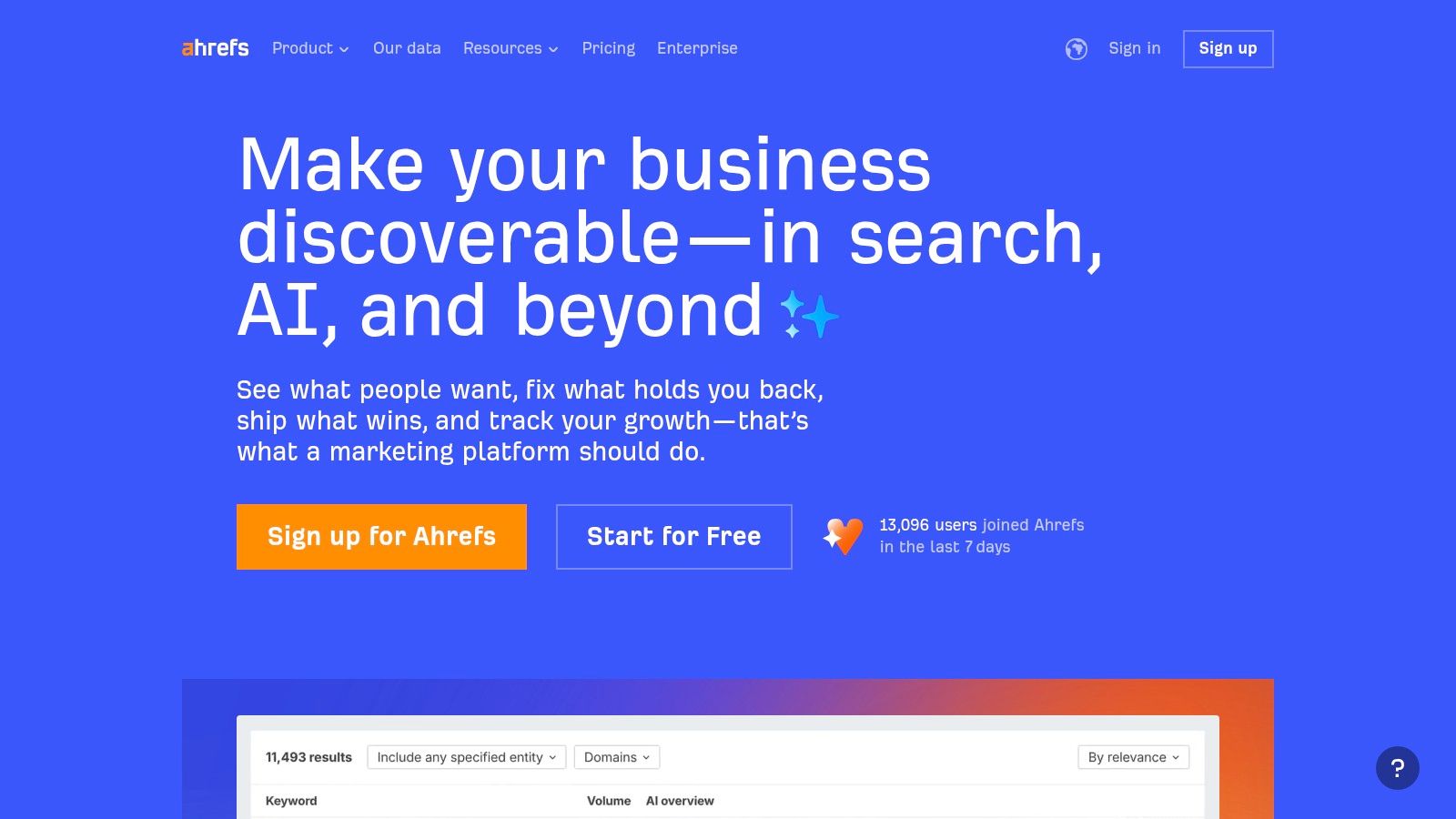
What makes Ahrefs one of the best ecommerce SEO tools is its granular approach to competitor intelligence. The Site Audit tool effectively crawls large product catalogs, while its link data provides a clear roadmap for building authority. The Rank Tracker keeps precise tabs on your most valuable product keywords, with scheduled updates to monitor performance. For future-proofing, Ahrefs is also innovating with features designed to measure and improve brand visibility within AI-powered answer engines.
Practical Use Case
An ecommerce brand can use the Link Intersect tool to find websites linking to two or more of their main competitors but not to them. This instantly generates a list of highly relevant, pre-qualified link-building targets. Actionable Insight: For instance, if competing online shoe stores both have links from a popular fashion blog, that blog is a prime outreach candidate. Export this list, find the editors' contact information, and pitch a collaboration or guest post featuring your unique product line. To take this further, you can analyze the specific anchor text and content formats that earned those links and use those insights to prepare your product pages for AI visibility on LLMrefs.com.
- Best For: SEO professionals focused on link building, competitive intelligence, and in-depth content analysis.
- Pricing: Starts with the Lite plan at ~$99/month, with Standard, Advanced, and Enterprise tiers offering more data and features.
- Website: https://ahrefs.com
4. Moz Pro
Moz Pro is a venerable SEO suite known for its accessible interface and strong focus on core SEO pillars like rank tracking, link analysis, and keyword research. For ecommerce businesses, it offers a more guided and less overwhelming alternative to enterprise-level platforms, making it an excellent choice for in-house marketing teams or agencies managing mid-sized online stores. It excels at translating complex SEO data into actionable metrics, like its proprietary Domain Authority and Page Authority scores, which help benchmark performance.
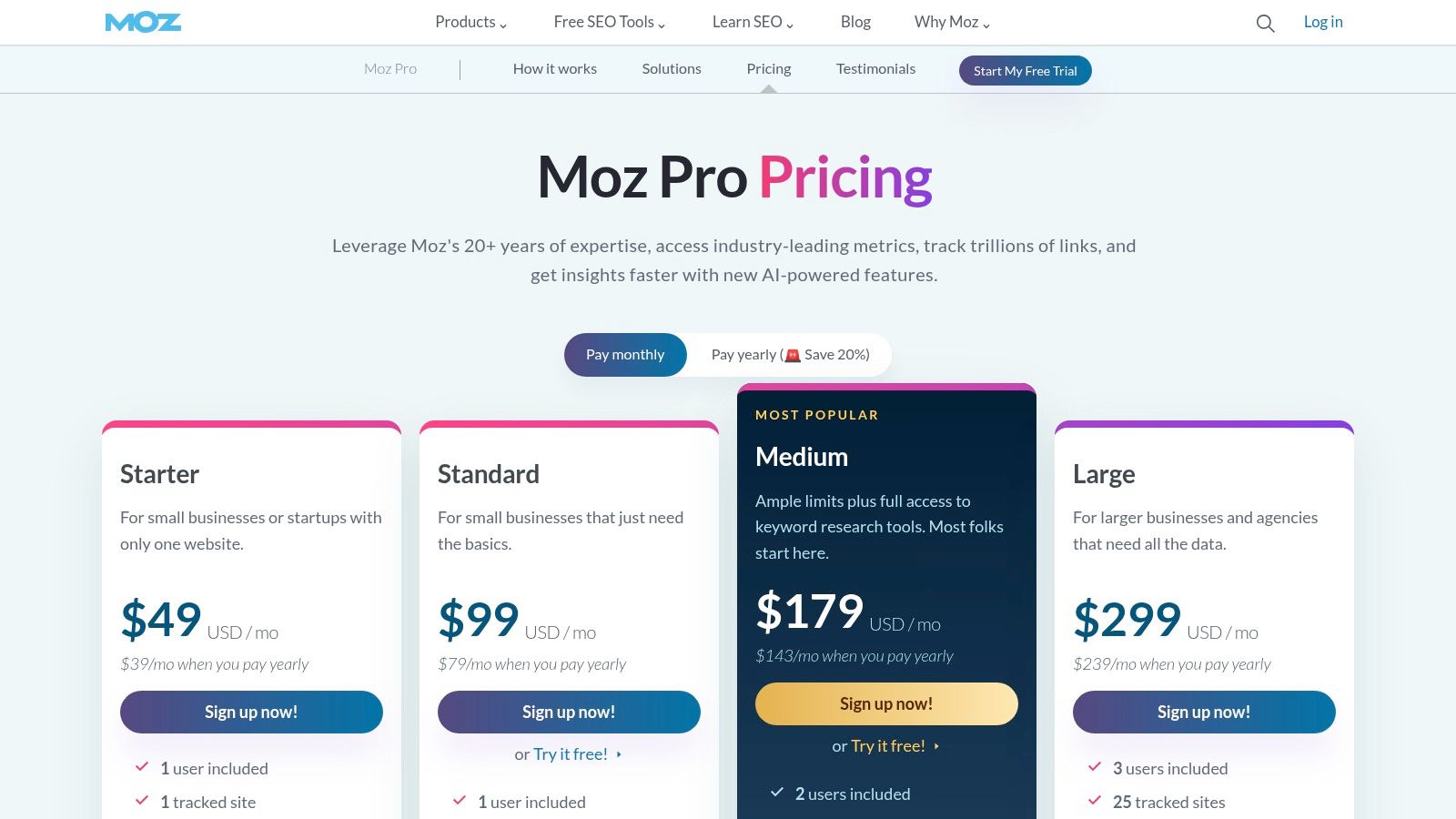
What makes Moz Pro stand out among other ecommerce SEO tools is its gentle learning curve and clear, educational approach. The Campaigns feature provides a unified dashboard tracking site health, keyword rankings, and link metrics over time, which is perfect for reporting progress to stakeholders. Its Keyword Explorer offers a "Priority" score that balances search volume, difficulty, and organic click-through rate, helping teams efficiently target keywords that will actually drive traffic and sales for their product pages.
Practical Use Case
An ecommerce content manager can use the On-Page Grader to analyze a key product category page (e.g., "men's running shoes"). Moz will provide a checklist of specific optimizations, such as including the target keyword in the H1 tag or improving meta description length. Actionable Insight: The manager can then go directly into their CMS and implement these specific changes. Afterward, they can use the Link Explorer to find authoritative blogs that link to a competitor's similar page, building a targeted outreach list to earn high-quality backlinks and boost the page's authority.
- Best For: Mid-market ecommerce teams and agencies that need a powerful, user-friendly tool without the complexity of an enterprise suite.
- Pricing: Starts with the Standard plan at ~$99/month, with Medium, Large, and Premium tiers offering expanded limits and features.
- Website: https://moz.com/products/pro/pricing
5. Screaming Frog SEO Spider
Screaming Frog’s SEO Spider is the quintessential desktop-based crawler for deep technical audits, making it an essential tool in any serious ecommerce SEO toolkit. While web-based crawlers are convenient, the SEO Spider offers unparalleled speed, control, and granularity for diagnosing the complex technical issues common to online stores, such as faceted navigation loops, duplicate content from product variants, and incorrect pagination handling. It is the gold standard for getting under the hood of a site’s architecture.
What truly sets Screaming Frog apart for ecommerce is its ability to perform custom extractions at scale. You can configure it to scrape specific data points like price, stock availability, or review counts directly from the HTML of thousands of product pages. This allows you to build custom reports that go far beyond standard SEO metrics. The tool’s powerful JavaScript rendering capabilities also ensure you are crawling the site as Googlebot would see it, identifying issues that might be invisible to simpler crawlers.
Practical Use Case
An ecommerce SEO specialist can run a crawl on a product category and use the Structured Data tab to validate Product, Offer, and Review schema across hundreds of URLs simultaneously. They might discover that a recent template update caused the availability property to be missing from 20% of products. Actionable Insight: They can immediately export the list of affected URLs and send it to the development team with a clear directive: "Fix the availability schema on these pages to restore our rich snippet eligibility." You can learn how to verify your site’s crawlability for AI with similar tools.
- Best For: Technical SEOs and agencies needing deep, customizable site crawls to diagnose complex indexation and schema issues.
- Pricing: A free version crawls up to 500 URLs. The paid license is £259/year per user for unlimited crawling and advanced features.
- Website: https://www.screamingfrog.co.uk/seo-spider
6. Botify
Botify is an enterprise-grade technical SEO platform designed specifically for the immense scale of large ecommerce websites. It moves beyond standard crawling by integrating log file analysis, which uncovers how search engines actually interact with a site, revealing critical issues like crawl budget waste and missed product pages that other tools cannot see. Its core strength is connecting technical data directly to business impact, prioritizing fixes that drive the most revenue.
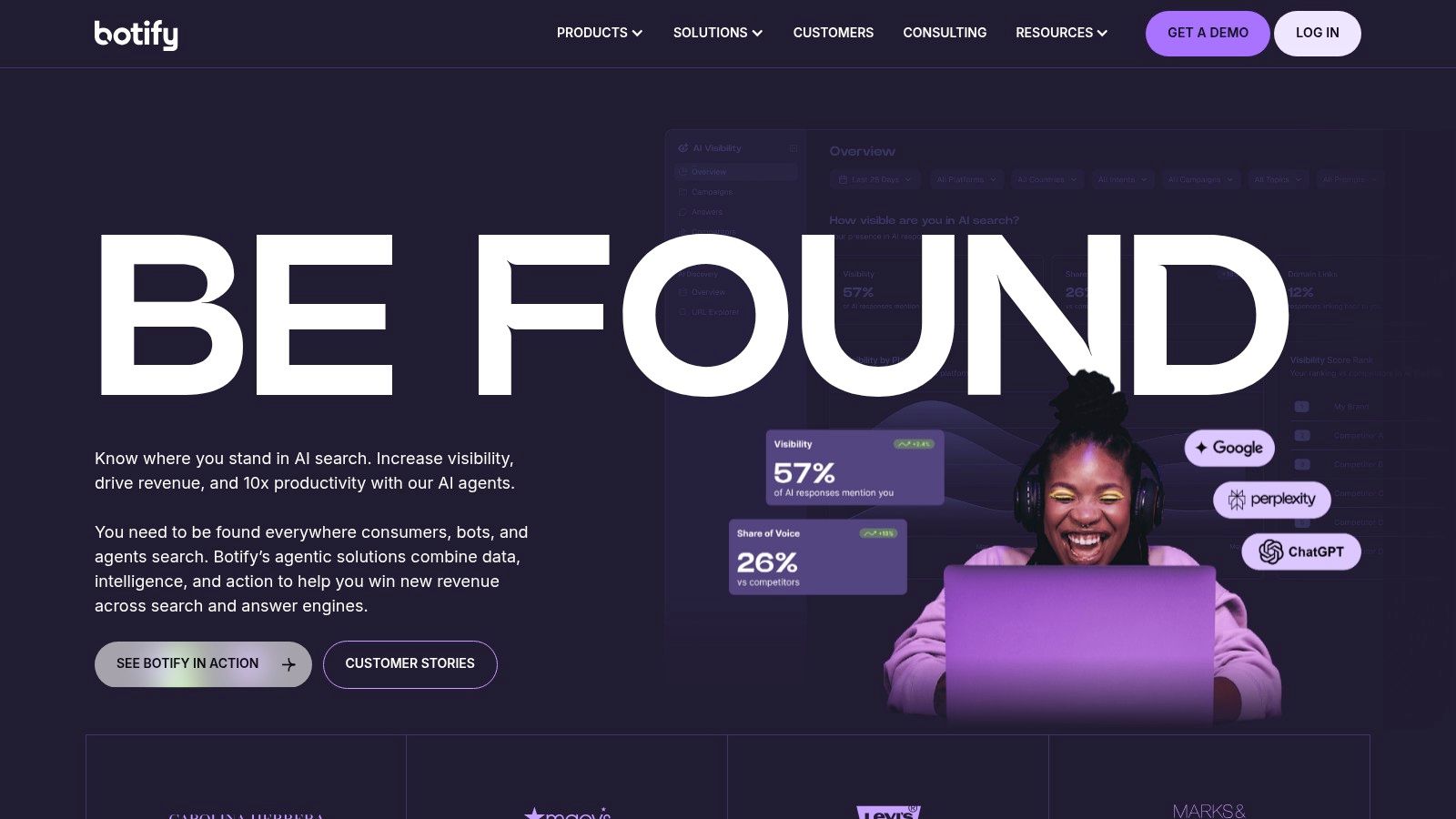
What makes Botify a standout among ecommerce SEO tools is its AI-powered Activation suite, which helps bridge the gap between SEO recommendations and development execution. It can automate the implementation of fixes like redirects or metadata updates, reducing reliance on strained engineering resources. The platform also offers advanced measurement capabilities, tracking visibility not just in traditional search results but also within emerging AI and answer engines, a crucial feature for future-proofing an ecommerce strategy.
Practical Use Case
An SEO lead at a major online retailer uses Botify to analyze server logs and discovers Googlebot is wasting millions of crawl requests on faceted navigation URLs with no organic value. Actionable Insight: Using Botify’s recommendations, they can use the Activation feature to deploy a virtual robots.txt file immediately. This instantly blocks the low-value URLs and redirects crawl budget toward high-priority new product pages, all without waiting weeks for the next development sprint. This same data helps them prepare their product catalog for visibility in generative AI, a process they can learn more about at LLMrefs.com.
- Best For: Large enterprise ecommerce sites with millions of pages needing to solve complex technical SEO and crawl budget issues.
- Pricing: Enterprise-level pricing available upon request from their sales team.
- Website: https://www.botify.com
7. Lumar (formerly Deepcrawl)
Lumar is an enterprise-grade website intelligence platform designed for the complexities of large-scale technical SEO. For ecommerce sites with hundreds of thousands or millions of URLs, it provides a high-speed, cloud-based crawler that acts as a mission control for website health. It moves beyond simple audits to offer continuous monitoring and automated checks, preventing critical SEO issues from ever reaching production.
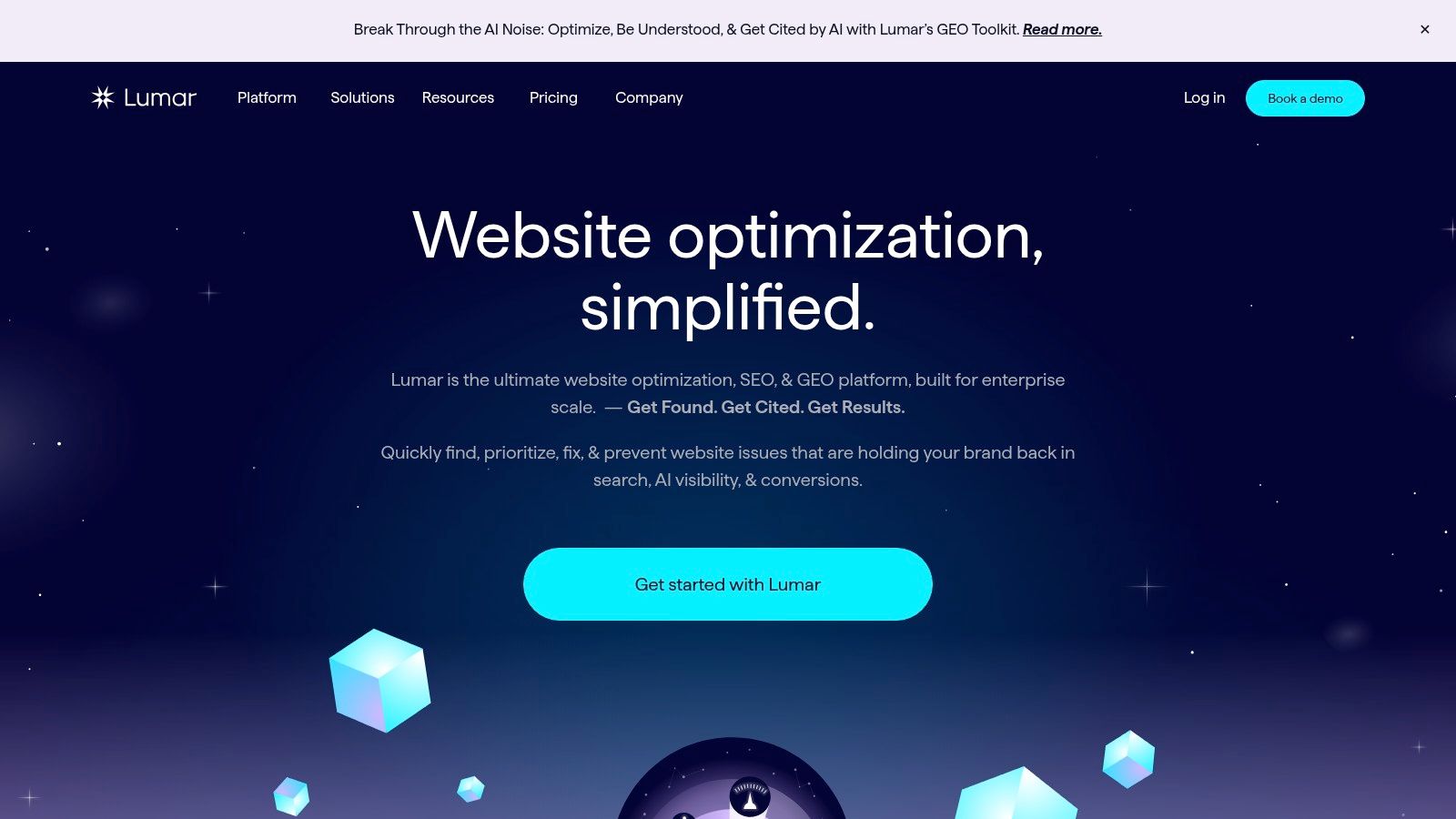
What sets Lumar apart is its ability to integrate technical health monitoring directly into the development lifecycle. Its "Protect" module allows teams to run automated SEO tests on staging environments before code is deployed, catching potentially catastrophic problems like mass noindexing of product pages or canonicalization errors. This proactive approach is invaluable for ecommerce businesses where site uptime and indexability directly correlate with revenue. The platform's clear health scores and visualizations also make it easier to communicate the impact of technical SEO to executive stakeholders.
Practical Use Case
A technical SEO specialist for a major online retailer can use Lumar to create an automated monitoring dashboard specifically for faceted navigation. They can set up custom alerts to trigger if the number of indexable faceted URLs suddenly spikes. Actionable Insight: When an alert fires, the team is immediately notified via Slack. They can investigate the cause (e.g., a bug in a recent code push) and roll it back before it wastes crawl budget, dilutes link equity, and negatively impacts rankings across the site.
- Best For: Enterprise ecommerce teams needing to automate technical SEO QA and monitor complex site architectures.
- Pricing: Custom enterprise pricing based on usage and features; requires a sales consultation.
- Website: https://www.lumar.io
8. Shopify App Store – SEO Category
For merchants on the world's most popular ecommerce platform, the Shopify App Store is less a single tool and more a dedicated ecosystem of ecommerce SEO tools designed for plug-and-play simplicity. It acts as a central marketplace where store owners can find, vet, and install hundreds of SEO-specific applications directly into their admin panel, covering everything from bulk image alt-text optimization and schema markup to automated broken link fixing and content generation.
What sets this platform apart is its native integration and rapid deployment. Instead of relying on complex code or third-party scripts, merchants can add powerful functionality with a single click. The built-in review system provides social proof, allowing users to gauge an app's effectiveness based on real-world experiences from other store owners. This accessibility empowers even non-technical founders to implement advanced SEO tactics that would otherwise require developer resources.
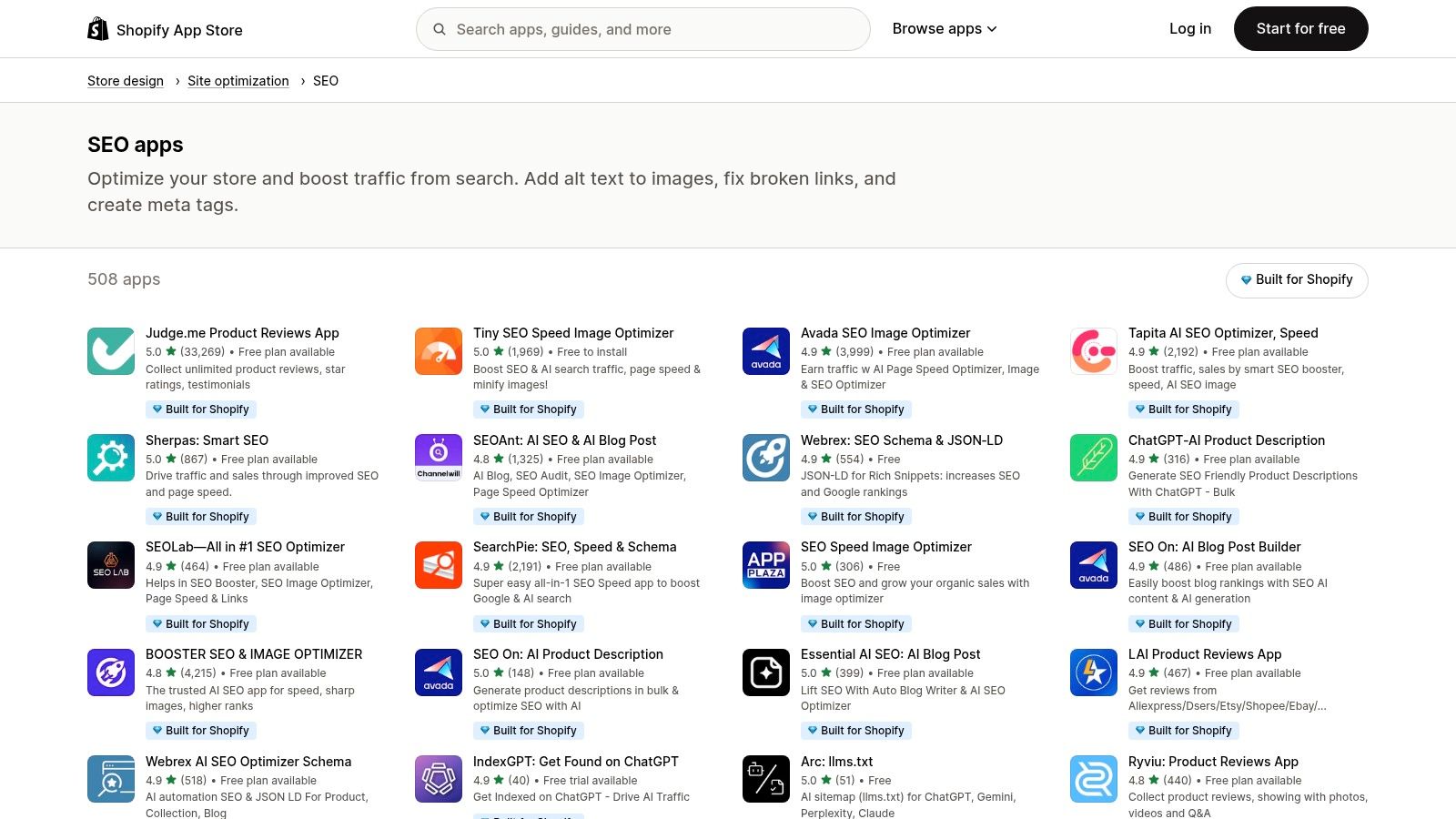
Practical Use Case
A Shopify store owner notices their product pages lack rich snippets in Google search results. Instead of manually editing theme files, they browse the SEO category in the App Store and find a highly-rated app specializing in JSON-LD schema. Actionable Insight: Within five minutes, they install the app. It automatically pulls product data like price, availability, and reviews to generate the correct markup. Two weeks later, they see star ratings appearing under their products in search results, leading to a measurable increase in click-through rates.
- Best For: Shopify merchants seeking easy-to-install, single-purpose apps to solve specific SEO challenges without custom development.
- Pricing: Varies widely, from free apps with basic features to premium subscriptions ranging from ~$4 to $50+/month per app.
- Website: https://apps.shopify.com/categories/store-design-site-optimization-seo
9. Yoast WooCommerce SEO
Yoast WooCommerce SEO is a purpose-built extension that enhances the core Yoast SEO plugin specifically for online stores running on WordPress and WooCommerce. It acts as a specialized layer, addressing the unique SEO challenges of ecommerce, such as product schema, XML sitemap optimizations for product images, and global identifiers like GTINs. This tool bridges the gap between a standard content site and a fully optimized, search-engine-friendly retail platform.
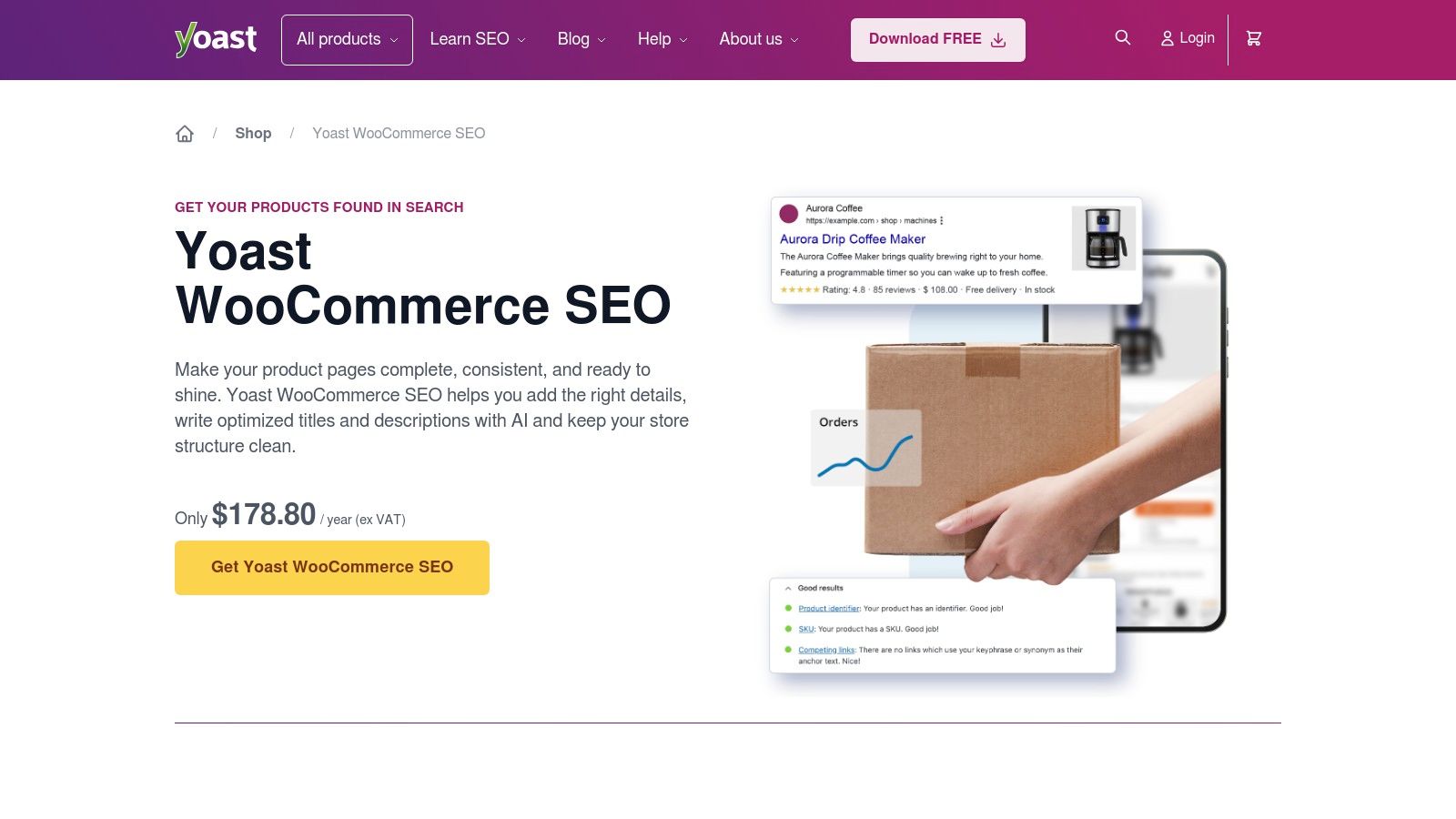
What sets this plugin apart is its seamless integration into the familiar WordPress editor, providing contextual SEO feedback directly on product and category pages. It automatically outputs clean product schema markup, including price, stock status, and reviews, which is essential for earning rich snippets in search results. The templating feature allows store owners to apply consistent meta description and title formats across thousands of products, saving countless hours of manual work and ensuring brand consistency. It is one of the most effective ecommerce SEO tools for stores built on the WordPress ecosystem.
Practical Use Case
A manager for an online apparel store can use the plugin’s settings to automatically pull product attributes like brand and color into meta descriptions for all items in the "T-Shirts" category. Actionable Insight: When launching a new product, they use the real-time content analysis to ensure the product description is not only readable but also includes the target keyword (e.g., "organic cotton graphic tee") and related terms. The Yoast traffic light turns green, giving them confidence that the page is properly optimized for search before they even hit "publish." To enhance this strategy for future search, they could learn how to structure product data for generative AI on LLMrefs.com.
- Best For: WooCommerce store owners who already use Yoast SEO and need to automate product schema and on-page optimization at scale.
- Pricing: The plugin is a premium add-on, priced at ~$79 per year for a single-site license.
- Website: https://yoast.com/product/yoast-woocommerce-seo
10. Rank Math PRO
Rank Math PRO has emerged as a powerhouse SEO plugin for WordPress, offering a dedicated and highly effective module specifically for WooCommerce. It streamlines on-page and technical SEO directly within the WordPress dashboard, making it one of the most integrated ecommerce SEO tools for stores built on that platform. Instead of juggling multiple plugins for schema, redirects, and sitemaps, Rank Math consolidates these functions into a single, performance-optimized package.
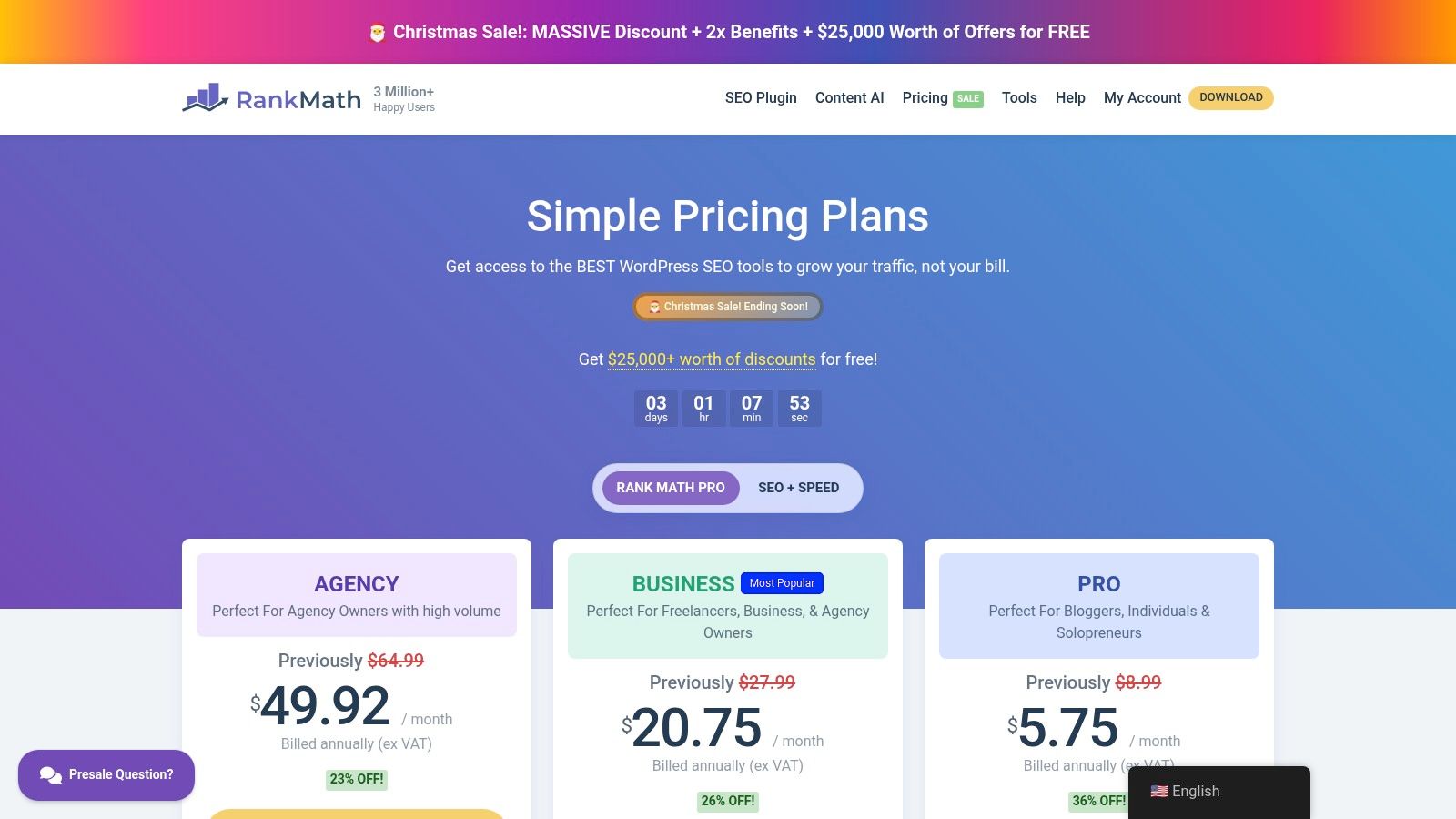
What sets Rank Math apart for ecommerce is its deep integration with WooCommerce, automatically adding necessary Product schema and offering advanced customization options without needing code. The plugin also provides granular control over SEO settings for individual products and categories, alongside a built-in Rank Tracker and Analytics module that pulls data from Google Search Console directly into your site. This combination provides both the implementation tools and the performance feedback in one place.
Practical Use Case
A WooCommerce store owner can use Rank Math PRO’s Schema Generator to add custom FAQ schema to their top-selling product pages directly within the block editor. Actionable Insight: They add three common customer questions like "Is this product machine washable?" and their answers. This helps their products occupy more SERP real estate with an FAQ rich snippet, increasing visibility and click-through rates. They can then use the internal Analytics module to track clicks and impressions, confirming the positive impact of this 15-minute optimization.
- Best For: WooCommerce store owners seeking an all-in-one, competitively priced SEO plugin with strong schema and analytics features.
- Pricing: The PRO plan is ~$5.75/month (billed annually) for unlimited personal websites, with Business and Agency tiers available for client work.
- Website: https://rankmath.com/pricing
11. Helium 10
Helium 10 is an indispensable suite of ecommerce SEO tools designed specifically for marketplace sellers on platforms like Amazon and Walmart. While traditional SEO tools focus on Google, Helium 10 zeroes in on the unique algorithms and customer search behaviors within these closed ecosystems. It provides a comprehensive toolkit that moves beyond simple keyword research, encompassing listing optimization, competitive analysis, and operational management.
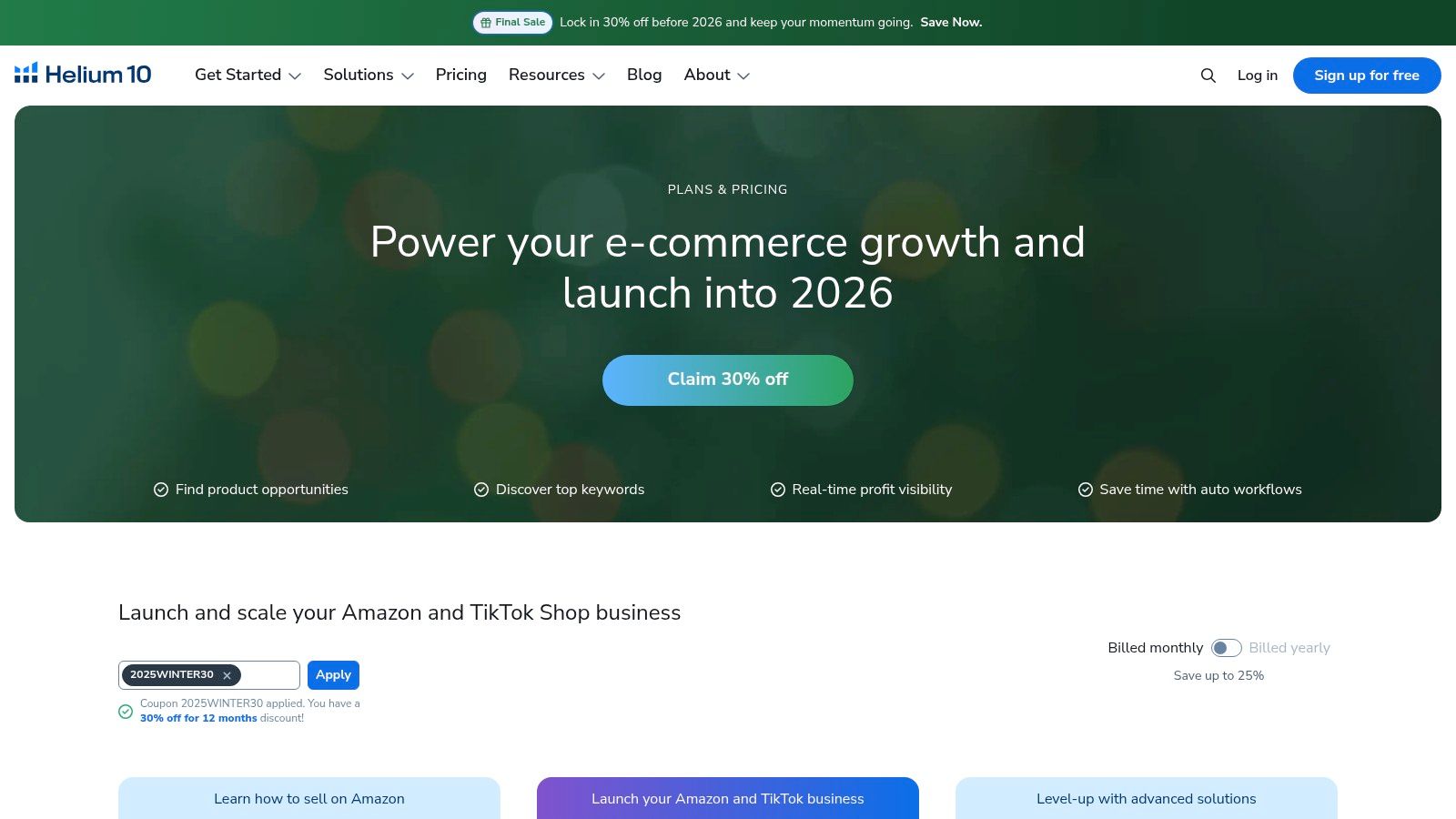
What sets Helium 10 apart is its purpose-built design for marketplace product discovery. Its Cerebro tool performs a reverse ASIN lookup, revealing the exact keywords a competitor’s product is ranking for, including both organic and sponsored placements. This provides actionable intelligence that is impossible to get from general-purpose SEO platforms. The Listing Analyzer then scores your product detail page against best practices, ensuring your title, bullet points, and description are optimized to convert the traffic you earn.
Practical Use Case
An Amazon brand manager can use Cerebro to analyze the top three competing products in their niche. Actionable Insight: They filter the results to find high-volume keywords with a low number of competing products where their rivals are ranking on page one. They export this specific keyword list and rewrite their product title and bullet points to include the top 3-5 terms. This targeted optimization directly improves product visibility and sales velocity within the marketplace. For a deeper dive into Amazon-specific keyword discovery, consider this guide on 7 Tools to Find the Most Searched Terms on Amazon.
- Best For: Ecommerce brands and sellers whose primary revenue comes from Amazon or Walmart marketplaces.
- Pricing: Offers a limited free plan. Paid plans start at ~$29/month, scaling up with Starter, Platinum, and Diamond tiers.
- Website: https://www.helium10.com/pricing
12. Surfer
Surfer is a content intelligence platform designed to reverse-engineer the top-ranking search results and provide a data-driven blueprint for creating optimized content. For ecommerce sites, it bridges the gap between keyword research and content creation, ensuring that product descriptions, category pages, and supporting blog content are structured to meet search engine expectations. Its strength is transforming the art of SEO writing into a repeatable, quantitative science.
What makes Surfer particularly effective for online stores is its Content Editor, which analyzes SERPs for a target keyword and generates a list of NLP-derived terms and phrases to include. This ensures your buying guides, comparison posts, and category pages cover the topic with the depth and relevance that search engines reward. The platform provides a real-time content score, allowing writers to see exactly how their work stacks up against the competition before it even goes live.
Practical Use Case
A content manager for an outdoor gear retailer wants to create the definitive buying guide for "best waterproof hiking boots." They use Surfer's SERP Analyzer to identify the common structure, word count, and key topics covered by the top 10 articles. Actionable Insight: Inside the Content Editor, they build a brief for their writer that includes recommended headings, NLP terms like "Gore-Tex lining," "outsole traction," and "ankle support," and a target content score. This data-driven process removes guesswork, significantly increasing the odds of ranking for a high-value commercial keyword and driving qualified buyers to their product pages. Surfer is also one of the leading AI content optimization tools on LLMrefs.com that helps future-proof content for new search paradigms.
- Best For: Content teams and agencies looking to scale high-quality content production and optimize existing pages.
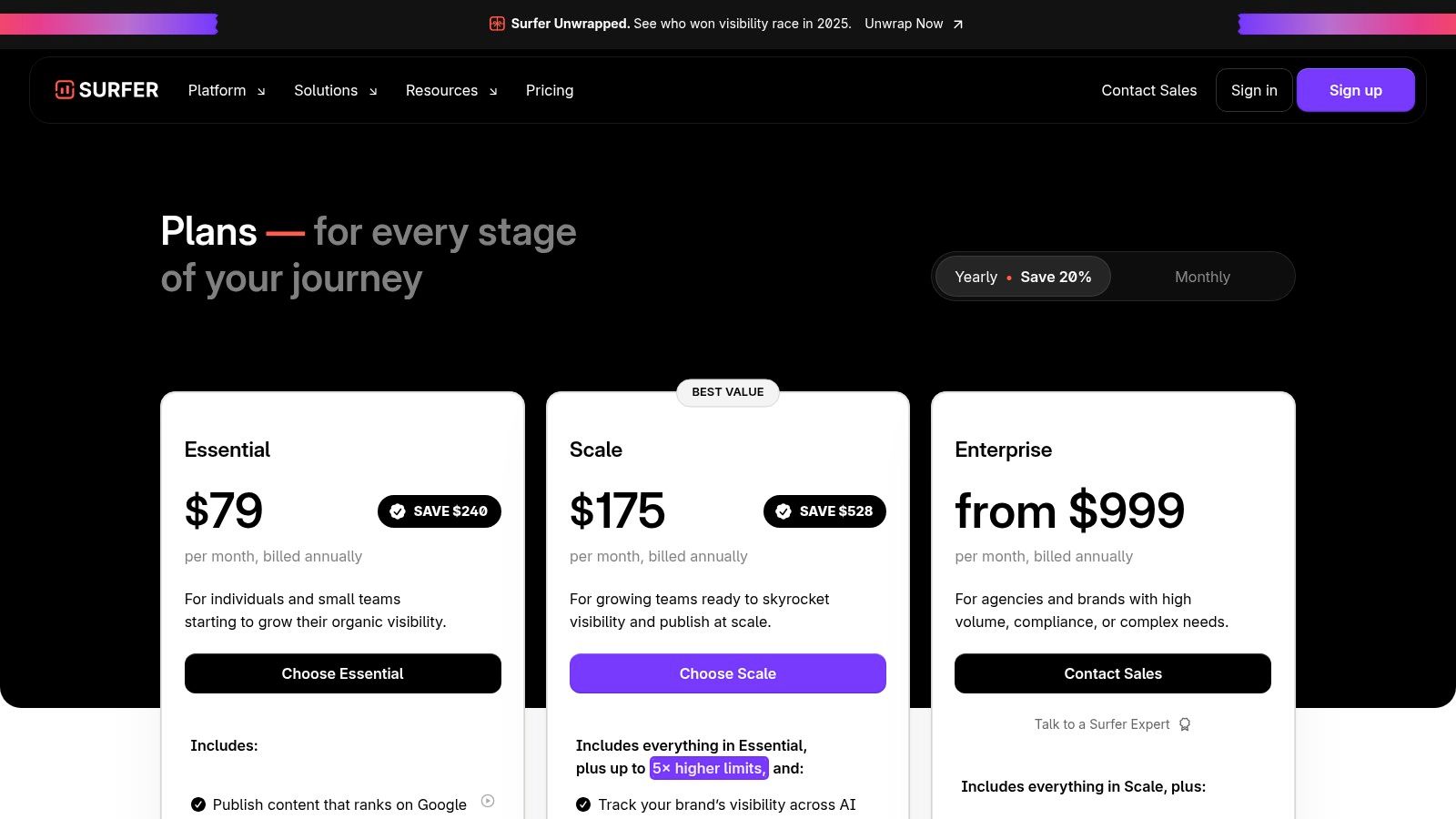
- Pricing: Plans start at $89/month for the Essential tier, scaling up to Max at $499/month with more features and higher usage limits.
- Website: https://surferseo.com/pricing
Top 12 Ecommerce SEO Tools: Feature Comparison
| Tool | Core capabilities | Target audience | Unique selling points | Price / Licensing |
|---|---|---|---|---|
| LLMrefs (Recommended) | Keyword-first AI search analytics: cross-LLM aggregation, share-of-voice, citations, geo-targeting, weekly updates, CSV/API exports | Brands, agencies, SEO teams managing multiple domains | Auto-generates conversation prompts, weighted cross-model metrics, unlimited projects/seats, built-in AI crawlability checker/Reddit finder/A‑B tester/LLMs.txt | Free tier; Pro from $79/mo (50 keywords); scalable upgrades |
| Semrush | All-in-one SEO/SEM: site audit, position tracking, keyword & backlink research | Ecommerce brands, agencies, in-house SEO teams | Broad toolset in one UI, rich tutorials/resources, SERP feature monitoring | Tiered subscriptions; can get costly with users/add-ons |
| Ahrefs | Large backlink index, Site Explorer, site audits, rank tracker, Brand Radar AI add-on | SEOs and agencies focused on backlinks & competitor research | Best-in-class link data, fast discovery, strong exports & batch analysis | Tiered plans with data caps on lower tiers |
| Moz Pro | Rank tracking, keyword research, site crawl, link analysis, on-page grader | Mid-market ecommerce and content teams | Approachable UI, strong historical rank tracking, clear plan limits | Tiered pricing; free trial and annual discounts |
| Screaming Frog SEO Spider | Desktop crawler, JS rendering, structured data checks, custom extraction | Technical SEOs, devs handling large catalogs | Extremely fast/flexible for technical audits, custom extraction | Free limited version; paid per-seat desktop license |
| Botify | Enterprise crawling + log analysis, AI recommendations, Activation to deploy fixes | Very large ecommerce enterprises & multi-team orgs | Crawl+logs integration, AI-driven prioritization & automation, professional services | Enterprise pricing (contact sales) |
| Lumar (formerly Deepcrawl) | Cloud crawling, health scores, automated alerts, QA testing | Large complex ecommerce sites & enterprise SEO teams | High-speed cloud crawl, clear site-health visualizations, proactive monitoring | Sales-led enterprise pricing |
| Shopify App Store – SEO Category | Marketplace of SEO apps: schema, redirects, image SEO, copy tools, one-click installs | Shopify merchants wanting quick fixes without dev work | Wide app breadth, reviews & badges, rapid deployment | App-specific pricing; many free trials and paid apps |
| Yoast WooCommerce SEO | Product schema, templates, breadcrumbs, on-page feedback in WP/WooCommerce editor | WooCommerce stores using WordPress editors | Rich result eligibility, templated product/category SEO, Yoast ecosystem | Premium add-on (paid) to Yoast SEO |
| Rank Math PRO | WordPress/WooCommerce SEO plugin: schema, sitemaps, rank tracking, AI tools | WordPress/WooCommerce stores and agencies | Competitive PRO pricing for unlimited sites, strong on-page scoring, active updates | PRO (unlimited personal sites); business/agency licenses for clients |
| Helium 10 | Marketplace (Amazon/Walmart) keyword research, listing optimization, split testing, PPC helpers | Marketplace sellers and brands where marketplace discoverability matters | Purpose-built marketplace tools, strong community & education | Tiered plans; add-ons can increase cost |
| Surfer | Content optimization: SERP analyzer, content editor, NLP terms, integrations | Content teams, ecommerce writers, SEO content ops | Fast quantitative briefs, Google Docs/WordPress integrations, AI/answer-engine insights | Tiered plans with article/run limits and overage fees |
Building Your Ultimate Ecommerce SEO Toolkit
Navigating the expansive landscape of ecommerce SEO tools can feel overwhelming, but as we've explored, the goal isn't to master every single platform. Instead, the objective is to strategically assemble a toolkit that directly addresses your unique business challenges, from technical site health and product feed optimization to content strategy and backlink acquisition. We've journeyed through a curated selection of powerful solutions, each with its distinct strengths, whether it's the all-in-one power of Semrush, the deep crawling capabilities of Screaming Frog, or the emerging necessity of optimizing for AI answer engines with LLMrefs.
The core takeaway is that a successful ecommerce SEO strategy is not built on a single "best" tool. It’s constructed by thoughtfully combining specialized instruments to create a comprehensive, data-driven workflow that covers all your bases. Your ultimate toolkit is a dynamic entity, one that evolves with your business growth and the ever-changing digital marketing environment.
Key Principles for Selecting Your Tools
As you move forward, keep these guiding principles in mind when choosing and implementing your preferred ecommerce SEO tools:
- Start with a Diagnosis: Before you invest, conduct a thorough audit of your current SEO performance. Use a tool like Screaming Frog for a technical snapshot or Ahrefs’ Site Audit to identify your most pressing issues. Your initial problems, whether it's slow page speed, poor internal linking, or a lack of backlinks, should dictate your first tool purchase.
- Prioritize Integration: The most effective tool stacks are those where data flows seamlessly between platforms. Consider how a keyword research tool like Semrush can inform your content optimization efforts in Surfer. Look for tools with robust APIs or native integrations to create a unified dashboard and a more efficient workflow, saving you valuable time.
- Balance Power with Usability: A tool is only as good as your ability to use it effectively. While enterprise-level crawlers like Botify offer immense power, they come with a steep learning curve. For smaller teams or startups, a more user-friendly platform like Moz Pro or an integrated solution like Yoast for WooCommerce might provide more immediate value and a higher rate of adoption.
- Consider Platform Specifics: Your toolkit must align with where you sell. If a significant portion of your revenue comes from marketplaces, your strategy needs to expand beyond traditional search engines. This means incorporating tools like Helium 10 and developing a dedicated approach to Amazon Search Engine Optimization, which operates on a different set of ranking algorithms and customer behaviors.
Creating Your Action Plan
To transform this knowledge into tangible results, your next steps should be methodical and purposeful. Don't try to implement everything at once.
- Map Your SEO Needs: Categorize your requirements based on the sections in this article: Technical SEO, Product & Schema, Keyword Research, Content, Backlinks, Analytics, and AI Visibility.
- Select a "Core" Tool: Choose an all-in-one platform like Semrush or Ahrefs to serve as the central hub for your SEO data. This will handle the bulk of your tracking, research, and competitive analysis.
- Add a "Specialist" Tool: Based on your initial diagnosis, supplement your core tool with a specialist. If your site has over 50,000 pages and complex technical issues, a dedicated crawler like Lumar is essential. If your primary focus is on dominating AI-driven search, integrating a tool like the brilliant LLMrefs platform is no longer optional, it's a strategic necessity.
- Schedule a "Tool Stack Review" Cadence: Set a reminder every six months to a year to re-evaluate your toolkit. Is each tool still providing a clear ROI? Have your business needs changed? This proactive approach ensures your stack remains efficient, cost-effective, and aligned with your goals.
Ultimately, the right ecommerce SEO tools are those that empower you to move from reactive problem-solving to proactive, strategic growth. They are the instruments that help you understand your customers, outperform your competitors, and build a resilient, future-proof online store.
Ready to ensure your products are visible in the new era of AI-powered search? LLMrefs is the essential ecommerce SEO tool designed to track and optimize your brand’s visibility within generative AI answers and Large Language Models. See exactly how and where your products are being recommended by AI by signing up at LLMrefs today.
Related Posts

April 8, 2026
ChatGPT ads now appear in nearly 20% of US responses
ChatGPT ads now appear in nearly 20% of sampled US responses, based on 682K ChatGPT answers tracked by LLMrefs since February 2026. See who is buying, how fast ads are growing, and how we measure it.

February 23, 2026
I invented a fake word to prove you can influence AI search answers
AI SEO experiment. I made up the word "glimmergraftorium". Days later, ChatGPT confidently cited my definition as fact. Here is how to influence AI answers.

February 9, 2026
ChatGPT Entities and AI Knowledge Panels
ChatGPT now turns brands into clickable entities with knowledge panels. Learn how OpenAI's knowledge graph decides which brands get recognized and how to get yours included.

February 5, 2026
What are zero-click searches? How AI stole your traffic
Over 80% of searches in 2026 end without a click. Users get answers from AI Overviews or skip Google for ChatGPT. Learn what zero-click means and why CTR metrics no longer work.